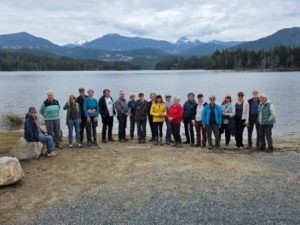
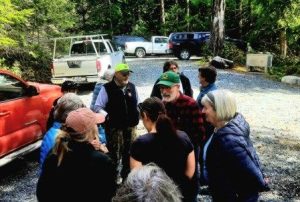
Twenty-one MalaNats members toured the Horseshoe Valley area looking at variety of glaciological and geological sites. And despite some forecasts, the weather cooperated – it turned out to be a nice April day!
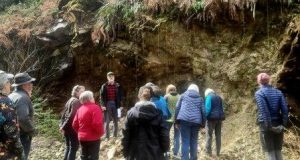
Our first stop at 12 Mile on the Goat Main was mostly about recent (10,000 – 30,000 years ago) ice advances and retreats at the close of the last ice age. Some of the sediments left behind as the last ice left the area are nicely exposed in the gravel pit at 12 Mile.
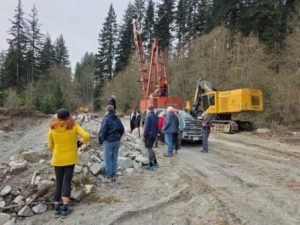
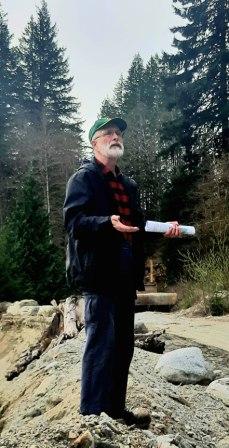
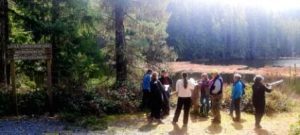
On the Beaver Main we stopped at a view point looking over Dodd Lake and out towards the Rainbow Range. Here we talked a little more about the geographical features left behind by the ice, and also delved into the regional geology and geological history of the area. (And enjoyed the nice view!)
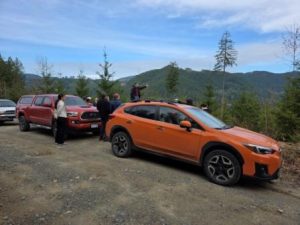
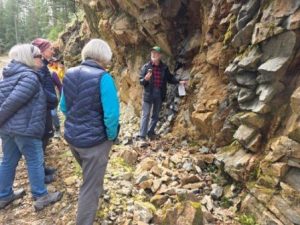
A little further down the road we stopped to hear about fractures and intrusions, and saw swarms of hydrothermal dykes of varying colours. We found the rotten rock that hydrothermal fluids create (and that geologists love to find!) and learned a bit about mineralisation in these veins. We also took a short jaunt down to Beaver Lake to look around.
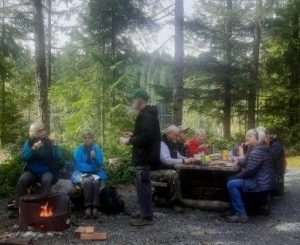
We then drove further up the road to Little Horseshoe campsite where we enjoyed our lunches and warmed up around a nice campfire. Wide ranging naturalist discussions ensued, going all the way from rocks to birds!
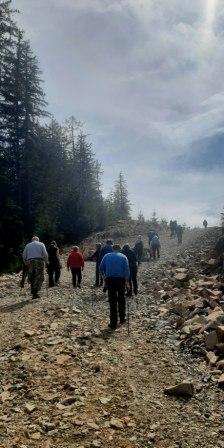
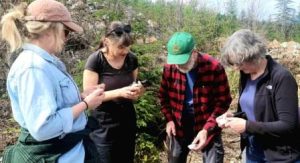
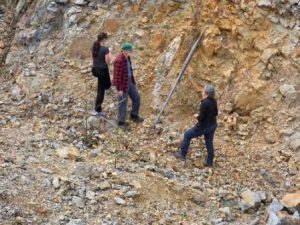
On the way out, we made our last geological stop, walking up an old road to a rock pit where a nicely mineralised quartz vein is exposed. Here we did a bit of hunting for pyrite, chalcopyrite, molybdenite, and other sulphide minerals within the quartz. A few intrepid folk even climbed down into the pit for a closer look at the vein – though, as usual, no one found any gold!
From there we headed towards home with one last stop at Nanton Lake to enjoy the view and compare notes on the day. Hopefully everyone enjoyed the day, perhaps learned a little bit, and maybe even found a few little treasures!