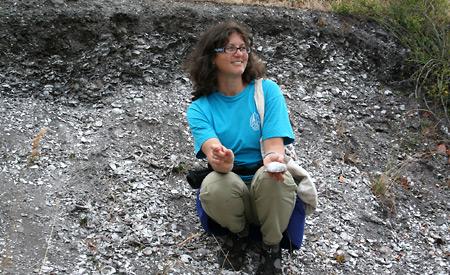
Flooded quarry on Texada – A. Bryant
A trip to Texada
by Sherri Wretham, 23 June 2009.
Long-time Club member and local naturalist John Dove led a group of us around to experience the sights and history of lovely Texada Island.

A trip to Texada
by Sherri Wretham, 23 June 2009.
Long-time Club member and local naturalist John Dove led a group of us around to experience the sights and history of lovely Texada Island.


Return to Toba Inlet
by Heather Harbord, 17 June 2009.
We were fortunate to repeat our 2007 journey to Toba Inlet, courtesy of Captain Mike and the ever trusty Misty Isles.
Again we stopped to admire the pictographs, and got wet when Mike poked the bow of our craft under the big waterfall at the entrance to Toba Inlet.
Then spectacular double waterfall at Racine Creek never fails to impress, and more people got wet.
As usual we stayed at the wonderful Toba Wildernest Resort, where we ate extremely well. Captain Mike again showed his exceptional culinary skills. The two days aboard ship and one night at Toba Wildernest cost (including GST) was the same as last time: $305 per person in cabin accommodations (for 10) and $280 per person for campers (2).

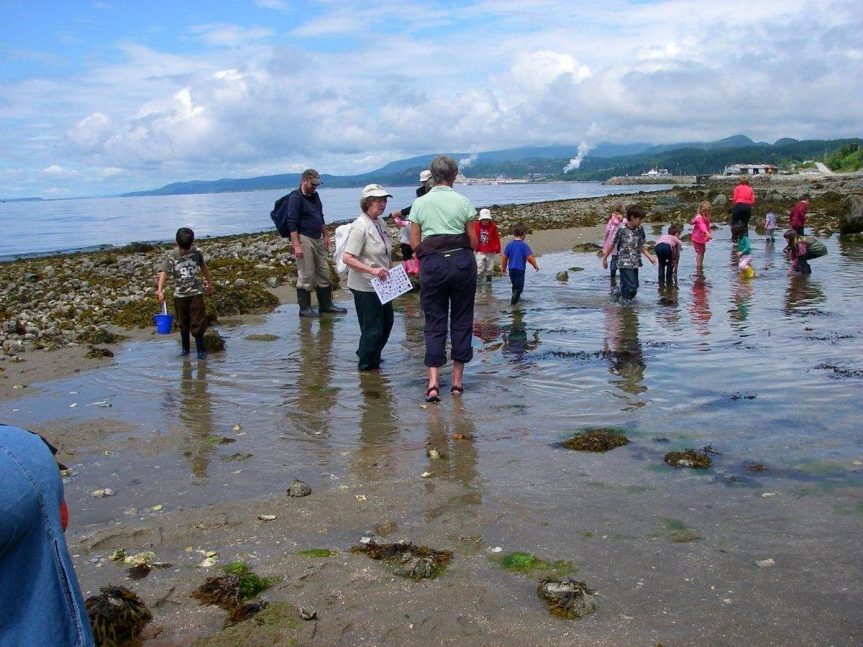
Beachwalk
by Sherri Wretham, 6 June 2009.
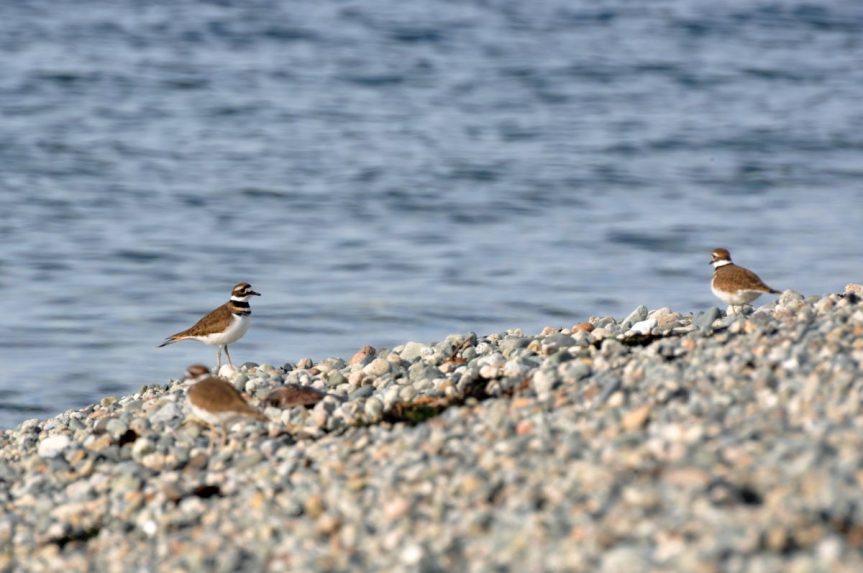
Long-time club member Heather led a leisurely ramble along the beach to watch birds, explore the seashore life, and enjoy the sunshine!

Mitlenatch with Mike Moore and the Misty Isles
by Heather Harbord, 31 May 2009.
In what has become somewhat of a Club tradition, Captain Mike Moore took us aboard the Misty Isles and we set our for Mitlenatch Island.
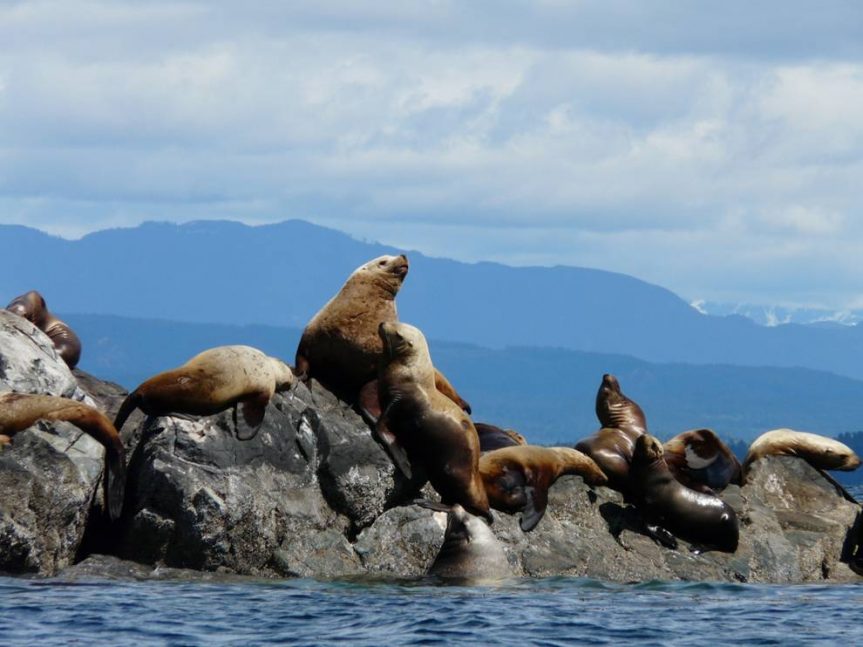
We followed our usual routine, with half of the group going ashore to see the nesting areas through the newly-constructed bird blind, and the other half circumnavigating the island thanks to Mike’s zodiac inflatable and seafaring skills. We saw both Califonia and Steller’s sea lions, nesting cormorants and pigeon guillimots.
The groups switched halfway through the day, so participants got to experience both the aquatic and the terrestrial marvels!

Dr. David Ballantyne has spent his entire life working with plants, beginning in his parent’s greenhouse business in Victoria. After completing graduate work in horticulture at Washington State and the University of Maryland, he worked at the Agriculture Canada Experimental Farm at Saanichton. In 1963 he obtained a teaching and research position at the University of Victoria, a position that evolved into a career lasting 33 years.
Most of his teaching emphasized plant physiology, while his research was involved in investigating plant hormones, and latterly, the effect of air pollutants on plants. He has always been interested in rhododendrons and azaleas, and also in using greenhouses. Since retiring in 1996, he has been involved in investigating the flowering, water relations and flowering of azaleas and rhododendrons.
He spoke to us about his recent travels to the Big Island of Hawaii, where he visited several botanical gardens…and continued to marvel at the azaleas and rhododendrons!

Spring wildflowers
by Sherri Wretham, 20 May 2009.
Long-standing Club member and flower-passionate Shirley Cole took us out for a walk to see what was in bloom.
As it turns out, rather a lot of things were!

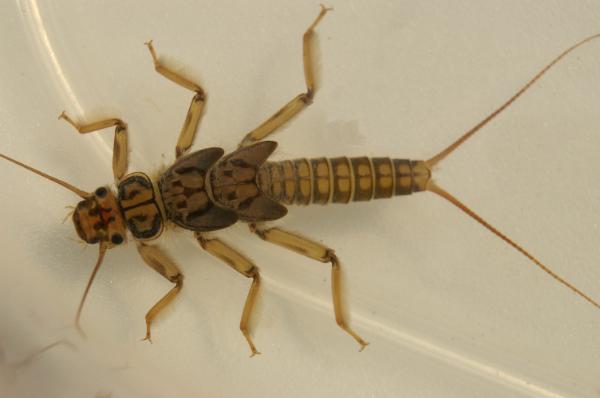
The Young Naturalists met at Willingdon Beach Campground to look at stream invertebrate in a nearby creek – amazing critters when you get close!

Dr. Richard Mackie is an award-winning author and historian from Victoria. He worked as an archaeologist for a number of universities and museums, studied mediaeval and modern European history at St. Andrews University, and studied Canadian history and historical geography at the universities of Victoria and British Columbia.
Combining his passion for history with his interest in natural history, he spoke about how House sparrows, Eurasian skylarks, Starlings and other species have adapted to life in coastal British Columbia.
And about how some other introduced songbirds, such as the lovely English Robin, did not – despite valiant efforts!


Marine invasive species
by Sherri Wretham, 27 March 2009.
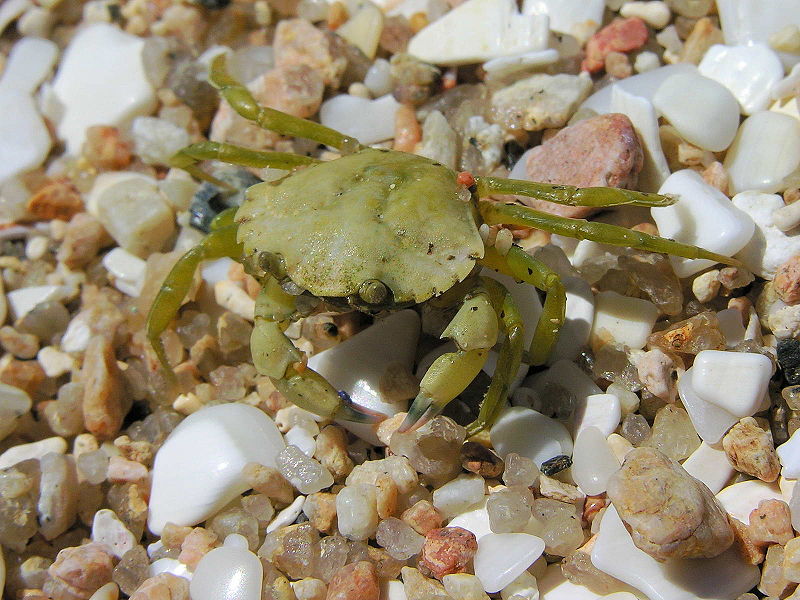
As a follow-up to his fascinating talk the previous evening, Dr. Graham Gillespie of the Pacific Biological Station in Nanaimo took us out for a hike along the seashore to hunt to for invaders…and we were surprised to learn that they’re everywhere!
Fortunately for us, we learned that our shores still remain in pretty good shape, and invasive species are not nearly the problem they are in some other B.C. coastal regions.


Graham Gillespie is a Research Biologist with Fisheries and Oceans Canada (DFO) at the Pacific Biological Station in Nanaimo. Graham is Head of the Intertidal Bivalve, Cephalopod and Crab Programs, conducting stock assessments for commercially important species, providing scientific advice and participating in ecosystem-level research involving these groups.
David’s talk focused on the Aquatic Invasive Species project, which examines distribution, dispersal and impacts of intertidal non-indigenous species on the Pacific Coast of Canada.

Birding trip to spawning grounds
by Sherri Wretham, 15 March 2009.
The day after our day of “ear-birding”, Pierre again led us, this time traveling by ferry to see the herring spawn at Comox, and the incredible birding results!

Birding by ear
by Sherri Wretham, 14 March 2009.
Master birder Pierre took a group of members out to hone their “ear-birding” skills with the early spring migrants.

Daniel Francis, together with co-author and long-time Vancouver Aquarium staff member Gil Hewlett, wrote Operation Orca: Springer, Luna and the Struggle to Save West Coast Killer Whales. This book was awarded “Best Nature Non-Fiction Award” by Forward Magazine, and has been excerpted in The Tyee, which you can find here.
Daniel described how and why he came to write this book, and his passion for telling their story. It is remarkable that these graceful and majestic creatures have gone from being perceived as fearsome, man-eating monsters that should be systematically killed – to a powerful symbol of the wild BC coast, indeed a true poster child for the need to protect our marine environment.

Soapstone carving
by Janet Alred, 14 February 2009.
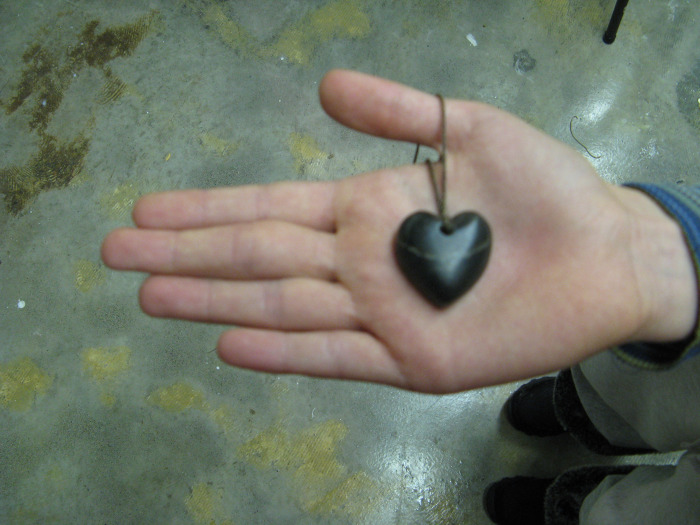
The Young Naturalists met at Trinity Hall (United Church). Richard Benson, a local artist, demonstrated soapstone carving. Each child had the opportunity to carve an arrowhead or a heart pendant. No injuries were incurred despite sharp tools being entrusted to tiny hands!


Bruce Cousens is an independent biologist who works for the Western Purple Martin Foundation (WPMF), a non-profit charity based in Nanaimo. Bruce has worked with Purple Martins (Progne subis arboricola) since the mid 1980s, when he began to help construct nest boxes for this species, which is listed as a “vulnerable” species in British Columbia .
Bruce spoke about the biology, behavior and history of Purple martins, and in particular how the nest box program has facilitated a remarkable population recovery. Once restricted to only a handful of colonies and containing only a few breeding pairs, the population has grown to several hundred.
Several of our members have been active in maintaining the local colony at Myrtle Rocks. It was nice to gain a broader perspective about how that colony compares with others, and to learn more about such a successful grass-roots conservation program.
Ann Clements started the club by writing an article in the paper suggesting a need for it, and inviting interested people to turn up to hear a talk on 18 March 1999 on “Feeding Wild Birds”. The speaker was Bob Waldon of Alert Bay, who had written a book called Feeding Winter Birds in the Pacific Northwest. Extra chairs were called for as those put out in the Recreation Centre’s room almost filled… and the club never looked back.
Originally called the Powell River Naturalists, the club changed its name in June 2001 to the Malaspina Naturalist Society to avoid confusion with the now-defunct Powell River Nature Society. The latter started as a division of the club to raise money to build a Nature House but faded away due to lack of government commitment.
At the first executive meeting someone got up and wanted the group to organize a protest in support of creating a park at Myrtle Rocks but the members very firmly said no to all such activities. The next year, during the formation of Millenium Park, three members resigned because they were afraid of a conflict of interest with their jobs. The executive were embarrassed and became even firmer about being enthusiasts instead of advocates. A few years later, a local branch of the Sierra Club was formed which took on the advocacy role. Some people are happily members of both.
Right from the beginning, we had fun with great speakers who often led field trips the day afterwards. Among them were Dr. Jim Cosgrove, author of Super Suckers: the Giant Pacific Octopus, whose wife showed us a tiny opalescent nudibranch at Limekiln Bay, Dr. Wilf Scofield, who knew everything and everyone who ever worked on mosses, the Bear Man of Whistler, Michael Allen, whose visit sparked a Bear Aware program here, Purnima Govindarajulu who knew everything about bullfrogs, Dr. Eileen Vander Flier-Keller who made the tectonic geology of Vancouver Island easily understandable, Sabine Leader-Menses, a marine biologist from Cortes Island intimately acquainted with low tide critters, and many more.
Mitlenatch Island has been such a popular trip that we’ve been so many time that the sea lions wave to us when we arrive on the schooner, Misty Isles. The same boat took us twice to see the grizzly bears of Bute Inlet and to other places in Desolation Sound. On our own two feet and four wheels, we’ve watched Purple martin chicks being banded and almost frozen our buns off counting birds at Christmas time. We’ve hunted and eaten mushrooms with no ill effects and we’ve stargazed far into summer nights. We’ve welcomed the white Erythronium lilies and pink shooting stars in spring and marveled at the saprophytes of late summer and early fall.
Cookies and tea are served during the social half hour before monthly meetings in the United Church Hall. Business is kept to 5 minutes or less and we have the shortest AGMs in town – 10 minutes max. Dues, which started at $5, rose to $10 in 2002 and $15 ten years later, are mainly used to pay our speakers a modest honorarium. Twice monthly e-mail messages keep members in the loop as only meetings are announced in the Powell River Peak.
by Andrew Bryant, 18 April 2014

We’re a small club. Our membership has grown from about ~110 members in 2010 to ~150 since.
Despite being small, there’s lots of work involved in organizing field trips, inviting speakers, keeping members advised about upcoming events, compiling photographs from past events, keeping email addresses current, transporting a heavy ladder to the Purple Martin colony at Myrtle Rocks, making cookies and serving tea for our meetings…
Well…you get the picture…

We need YOUR help!
Know somebody who’d be a great Invited Speaker?
Feel like baking a batch of cookies?
Are you great with kids, or knowledgeable about starfish?
Need an excuse to get out of the house?
If you feel you’d like to become more involved….just ask!
Individuals or organizations who made images available for use on this website will:


Hit the send button and you’re good to go. It’s FAST — just like these guys!

Individuals or organizations who allowed us to post electronic documents for use on this website will:

Volunteers track birds
by Heather Harbord, 3 December 2008.
Powell River’s birds will soon be counted once again. The fifth annual Powell River Christmas Bird Count (CBC) will be held on December 14. Volunteer birdwatchers will scout a large area, 24 kilometres in diameter, searching for bird species.
The Christmas Bird Count began on Christmas Day, 1900, when ornithologist Frank Chapman proposed a new holiday tradition-an annual bird census that would count birds during the holidays rather than hunt them.
Since then, the counts have been held every year with more communities joining the effort until there are now over 1,800 counts in North America and new counts starting in Central and South America and Europe.
In the Powell River area, birds will be counted from Stillwater Bay to Tla’Amin (Sliammon) First Nation. Plenty of help will be required as this is an ambitious region to cover.
Expertise is not required to participate; novices will be teamed with more experienced counters. Tally persons and spotters are also in demand. Most teams start at first light and although counting goes on throughout the day, much is done by noon.
Volunteers can also participate as feederwatchers: people who, from the comfort of their homes, count the birds that visit home-based feeders.
Counters under 18 years of age, Bird Studies Canada members and feederwatchers are invited to participate at no charge. Other counters are asked for a $5 contribution to offset the costs of the count and the follow-up publications they will receive throughout the year.
For those unsure about participating or who want to tune up their bird-counting skills, a birding by ear field trip will be held from 9 am to noon on Sunday, December 7 at the old golf course beside the Catalyst Paper Corporation mill. Meet with Pierre Geoffray in front of the old Knights of Columbus building. Bring warm clothing and if possible, a pair of binoculars.
To volunteer for the count, readers can contact Heather Harbord or Pierre Geoffray.

Karen Needham is Assistant Curator of the Spencer Entomological Collection, which is hosted by the Beaty Biodiversity Museum at UBC in Vancouver.
She spoke about the tremendous diversity of “bugs”, or more formally, arthropods. She explained the differences between the “true bugs”, which includes leafhoppers and cicadas (the order Hemiptera), ants and bees (the order Hymenoptera) , beetles (the order Coleoptera), flies (the order Diptera), and butterflies, moths and skippers (the order Lepidoptera). And there are many more!
She also talked about the importance of maintaining museum collections, and about the important insights that can be gleaned from careful study of specimens already collected, in some cases more than 100 years ago!


Mushroom hunt
by Sherri Wretham, 28 October 2008.
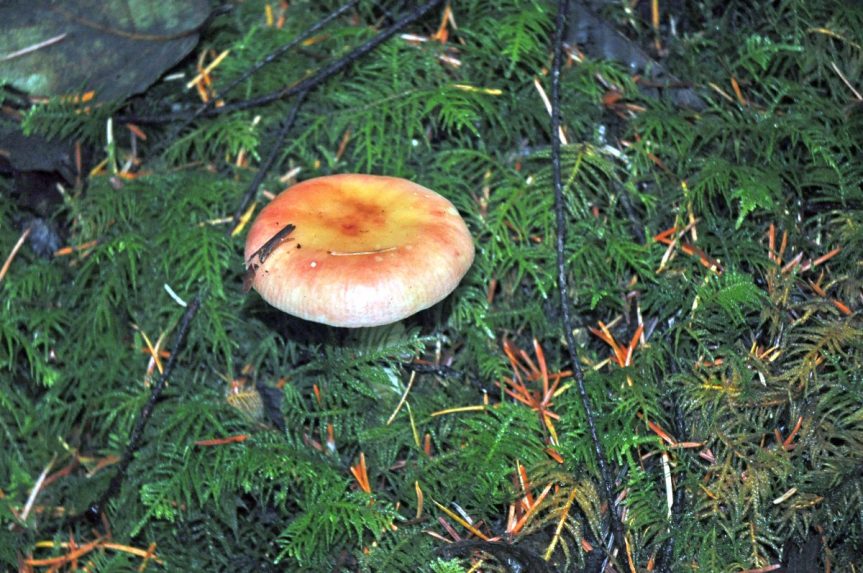
Long-time Club member Christine Woolcott again showed off her prowess with finding mushrooms, and knowing the difference between those that are edible…and most importantly, those that are not!

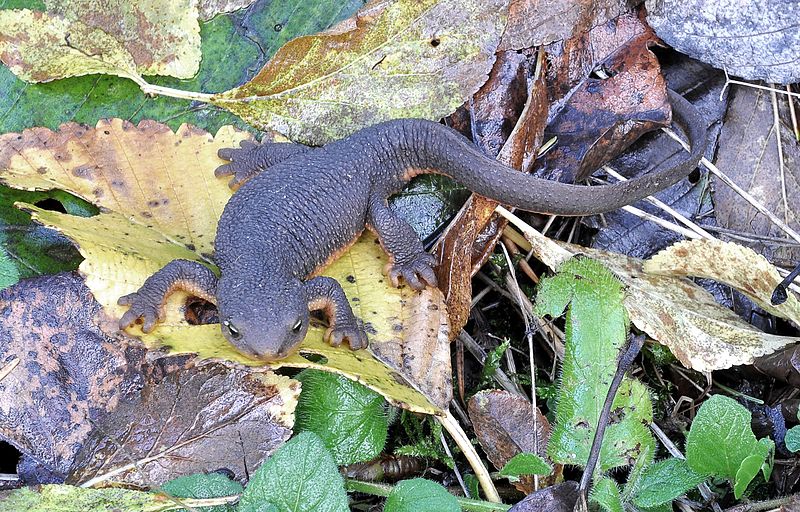
Rick O’Neil spoke to us about the ecology and natural history of newts and salamanders.


Bute Inlet grizzly tour
by Heather Harbord, 27-29 September 2008.
Bute Inlet BearTour. This was our second tour to see the Grizzly Bears. Aboard Misty Isles, we departed Lund at 9:00am and sailed up to Orford River in Bute Inlet. We dropped our gear at the Homalco logging camp and hopped on their bus for a wild ride to where two crystal clear rivers met. The native guides who drove the bus wouldn’t let us out of it until they had checked the area to see where the bears were.
Cameras at the ready, we walked a short distance onto a gravel bar where we had a prime view of the bears catching and eating salmon and the little Bonaparte’s and Mew gulls eating the leavings. We spoke in whispers if at all and watched carefully for signals from the guides to back off. As dusk began to fall, we returned to the camp where we ate a huge delicious loggers’ supper and fell into bed. Next morning we were up in darkness for a big breakfast and then drove to the viewing platforms from which we watched the dawn and the bears but did not see as many as last year.
By mid morning we were back at the boat and sailed back down to Toba Wildernest Lodge on Pryce Channel where we spent the night. In the morning we visited the Lucey graves again but still have not been able to find out much about them except that there was a small mine on the mountain above for a very short time. Unfortunately, we were never able to arrange this trip again.

John Kelly works as a Wildlife Biologist for the Fish and Wildlife Section based in Surrey. He spoke to us about cougars, including their behaviour, ecology and interactions with humans.

Beachwalk
by Heather Harbord, 21 June 2008.
The Young Naturalists met at Willingdon Beach Campground to stroll along the beach at low tide – and look for cool stuff!

Dana Lepofsky – “Archaeology of the Coast Salish Region”
by Heather Harbord, 19 June 2008
Dana Lepofsky is a professor of archaeology from Simon Fraser University. She, along with her students and members of Tla’amin (Sliammon) First Nation, have spent several years uncovering the past.
Dana’s talk focused on the results of the Sliammon & Simon Fraser University Heritage and Archaeology Project. This ambitious and ongoing effort is systematically creating a picture of the rich and sophisticated culture of the ancient people who populated the coast.
The Powell River Peak has offered more insight about her work. You can learn more about the work here and here.