A Citrine Wagtail!

A Citrine Wagtail!
By Heather Harbord, 25 November 2012.

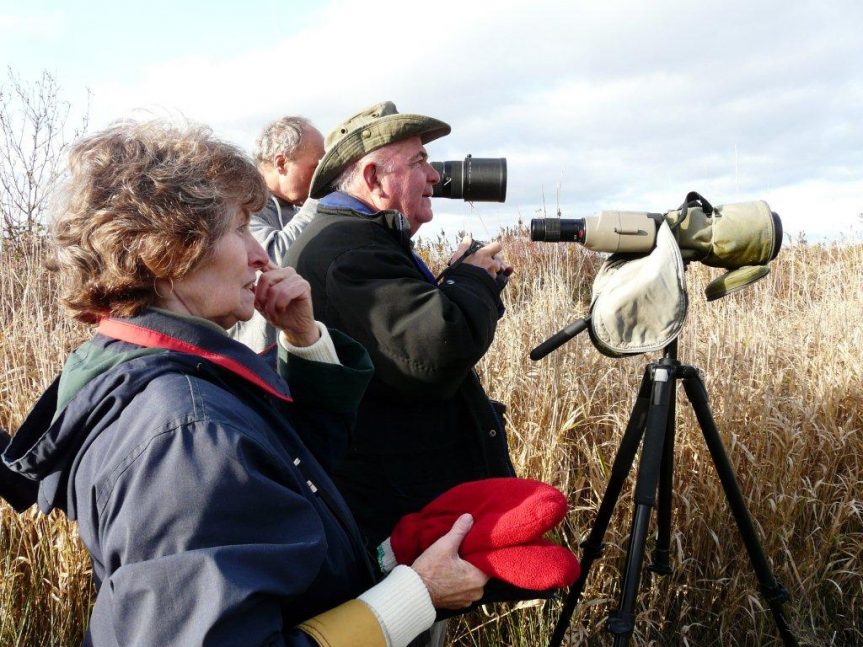
A small delegation of Malaspina Naturalists (all 3 of us) boarded the 8:10 ferry and piled into Clyde Burton’s truck on the other side.  We drove straight to where the Citrine Warbler had first been seen by Comox Valley Naturalists on Nov. 14th.

In company with birders from Nanaimo, Vancouver and Iowa we walked along the farm track carefully scanning the shallow frozen ponds on the left hand side.  We had been instructed not to go into the fields on that side.  No wagtail though some of the people we met said it had been seen at 8:00 AM.

We then drove on to Goose Spit where we found a dead marbled murrelet and watched a Glaucous-winged gull repeatedly rising up from the water to jump dive after some juicy morsel.  Although we usually see lots of dabbling ducks close to shore in this area, they were across the water towards Comox. Clyde said the last time he was down he noticed people kite surfing in the area and thought they might have scared the ducks away.

At Holmes Point, we stopped for lunch and Terry Thormin, who we met on our February 27th birding trip to Oyster Bay, drove up and parked behind us.  After the February trip, we recommended to the Speakers Committee that he be asked to speak to the club about dragonflies, which he later did.   Terry’s website is www.terrythormin.smugmug.com

Terry said we might still see the wagtail if we went back as the sun had begun to melt the ice on the ponds.  We went back only to be met by a hoard of ecstatic birders who had spent an hour with it until a Cooper’s Hawk frightened it off with a near-death experience.  Quite concerned, we walked along the track again and just as we were coming up to the brush piles on the left, the bird called and swooped across into the field on the right.  A convenient plank across the ditch led us onto a low dike from which we could see the bird some distance away busily feeding on pond delicacies.  We would have liked to have gone closer but as we were not supposed to be in the field, we stayed put.  Consequently, our pictures are not as perfect as we would have liked them to be but more people were able to see the bird which was still feeding when we left to catch the 3:15 pm ferry.

Both going and coming on the ferry we caught glimpses of murres in the middle of the Strait and lots of Glaucous-winged and Mew gulls with the odd cormorant.  The weather was cold, sunny and bright.  Perfect for bird watching and a good time was had by all.
Rob Southcott, Bob Perry and Murray Jones – “Hiking the North Powell Divide”

Rob Southcott, Bob Perry and Murray Jones – “Hiking the North Powell Divide”
by Andrew Bryant, 25 October 2012. 

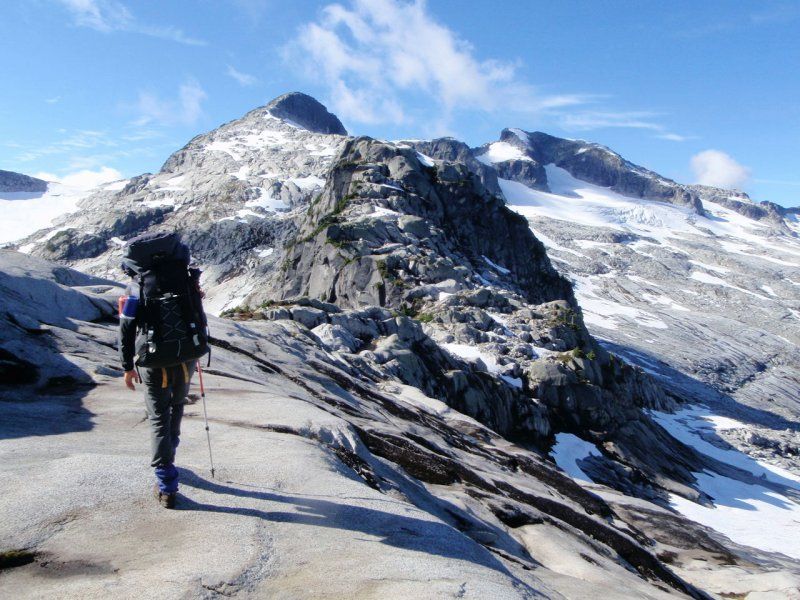
Rob Southcott, Bob Perry and Murray Jones presented “In the footsteps of the greats”, a tale of their impressive hiking adventure along the North Powell Divide.  They, together with Murray’s son Kevin, spent eight days route-finding and hiking the 50 kilometres from just south of the top of Toba Inlet, all the way south to the D-Branch road in the Eldred River Valley.

The presentation was accompanied by evocative photographs that fully documented their hike.  What a hike it was!  It involved crossing snow slopes, climbing peaks and camping with wildlife.  The presentation appealed to anyone who has, or desires to, venture beyond the safety of their own backyard.

Their incredible journey was the subject of a story in the Powell River Peak that can be found here.


The Great Mushroom Cook-out

The Great Mushroom Cook-out
By Heather Harbord, 15 October 2012. 

Dave Taylor from Texada had been asked to lead this but at the last minute declined saying there were no mushrooms.  Eight of us went to Squirrel Crossing anyway and found about 20 species.

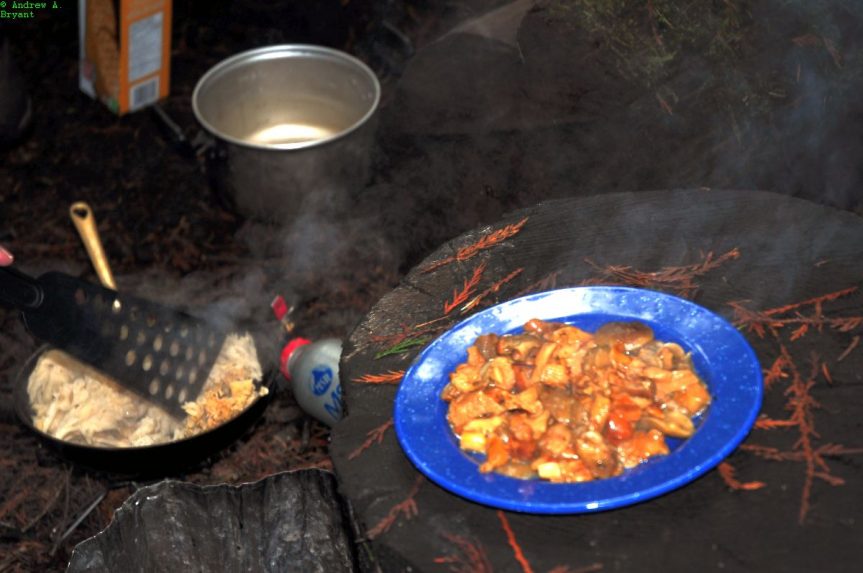
Despite a recent injury, Izi Loveluck led the trip as she knew far more than the rest of us.  Claudia Boelcke brought the huge remains of a 10 lb cauliflower mushroom which she found up Scout Mountain a few days before.  Andrew Bryant brought cooking gear and we ate the very tasty cauliflower as well as some chanterelles that we found.  This was just as well as the trip stretched into four hours instead of the usual two.

Derek Kyostia – “Coastal grizzlies”

Derek Kyostia – “Coastal grizzlies”
by Andrew Bryant, 27 September 2012. 

Derek Kyostia is a full-time interpretive naturalist who divides his time between the grizzlies of coastal BC, polar bears in the Arctic, and penguins in Antarctica.  Rough life!

Subscribing to the philosophy of conservation through co-existence, Derek strives to educate the public on bears, and bear safety.  His goal is to benefit bears and humans alike.

His presentation focused on the natural history of grizzly bears, with emphasis on what distinguishes coastal and interior populations.  Derek also included a discussion of seasonal behaviour, brought along some small skulls and other tactile props, and happily answered our questions.

Marmots on Mount Washington

Marmots on Mount Washington
by Andrew Bryant, 19 July 2012.

Sixteen of us made the first Queen of Burnaby sailing at 8:10 AM.  The day began with clear skies, calm water and great promise…

From Little River we car-pooled up the winding road to Mount Washington Alpine Resort, where we ascended to the summit via the ski chair-lift.  Not only was this method much easier on the knees, it offered spectacular and scenic views of the Comox glacier and surrounding mountains.  The discounted lift tickets generously provided by the Resort were a nice gesture (thanks to Peter Gibson…much appreciated!)

From the summit we meandered slowly 2-3 km down the steep, rocky maintenance road towards the main parking lot.  Occasionally our fearless leader (me) would pause, raise binoculars, and say, knowingly, things like “naah.  That’s just a marmot-shaped shadow/rock/shadow-of-a-rock…sorry…let’s keep looking”  Meanwhile we did take advantage of the opportunity to study alpine flora and the frisky Grey jays who obviously suspected we might be carrying food…

It was only about halfway down before we saw our first (and as it turned out the first of only two) wild marmots seen that day.  It was enough, as anyone who has had the great good fortune to meet one in person will attest, a thrilling, funny, cerebral moment.

Further down the road we stopped at the marmot breeding facility, which is a poorly-guarded secret located in plain sight, but kept strictly off-limits to the general public.   There we saw scads of marmots, met several field-researchers, and learned a lot more about the ecology and history of what used to be North America’s most critically endangered mammal.   All in all a fine day.

P.S:  On 15 September I repeated the trip with a member who had been unable to attend the July trip.

I did a little better the 2nd time, photographically-speaking.  I could even identify a particular marmot as male #327 (left ear) and #326 (right ear).  If my records are reliable then his name is “Troy“, he was wild-born at “P” Mountain in 2006 and transplanted to Mount Washington in early 2008.  How cool is that?

Banding Purple Martins

Banding Purple Martins
by Elizabeth Tenhoeve, 14 July 2012.

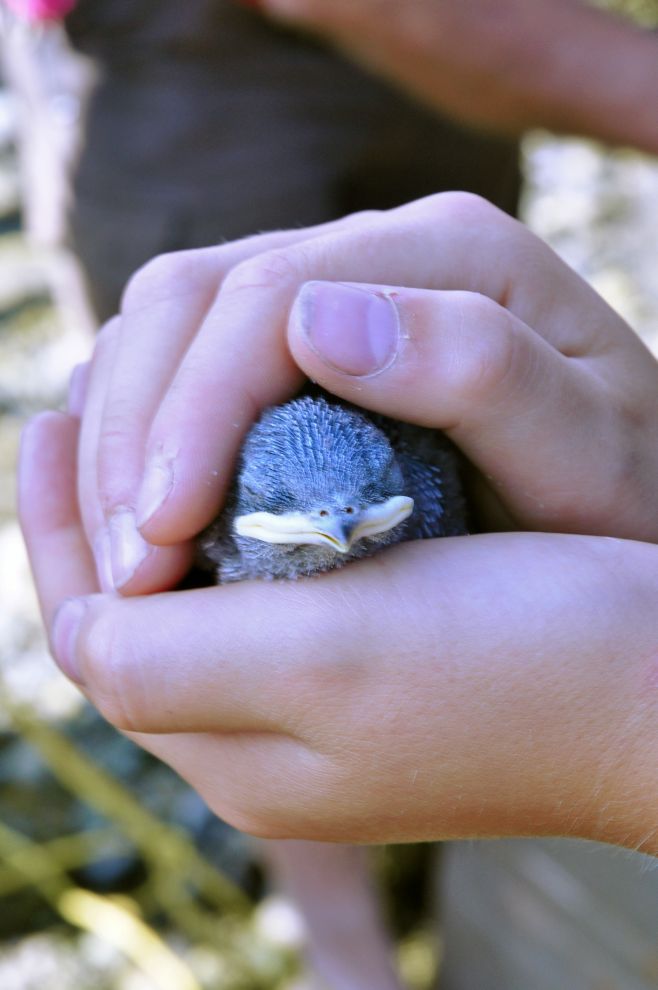
Among other things, Andrew Bryant is the local coordinator for the Purple Martin nest box project at Myrtle Rocks.  He invited the Young Naturalists along while Bruce Cousens, Charlene Lee and he collected nestlings from the nest boxes to be banded.  It was great fun, many of the children were able to hold and learn more about these beautiful little birds.

It was amazing to realise that, because of the nest boxes, populations of these once endangered bird are climbing steadily, to over 735 breeding pairs this year.  We were glad to hear it!

The Powell River Peak published a story about the Purple Recovery Program, which be found here.

Birding by canoe

Birding by canoe
By Heidi Rohard, 5 June 2012. 

The rain started in the afternoon, but it was light and there was no wind, making it pleasant enough for 10 birders to meet at Lindsay Park.  We walked around the park for a bit, but birds and other wildlife were pretty elusive except for some violet green swallows flitting about low over the water.  After coordinating canoe spaces and meeting places, 6 of us took off in 3 canoes, the rest went by car to our first stop at the bird sanctuary. Access had been granted by prior permission from the parks department.  We saw the turtle nesting beach, walked over to the entry to McFall Creek, and for a few minutes enjoyed these quiet, beautiful surroundings.  We heard a yellow warbler in the treetop, and Andrew managed to see a common yellowthroat.

The Borden Place trailer park was our next stop, but access to the lake is limited, so it was a short one.  A red-winged blackbird very loudly made its presence known in the bushes, defending its territory.  We then met up at the boat launching area off Yukon Avenue.  Betty remarked that the rain stopped only while we took a break, and resumed as soon as the canoe were set in motion.  No wonder we had some dripping wet canoeists.  Here we saw 7 Canada geese flying over our heads.  At Liz’ place we admired her beautiful extensive garden, and at the shore were about 6 sticklebacks.

We were 8 at Barbara’s place for our pot-luck dinner which turned out to be a veritable feast with Heather’s excellent moussaka, Barbara’s baked salmon, Wes’ garden-fresh salad, and other goodies.  The evening was very relaxed and pleasant.  After this refreshing afternoon I would like to encourage everyone to not let a bit of rain stop you from enjoying this great nature around our town.

Mitlenatch Island

Mitlenatch Island
By Heather Harbord, 2 June 2012.

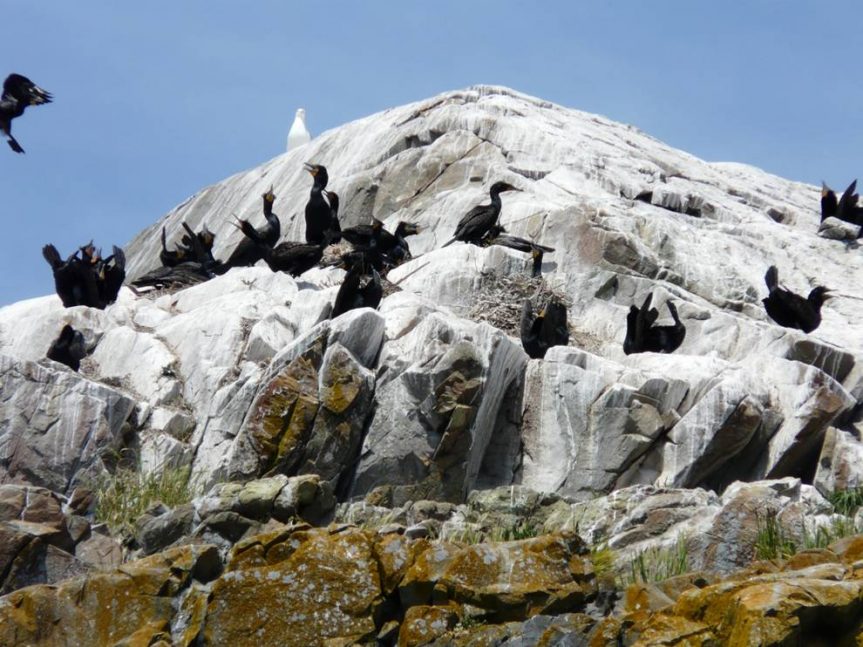
Ten members boarded the Misty Isles at Lund at 10 am and motored to Mitlenatch over calm seas as the wind did not warrant raising the sails.  Half the group went ashore while the other half circumnavigated the island by zodiac.  Although we saw both California and Steller’s sea lions there were very few of them and only one California was hauled out.  There were lots of seals and pigeon guillemots sporting their bright red legs and mouths.

Unlike other years, there were no eagles on the island and very few crows and ravens so the double-crested and pelagic cormorants were nesting in peace without having to defend their eggs from predators.  On shore the glaucous-winged gulls were courting and beginning to nest.  Pink Hooker’s onion, white death camas, blue-eyed grass and orange tiger lilies were on show along with some healthy clumps of cacti.  We arrived back at Lund having not seen a single porpoise, dolphin or orca which is unusual for this trip.

Georges Coulon – “Beetles”

Georges Coulon – “Beetles”
by Sherri Wretham, 30 May 2012

Georges is an entomologist who has lived in Powell River since 2008.   He was born in Belgium and has spent most of his life there.  He published his first paper about beetles when he was 18 and worked for several non-government organizations before joining the Royal Belgium Institute of Natural Sciences in Brussels.

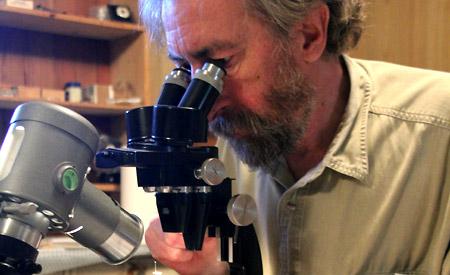
Some members may recall him being interviewed by the Powell River Peak about his beetle collection.  His beetles, specifically ant-loving beetles, was the subject of his talk.   It was quite interesting to learn above the process of describing new species, often known from only a handful of specimens.

The Powell River Peak story can be found here

Douglas fir ecosystems

Douglas fir ecosystems
By Janet Alred, 20 May 2012. 

Following the talk the evening before by Sari Saunders and Heather Klassen, Ministry of Forest Research Ecologists for the south coast, based out of Nanaimo along with Andy McKinnon, about 9 people large and small drove to Stillwater to examine the transition between Douglas Fir ecosystem and the Western Hemlock one.

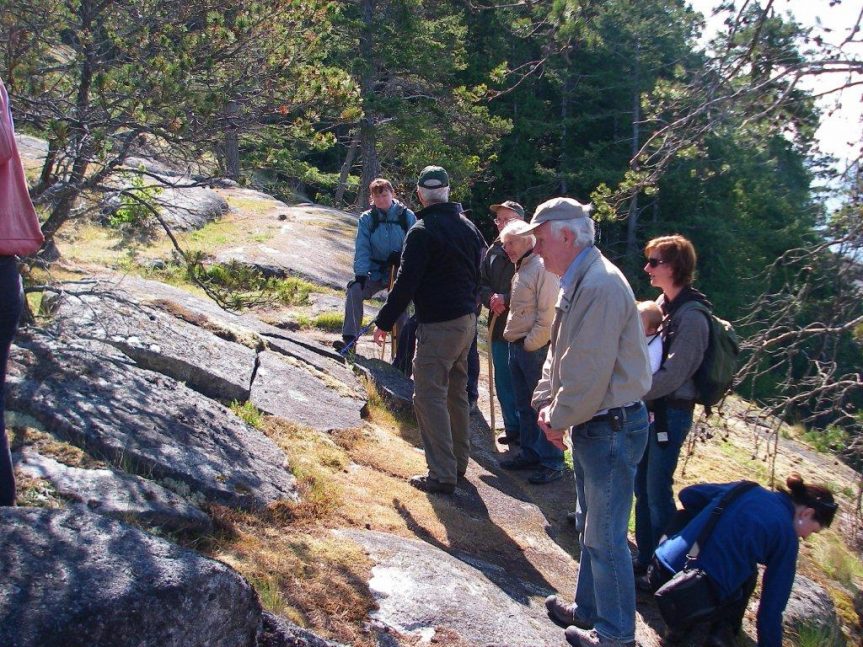
Andy did most of the talking on the field trip, pointing out that the very thick bark on a prominent burnt Douglas fir close to the trail was not an indicator of age as he has found after numerous examination of cores.  He noted that even if  red-listed plants are found in the area, their presence will not stop the logging that is scheduled.  Rachel Botting joined us and talked briefly about some of the lichens.  Although the trail leads round in a loop, once out on the bluffs overlooking the water, it got very rough so we retraced our steps.

Mason Bees and more

Mason Bees and more
by Janet Southcott, 14 April 2012.

We visited a gentleman south of town, Don Boese, who is a minefield full of information about mason bees.

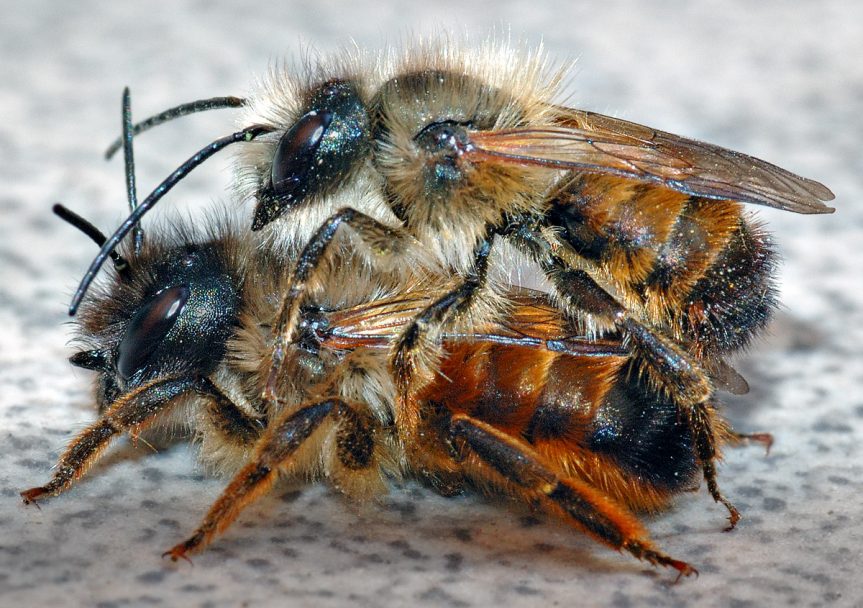
He showed a video of how to keep mason bees then helped us make mason bee boxes.  Everybody took a box home and hopefully there are many more mason bee homes now dotted around town.

Goats and the Eldred River

Goats and the Eldred Riverby Janet Aldred, 25 March 2012. 

Clyde Burton led nineteen of us to the lookout on Goat Lake where we saw the horns, eyes and splendid white coats of two Mountain Goats very clearly through Sharon Godkin’s excellent telescope.  Other dots may have been goats.

Then we progressed down the hill and on to Mile 34 where a mossy trail led through the woods to the Eldred River gorge.  Perched on the rocks, we marvelled at how so much river could squeeze into such a narrow space.  Afterwards we drove to where the road ends in a big ditch.  Some people hiked further while others watched a continuous series of avalanches and rock falls coming off a nearby peak.

On the way back, Andrew Bryant reported seeing four goats in the same place as the ones we all saw in the morning.  Having left town at 8am, we were back by about 5pm.


Christina Carrieres – “Wildlife Rehabilitation”

Christina Carrieres – “Wildlife Rehabilitation”
by Sherri Wretham, 8 March 2012. 

Christina Carrieres is the Senior Wildlife Rehabilitator for the BC SPCA Wild Animal Rehabilitation Centre (Wild ARC) in Metchosin, near Victoria.  She’s also the president of the Wildlife Rehabilitators Network (WRN) of BC.

In addition to her hands-on work with wildlife, Christina has developed specific protocols, including diet, housing and therapies, for the rehabilitation of many species of local wildlife that are being applied across the province.

Her talk focussed on the diversity of species requiring attention, and the growing need for wildlife rehabilitation services.


David Lacelle – “Hiking and Beachcombing in Haida Gwaii”

David Lacelle – “Hiking and Beachcombing in Haida Gwaii”
by Sherri Wretham, 23 February 2012. 

Dave Lacelle has been involved with environmental issues for most of his life, starting from childhood camping in a cedar lean-to, progressing to a BES at U of Waterloo, and 27 years with Environment Canada.  At the time of his talk, Dave was President of the Comox Valley Naturalists Society.

When he wants to get away from it all, he goes on a (usually) solitary month long hike/camp/beachcomb at a very remote area on the west coast of Haida Gwaii ( Queen Charlotte Islands ).  We’re talking really remote.  His favorite areas do not have established trails, or even flagging tape!  Dave does not usually see anyone else.

In the last 30 years of these retreats, he has made many discoveries, and had more than a few adventures.  His presentation included scenic pictures of old Haida sites, odd findings, five message bottles, and some comments on ocean pollution, as well as local ecology and geology.

Andrew Bryant – “Recovery of Vancouver Island marmots”

Andrew Bryant – “Recovery of Vancouver Island marmots”
by Andrew Bryant, 19 Jan 2012.

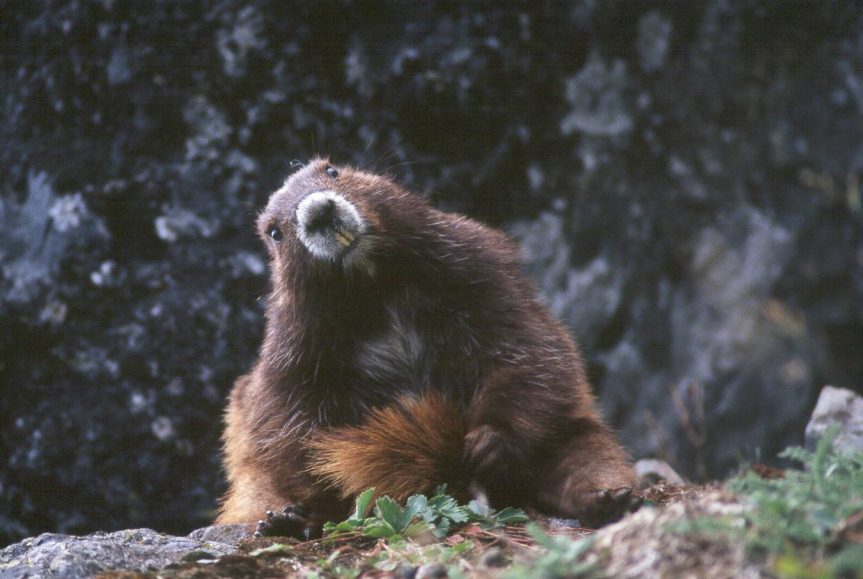
I had the great good fortune to spend over twenty years working with what used to be the most critically endangered mammal in North America, the Vancouver Island marmot (Marmota vancouverensis).

Mine was a detective story, for that is what science is.  How do we know what we think we know?  The story of Vancouver Island marmots is one of blind alleys, mistakes, and plain bad luck.   The world population declined during  the 1990s to a few score remaining in the wild by 2003  (the estimate was ~30).   At the last hour, a recovery program based on captive-breeding and reintroduction began in 1997.

Slowly at first, but with growing momentum, a team of dedicated researchers, loggers, naturalists, veterinarians, housewives, architects, financial planners and schoolchildren began to raise the resources necessary to solve the problem.  The captive program was successful and reintroductions began in 2003.  A decade later the wild population has rebounded to over 300 individuals.

Although not out of the woods yet, the Vancouver Island marmot story is no longer one of impending doom.  Instead, these lovely animals offer a wonderful story of forensic science, and a compelling tale of hope.

Michael Stewart – “Gallivanting in the Galapagos”

Michael Stewart – “Gallivanting in the Galapagos”
by Sherri Wretham, 24 November 2011. 

Michael presented a lovely slide show of her seven day tour of some of the archipelago’s inhabited islands and surrounding waters.  The emphasis, of course, was on the fauna and flora.  We all wanted to go!


Naked Eye Star-gazing

Naked Eye Star-gazing
By Janet Alred, 22 November 2011.

On Tuesday Christine Woolcott met with six would-be star gazers for an indoor get acquainted session.  Using simplified diagrams, Christine showed us how to use Orion to find Taurus, the Pleiades, Auricula (?), Capella and her three goats, Castor and Pollux, Procyon and Sirius.

A few nights later we went out in the evening but, although we could see some of these constellations, clouds obscured others.  A second indoor session was held a week later but after that the cloud cover never lifted and our teacher took off for Arizona from where she e-mailed to say she could see everything!

A spring sky indoor session has been scheduled for April 8th.

Rambling with Clyde Part II (seabirds)

Rambling with Clyde Part II (seabirds)
by Andrew Bryant, 16 November 2011. 

Our resident naturalist, Clyde Burton, took seven members to Gibson’s Beach and Sliammon waterfront on Wednesday.  Gibson’s Beach produced three herons in the trees and Glaucous-winged gulls almost at our feet.  We stayed only long enough to separate the different age groups.

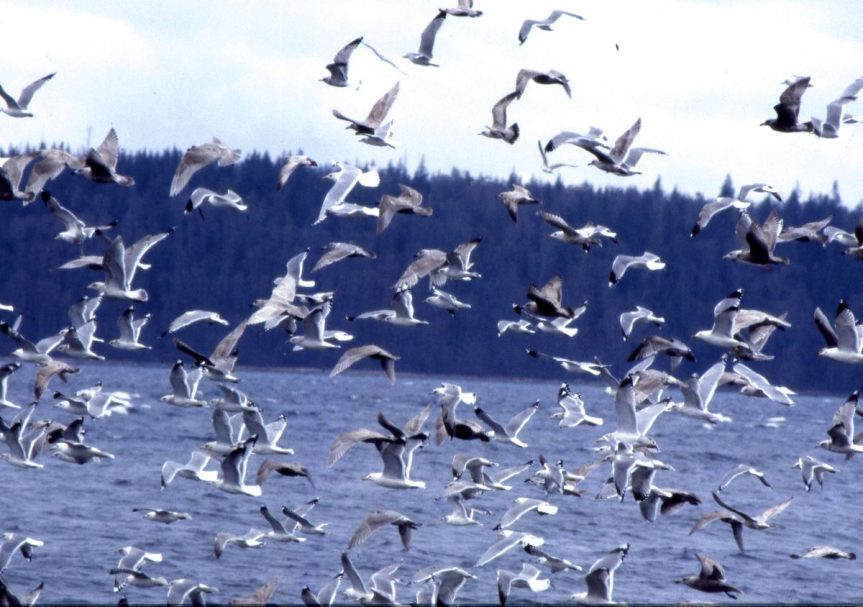
At Sliammon we saw several hundreds of gulls, the majority being Thayers.  Among them were Glaucous-winged gulls, Mew and one Herring gull.  In addition, all three mergansers were there, Golden-eye, Bufflehead, various scoters, Mallards, Gadwall, Green-wing teal, American widgeon, Black oyster catchers and Black turnstones plus Two killdeer.  Crows and Ravens also blessed us with their presence.

We stayed by over an hour till the wimps among us were driven away by a cool breeze.

Shoreline birds

Shoreline birds
by Janet Southcott, 15 Nov 2011.

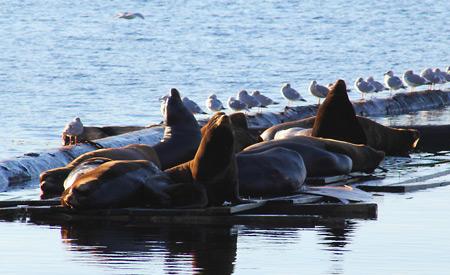
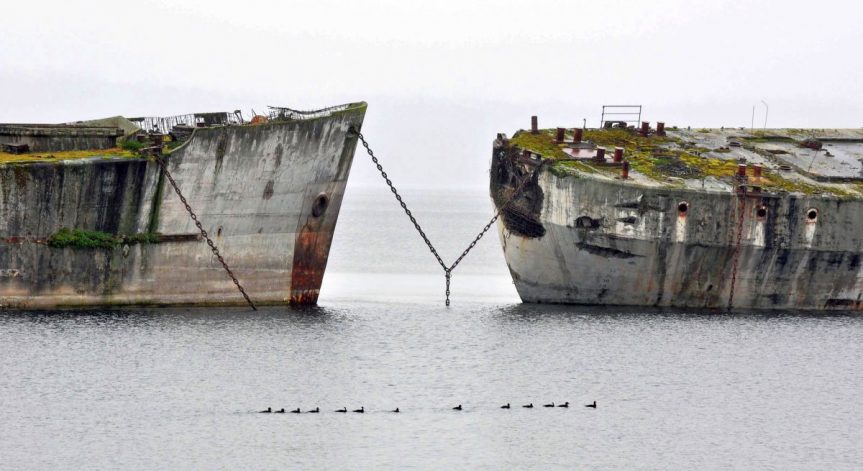
We went down to the Hulks, at the south end of Catalyst Paper Corporation mill and looked at the Californian and Steller Sea Lions in the log-sorting area.  We were lucky to see both species together as it was easy to tell them apart.  We also saw shoreline birds such as surf scoters, Barrow’s goldeneye and bufflehead, plus cormorants and common loons.

David Largent – “Collecting mushrooms in Australia”

David Largent – “Collecting mushrooms in Australia”
by Sherri Wretham, 20 October 2011.  

Dr. David Largent is a mycologist and former Professor of Botany at Humbolt State University in California.

David spoke to us about the mushrooms he’s studying in Australia.   The talk emphasized the two areas in which the research was done, namely The Wet Tropics Heritage Areas in far northern Queensland and the temperate rainforests in central New South Wales.  

He showed the vegetative areas in which he collected, and the diversity of a few of the mushrooms found in those areas.  The talk provided good views of the areas, things to avoid when visiting, things that are really interesting, and introduced a few of the people with whom he was collaborating.

Hernando Reef tour

Hernando Reef tour
by Heather Harbord, 15 July 2011.

Tide pools

Tide pools
by Janet Southcott, 15 June 2011. 

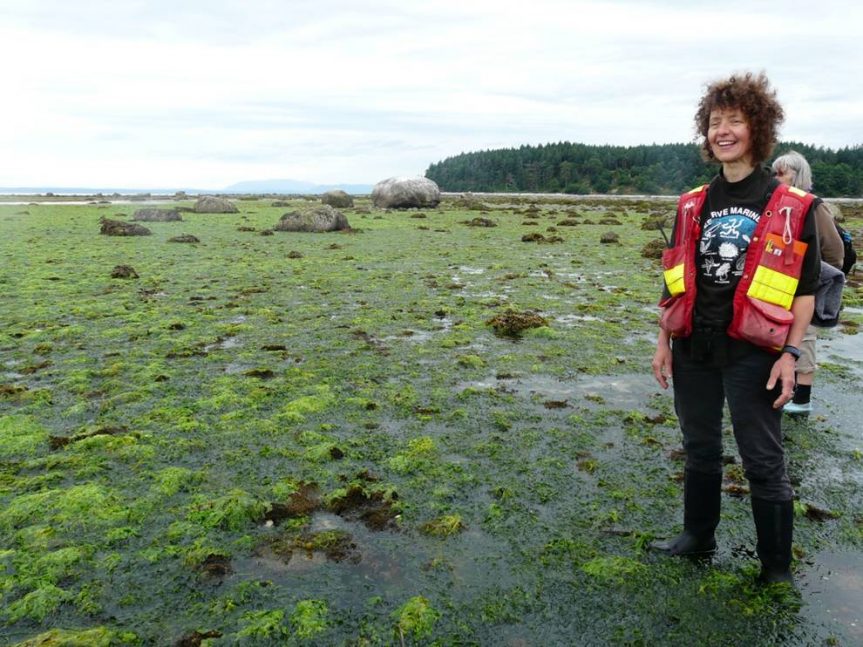
For the second time since the club was created, we ventured down to the shoreline below the Sea Walk on an extremely low tide to look in the tidal pools and find some fantastic creatures that show nature has fun with colours and shapes.  We found fish, sculpins, in jazzy colours and crabs both dead and alive, big and tiny. 

There was lots to see and explore!

Spring wildflowers with Andy McKinnon

Spring wildflowers with Andy McKinnon
by Janet Alred, 20 May 2011

On Friday 22 people showed up at 8am to meet the previous night’s speaker, Andy McKinnon.  Although the campsite was in shadow at first, gradually it warmed up as the sun reached it.  Nodding onion, Chocolate lilies, Sea blush, Monkey flower, Shooting stars, Blue-eyed Mary, Death camus, Saxifrage, Saskatoon, Salal, and many others were examined and commented on before the session ended at 10:00 AM.  Andy had just enough time to catch a coffee at Nancy’s and make the noon ferry home to Metchosin.

Turtles at Cranberry Lake


Turtles at Cranberry Lake
By Janet Alred, 13 May 2011. 

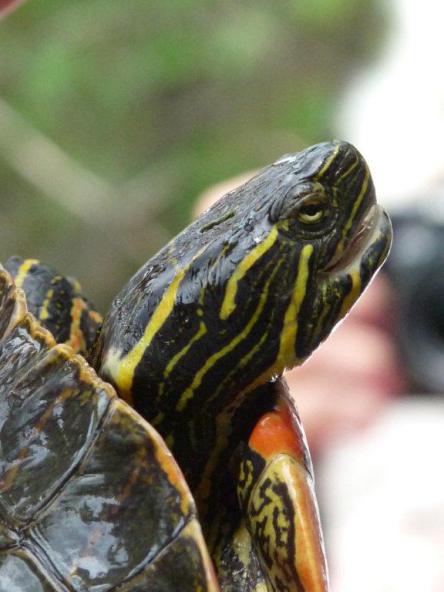
Following the most interesting lecture on these endangered turtles by Vanessa Kilburn, our field trip took us to Lindsay Park at the north end of Cranberry Lake.  Here we were met by Vanessa and her colleague Aimee Mitchell, as well as photographer of amphibians, Terry Brown and partner Jude Abrams.

After a brief discussion of the preferred habitat of the turtles, we drove to the bird sactuary by the lake.  Vanessa explained the building of the turtle nesting beach that she organized last September with the full support of the city.  It is hoped that the turtles will use this patch of soft gravel to lay their eggs instead of wandering outside the sanctuary.  From the end of May to the end of June volunteers will be watching this area for nesting activities and reporting those to Vanessa and photographer Terry.  A couple of basking logs were installed close to the shore to provide a convenient basking place.

Vanessa treated us to some animated demonstrations of turtle behaviour, such as how they feel the temperature of the nesting area with their outstretched necks.  There are so many little known facts about the Western Painted Turtle, it is worth learning more about them.

Vanessa Kilburn – “Western Painted Turtles”

Vanessa Kilburn – “Western Painted Turtles”
by Heather Harbord, 5 May 2011. 

Vanessa Kilburn is an independent biologist who, for over a decade, been active in the fields of conservation biology and herpetology, both in Canada and abroad.   Some of her work in conservation work in Canada has been described here.   Vanessa also works with the Toucan Ridge Ecology and Education Society (TREES) in Belize.

Her talk focused on the life history and conservation of painted turtles, with particular attention paid to local populations on Texada Island and at Cranberry Lake.

The Powell River Peak published an article about some her local work here, and she also led subsequent field trips to Cranberry Lake, and Emily Lake on Texada Island, where members gained additional hands-on experience.

Geocaching

Geocaching
by Janet Southcott, 9 April 2011.
 

We went on a hike through the woods around Powell River Recreation Complex, led by Bonnie Kent.  This was an introduction to geocaching.  The children learned to use GPS units to find caches.  Then they created and hid their own.

It was a lot of fun and we saw many more things as we explored the forest.

Texada karst and caves

Texada karst and caves
By Janet Alred, 25 March 2011.
 

Following his talk the previous evening, on Friday John Dove led a field trip for eleven members to Stromberg Falls and Marshall Point. At the Falls, we saw a creek exiting a cave and running into a swallet concealed under our feet. Then we went up to where a sink hole gurgled about 10 metres below us. The group then scrambled down to the foot of the falls before returning to the cars.

Lunch was on the sheltered side of Shelter Point as a howling southeaster was blowing into the south facing beach. Afterwards down at Marshall Point we looked at chemically weathered grikes and ran our fingers over a razor sharp edge honed by the mixture of seawater and limestone. We finished just as the rain started just in time to catch the 3pm ferry.