A Walk in the woods with Frank Ritcey and Hugh Marshall

A Walk in the woods with Frank Ritcey and Hugh Marshall
by Barbara Sherriff, 16 September 2016.

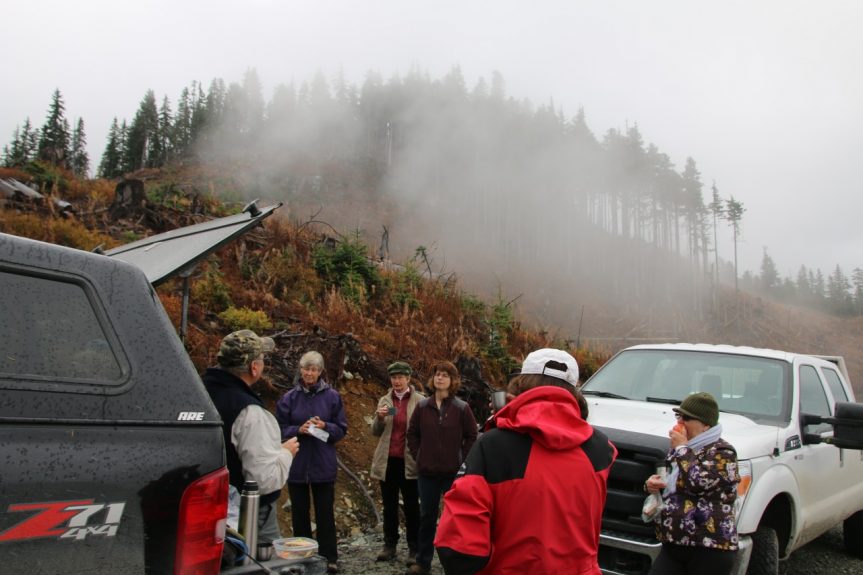
Sixteen members of the Malaspina Naturalists joined Frank Ritcey (Wildsafe BC coordinator) and Hugh Marshall (forester) for an interesting and educational walk along the Millennium Trails at the rear of the Recreation Complex.

Things we learnt included:

  • Bear bells attract bears rather than repel them (a.k.a. dinner bells)
  • Whistles can sound like distressed small animals and attract bears
  • Bear spray deters bears, cougars and wolves even if you don’t hit the animal. Do not walk in the woods without a can
  • Bears dig up rotting stumps or mud wasp nests to look for larvae leaving holes in the ground
  • Bears drag garbage bags into a “staging area” in the woods to enjoy it in peace
  • Conifer species vary in their light requirements, which influence the structure of the forest. Hemlock and cedar, for example, tolerate shade and commonly come in under the more light-demanding Douglas fir and broadleaved species.
  • If a bear is huffing and puffing, it is being defensive
  • If a bear is coming towards you quietly (stalking like a cat), it could be considering eating you
  • Cougars only attack weak prey so always fight back if attacked
  • spit bugs should be called fart bugs as the air inside the bubbles does not come from their mouths
  • Slugs have just one asymmetric breathing hole on the right side of their head
  • Trees can control the local water table aggressively pulling up water from a wide area.
  • Cutting down trees will change the water table considerably
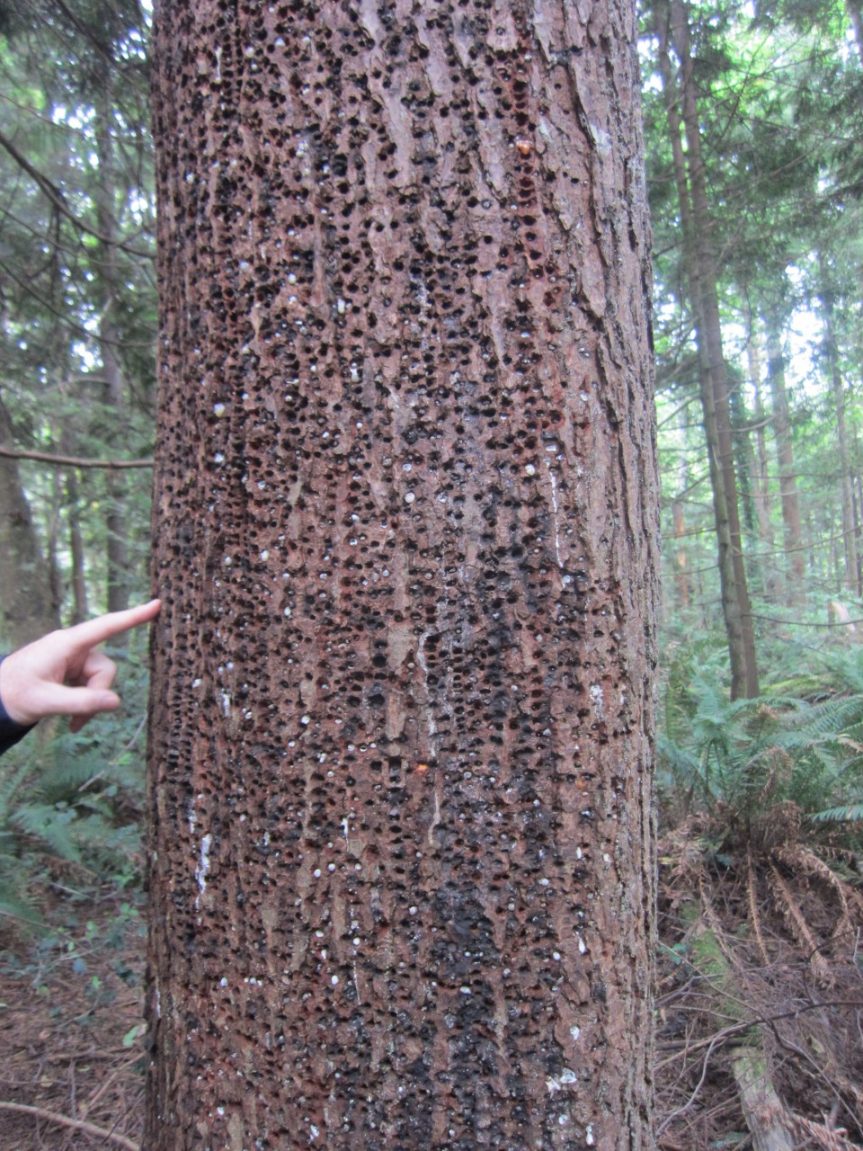
  • Sapsuckers feed on both the sap and the bugs that come to feed on the sap oozing out of holes that they have drilled in a tree

Frank Ritcey – “Staying safe on both sides of the glass”

Frank Ritcey – “Staying safe on both sides of the glass”
by Andrew Bryant, 15
 September 2016.

Frank Ritcey  was raised in the wilds of Wells Gray Provincial Park, and like his parents became a lifelong naturalist and conservationist. He works for WildSafe BC, is heavily involved with the Kamloops Naturalists Club, and spends much of his time filming, teaching and guiding.

Frank began with a beautiful film of grassland wildlife to introduce his topic: how can we minimize impacts on the wildlife we observe, and keep ourselves safe at the same time?    He discussed things like how to avoid being bitten by a rattlesnake (“for starters, don’t poke it with a stick”) or eaten by a cougar (“stand tall and fight back”).

He also highlighted the Wildlife Alert Reporting Program (WARP) , which logs wildlife-human encounters in BC.   Data reveal that Powell River is home to black bears and, as Pogo said, “we have met the enemy and he is us“.  Poor garbage management, unpicked fruit, and attractants such as bird feeders are at the root of most bear problems – and all too often it is the bear that pays.

And what if you’re out in the woods?  Bear-bells and bear-bangers are now considered passé, it seems.  Pepper spray is recommended.  But experts also recommend that you ensure that your can of pepper-spray is not past its expiry date, that you know how to use it – and that it’s not buried in the bottom of your pack when you need it!

We’ve have some good speakers over the years, and some talented photographers.  But in what must be a first for our club, we ended the evening with a rousing chorus of moose-calling…seriously.

Not to be missed.


But if you did, Frank has posted an appropriate YouTube video.

https://youtu.be/36q8sHC6Kg4

Rock Art with Judith Williams

Rock Art with Judith Williams 
by Michael Stewart, 15
 September 2016.

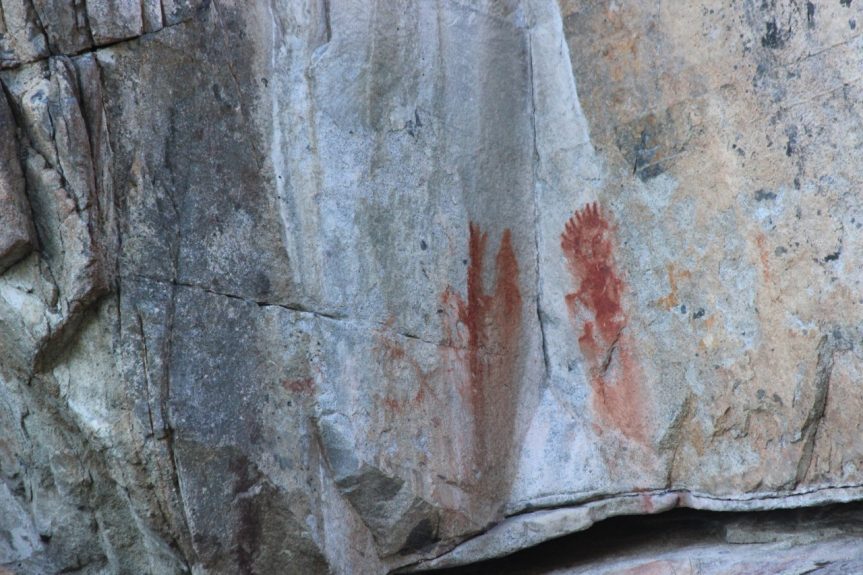
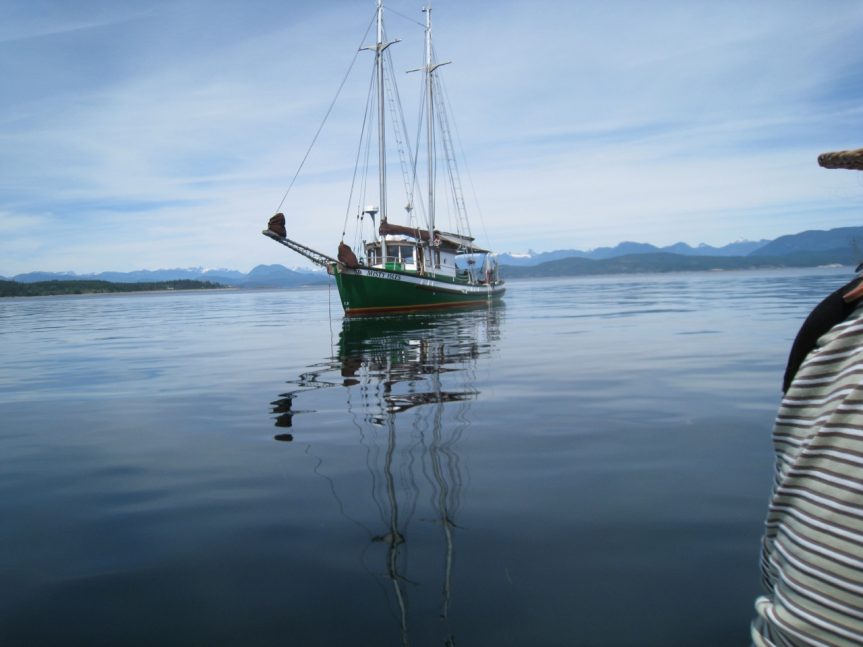
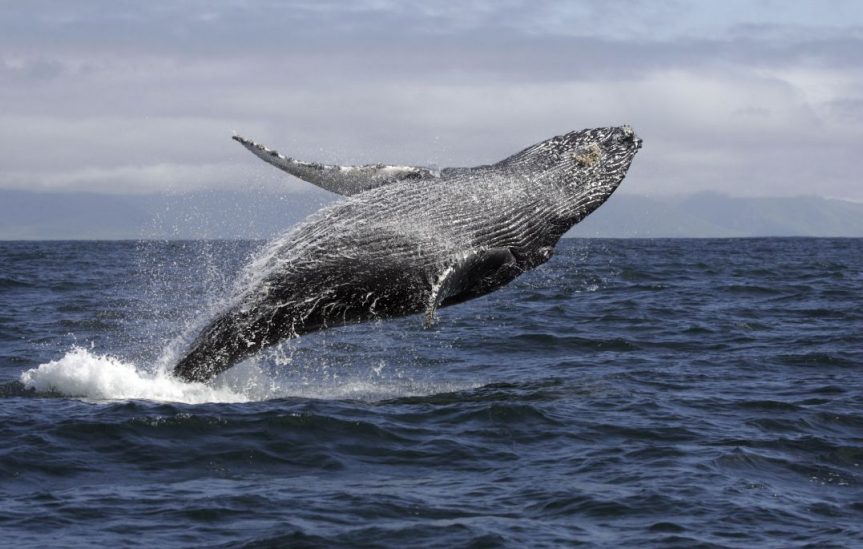
Mike, skipper of Misty Isles, his wife Samantha, guest historian Judith Williams, and six naturalists departed Lund Harbour, thrilled to hear that there were  Humpbacks just outside the harbour.  We were able to watch the 2 humpbacks  and have  this extra  unplanned “event”  for the beginning of our 2 day voyage.  The weather was perfect and  the scenery is so amazing.  We  motored up Thulin Pass to see  the first pictograph of our trip.  It was very interesting to see what animal was in the pictograph!

We continued past Sarah Point and into Desolation Sound while hearing many tales from both Judith and Mike.   The seas were calm  and visibility was perfect so we enjoyed the   wonderful scenery; then we went north into Waddington Channel where Mike found the location of the next pictograph near  Durham Point on East Redonda Island. We continued up Waddington Channel to Walsh cove on West Redonda Island where  Misty Isles  anchored.  From the zodiac, Judith pointed out and explained the pictographs and was delighted to point out the magical dancing reflections on the same rock faces.

Sarah presented us with a  tasty home-cooked lunch on board and then Judith  demonstrated rock art by mixing us red paint with a base of pulverized salmon eggs.  Each person   painted an example of their own rock art.

We continued west through Pryce channel where we saw some seabirds, a Dall’s porpoise,  another  pictograph and more wonderful scenery.  At the end of the afternoon, we landed in Evans Bay on Read Island to stay at Coast Mountain Lodge overnight.  We  were presented with an amazing home  cooked(Samantha) gourmet dinner and enjoyed the company of the owners, Ralph and Lannie, and their son and staff.  Many more stories were enjoyed.

After breakfast in the lodge, we set out towards Quadra Island.  We anchored and all went ashore in the  Zodiac to see a petrogylph that Judith had not yet seen.  It is in a beautiful setting just north of Rebecca Spit Marine Park.  The rock formations were amazing let alone the petroglyph.

Back on Misty Isles, we  continued through Uganda Pass and  the entrance to Gorge Harbour on Cortes island to see more  pictographs.  We  were entertained with more tales of early settlers and First Nations culture from our skipper and  Judith and then another wonderful  lunch  prepared by Samantha.  We  had  a sunny, calm trip all the way  back to Lund.


East Thurlow Island

East Thurlow Island 
by Caroline Brown, 29
 Aug 2016.

Pictographs, a “brand new” petroglyph, exotic geology, whales, dolphins, stories of gin and tonic sailors, mistresses, tall and not-so-tall tales were some of the highlights for twelve of the Malaspina Naturalists as we headed to East Thurlow Island aboard the Misty Isles – for three whole days!

For most of us, this was a new area to be explored and although the weather was not totally cooperative, it was a great three days and two nights (Aug 27-29). Mike Moore and his crew, Jonah Weyler, welcomed us in Lund and we set sail – well, not actually.  Although Misty is a gaff rigged schooner, Mike used its “functional seaworthiness of a west coast troller” for this trip.

Our first sighting was toward Little Mitlenatch Island, or as Mike calls it, an orca snack bar and also a hangout for glaucous-winged gulls and cormorants. As we passed through the waters of gorgeous Desolation Sound, known to have as many as 300 boats in Prideaux Haven, Mike reminded us of Captain Vancouver’s 1792 journal notes describing this area as “gloomy and dismal….dreary rocks.” Perhaps, but certainly not for us!

After travelling through the Gillard Pass and around the northern side of East Thurlow Island, our first night was on West Thurlow Island at Blind Channel Resort, originally the site of a thriving cannery.  A delicious salmon dinner completed Day 1.  Our accommodation was luxurious in the two, new, two-bedroom cabins, although one of our group opted to sleep on MI.

Before breakfast Sunday, several of the group explored the well-maintained trails behind the resort.  Soon after cast-off, Mike scooted to Mayne Passage, finding us 002 Pod – four orcas, including Tumbo, a large male with a bend in his fin. And later in the day, in Nodales Channel, we were entertained by a school/pod of Pacific white-sided dolphins.  The day had been chilly and wet and we all appreciated the warmth of the fireplace at Discovery Islands Lodge.  Our third meal of the day (all meals were provided by Mike and Jonah, with thanks to the pre-preparation of Mike’s wife, Samantha) was equally enjoyable.  The spacious, welcoming “great room” of the lodge allowed for good conversation.

Following a yummy breakfast prepared by our lodge hosts, we began our homeward journey.  Only the wished-for humpbacks were missing.  BUT the next day, our two Victoria participants saw a pair from the ferry.

Thanks to all our eclectic, delightful and well informed travelling companions for a memorable trip!


Marmots at Mount Washington

Marmots at Mount Washington 
by Lu Wuthrich, 13
 August 2016.

On a sunny Saturday eleven of the Naturalists went up to Mount Washington for a second Marmot tour, led by Andrew Bryant.

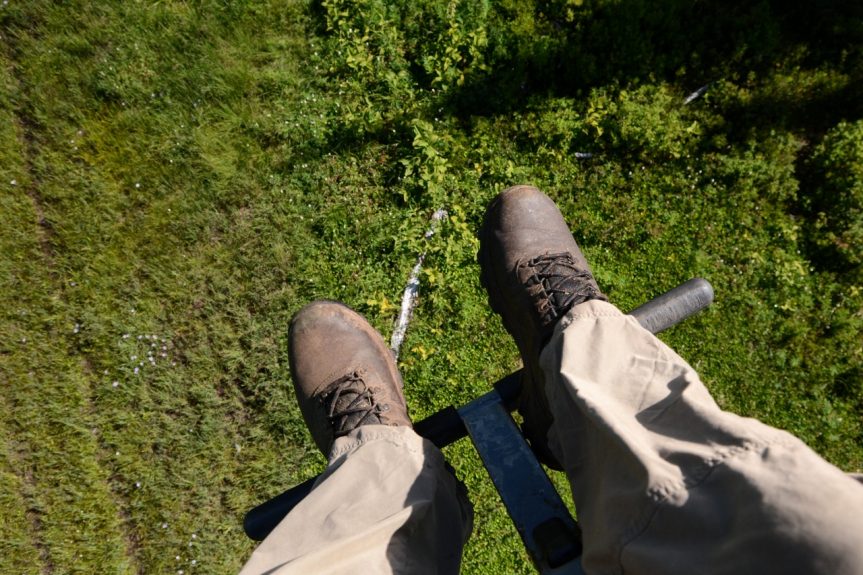
We were on the chair lift early in the morning and had a sunny, clear day to view the wonderful vistas around the top of Mount Washington.   Andrew chose several areas to stop and give the group a comprehensive history of Marmots, their habitat and behaviors.  He also discussed the local ecosystems, clear cut logging and the history of the Marmot Breeding Program and building on Mount Washington.  We had one sighting of a large Marmot in a beautiful meadow; the alpine meadows were in their full glory.

The group left with a good understanding of Marmot ecology, predation and current issues.

Thanks to Andrew and the members that made this trip such a pleasant experience.


Mitlenatch Island

Mitlenatch Island 
by Tom Koleszar, 19
 July 2016.

On July 19 the Malaspina Naturalists made the annual trip out to Mitlenatch Island, departing from Lund once again aboard the Misty Isles with Captain Mike Moore. The weather was a bit cooler and windier that we are used to in mid-July – but at least the wind meant we had the opportunity to raise the sails!

Mitlenatch Island Nature Provincial Park protects the largest seabird colony in the Strait of Georgia, and, since its boundaries extend 300m from shore, all marine life near the island as well.

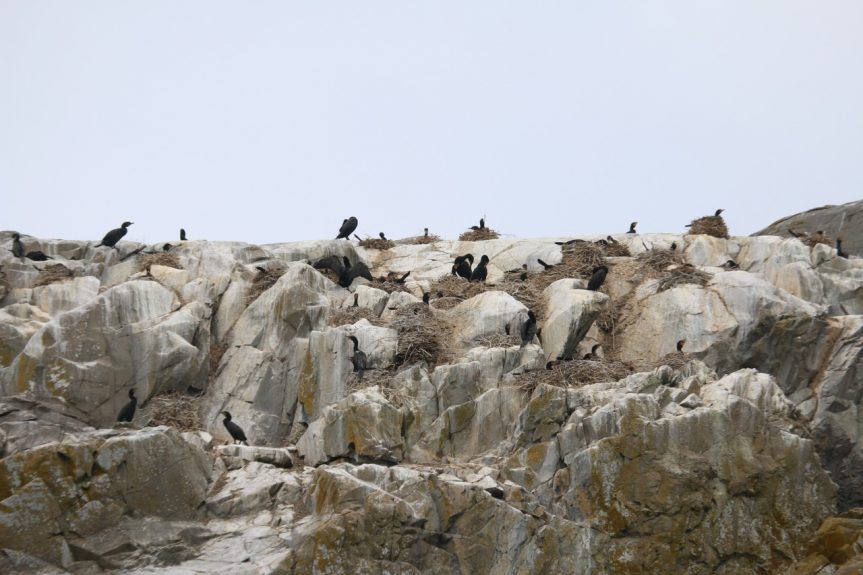
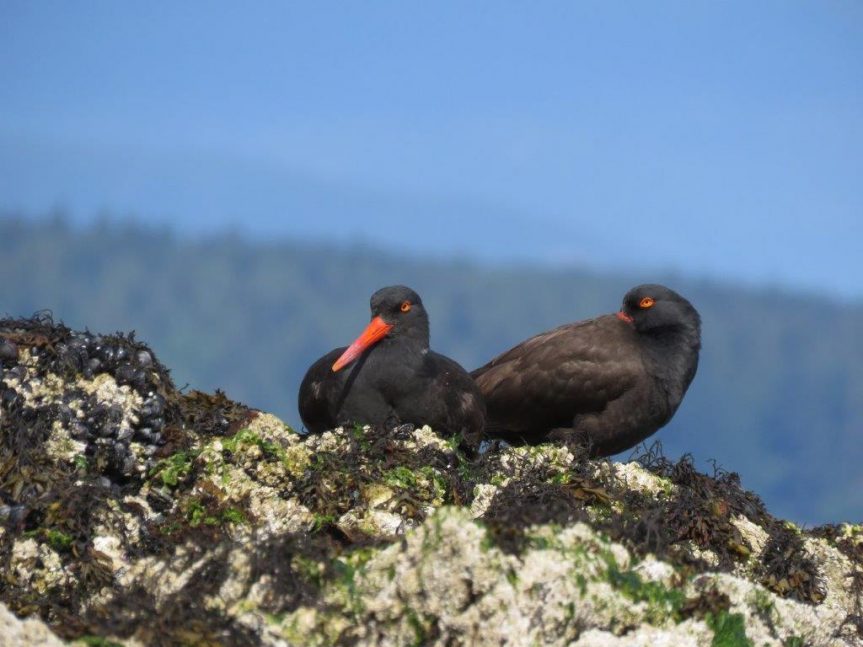
The group split into 2 parts and took turns going ashore and viewing the island and its wildlife from the zodiac. The group ashore saw a few wildflowers still blooming, but the highlight was viewing the gull chicks from the bird blind. We were able to see many ~2 week old chicks at very close range! Unfortunately due to the blustery weather, the zodaic was not able to circumnavigate the island. We had to stay mostly on the north and west sides, but still saw lots of seals and many seabirds, including Glaucous-winged Gulls, Double-crested and Pelagic Cormorants, Pigeon Guillemots, and Black Oystercatchers. Insome places the rocks and cliffsides were covered in nesting cormorants!

We all had a great time at Mitlenatch Island, and then enjoyed a relaxing trip back to Lund on the Misty Isles (complete with tea and cookies!).


Plant Walk with Ioni Wais

Plant Walk with Ioni Wais 
by Laurette Hamoline, 26
 June 2016.

A small gaggle of enthusiastic naturalists (about 10-12 of us) gathered in Willingdon Park on Sunday to learn about plant classification.  Ioni Wais was our charming and knowledgeable guide as we wandered around the grounds learning about strange “relations” in the plant kingdom.  There are numerous ways in which we categorize plants but the main one both taxonomists and us regular folk use is a plant’s morphology, or how it looks. We observe the color and shape of the blossom and of the leaf and stem.  Is it tall or short?  Where is it growing and when?  Does it have a taproot, a fibrous root or perhaps a rhizome?  How does it disperse its seed – through the digestive system of animals, by wings like dandelion fluff or perhaps with hooks like a burr?  These are all helpful in determining what family it may belong to but taxonomists go even deeper, studying the chemical compounds found in plants and even DNA to help them determine “family traits”.

The suffix “aceae” designates the family name.  For example, po-“aceae” refers to the grass family, which is a huge family including our grains, corn, sugar cane and bamboo.

In the araceae family, also known as arums, there is usually a spadix (stem with flowers/seeds) surrounded by a spathe (leaf like structure) such as in the skunk cabbage.  Some members of this family are thermogenic, creating their own heat, even melting through snow or ice.  The flowers are often stinky in an effort to attract insects necessary for pollination.  An interesting tidbit is that when bears break hibernation they seek out and consume skunk cabbage (with high concentrations of calcium oxalate) not as a food source but as a laxative to get their sluggish system functioning again.   Plantain, commonly found in our lawns, belongs to this family and has been referred to as nature’s bandaid because of its many medicinal qualities.

We learned that the ranunculaceae family, which includes the common buttercup, likes moist conditions and the word ranunculus means “little frog”.

Within the polygonaceae or buckwheat family, many species exhibit a zigzag pattern on the stem with swollen nodes at each bend. The name is derived from Greek where “poly” means “many” and “goni” means “knee”.  Japanese knot weed is a good example of this trait.  There is also most often a sheath which covers the new growth.  Think of your rhubarb when it first pops out of the ground.

Ioni made a valiant attempt to correct a few common misconceptions.  There is no official or even universal classification for weeds or even invasive species.  These are subject to the environment, political situation and even our own personal preferences.

Trees are not classified as coniferous opposed to deciduous.  There are coniferous trees that lose their foliage in certain seasons and trees with leaves that are evergreen.  Never mind what you were taught in school way back when!!

And it was very interesting to look at the inflorescence (proper name for the blossom) of different plants. Sunflowers and dandelions are composite flowers with a compact flower head consisting of hundreds of individual florets surrounded by many bracts or rays.  And common yarrow or even cauliflower is a large cluster of florets.

So have a closer look at the plants around you.  You might just learn something!


Hernando Reef with Rick Harbo

Hernando Reef with Rick Harbo 
by Julia Young, 5
 June 2016.

On a calm sunny morning the Misty Isles, captained by Mike, left Lund with 12 passengers.   En route to the reef, Mike used his navigational maps to illustrate the uplifting of peaks around us, the carving of deep channels by ice, and the effects of tides, currents and water temperature on the diversity of ecological zones and marine life in the region.

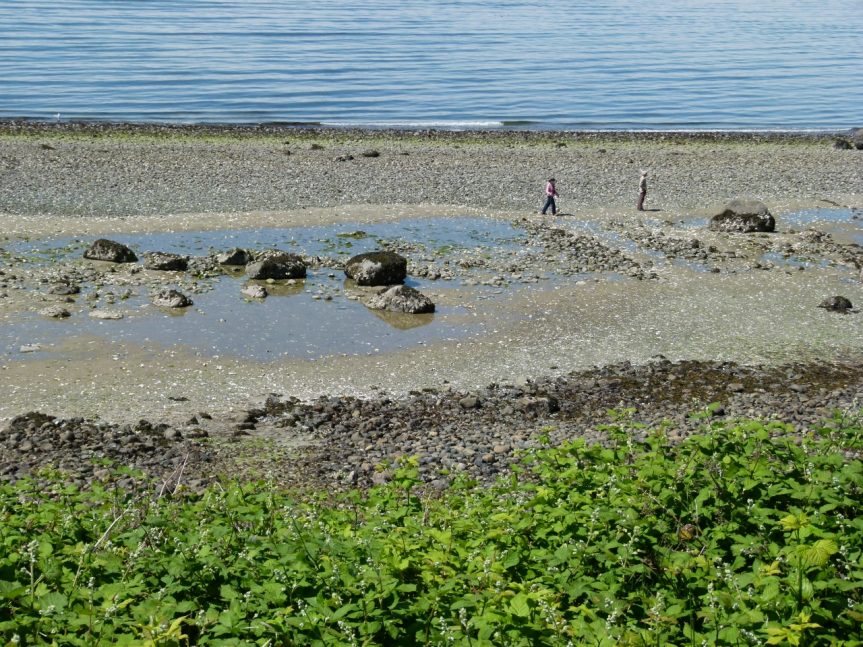
As we closed on to Hernando Reef, the vivid green, waving sea grass, darting fish and scurrying red rock crabs in the shallows under the Zodiac was the start of a fascinating few hours exploring the myriad life on the flat rocky reef, guided by renowned marine biologist Rick Harbo, on a day and time of the year’s lowest tide.   Much of the life at the reef’s shoreline was hidden under numerous species of green, red and brown seaweeds, from the prolific invasive Sargassum from Japan to the most delicate and coral-like structures.

As a shell and shellfish specialist, Rick found and identified for us a huge variety of clam, oyster, cockle, snail, limpet and chiton species, ranging from tiny 1 or 2-year old limpets and oysters clinging to shells and rocks to the big horse clams with their huge gaping siphons.

At this lowest of low tides all forms of exposed life are forced to find shelter under seaweed and rocks.  Most carefully upturning and then replacing rock after rock, Rick pointed out and described the interdependent life of dozens of shell, crab, sponge, shrimp, slug, fish species akin to complete ecosystems.   Of special note for us, were the 4 to 6-inch male “midshipmen” fish guarding the large orange eggs laid by the females on the undersides of small boulders.   Some of these same watery nooks were home to literally dozens of animal species of all shapes and sizes, some hardly identifiable by beginners as animals at all.  This was an amazingly rich experience for us and we all felt most grateful to Rick for giving his time to us.  But we know he enjoyed it too.

As the zodiac returned us back to the boat, we counted fifteen eagles soaring above and sitting on the rocks:  their once-a-year feast opportunity.  Back on board Christine served iced tea and cookies and Mike, having a little extra time, took the Misty Isles on a detour to point out rock structures where black basalt intruded into the granite cliffs as well as pointing out a petroglyph that long ago was left by First Nations Peoples.

 The “Hernando reef trip” is highly recommended and an absolute must for those wanting to know about intertidal life.  Thank you to the organizers of this trip and to Misty Isles Captain, Mike Moore and a “very big thank you indeed” to Rick Harbo for sharing his vast knowledge with us.  The ocean  floor became a new world for us and we realized that this ocean floor nursery of so many creatures is one of the most diverse on our planet.


P.S: Laurette Hamoline also provided a link to a nice six-minute video about the life-history of Midshipman fish, which can be seen here.


Rick Harbo – “Marine Life of the Strait of Georgia: past, present and future”

Rick Harbo – “Marine Life of the Strait of Georgia: past, present and future”
by Andrew Bryant, 4 June 2016.

Rick Harbo worked as a habitat protection biologist with Fisheries and Oceans Canada for over 35 years, and while “retired”, is presently an active Research Associate with the Royal BC Provincial Museum.   Rick is also an accomplished photographer and author of numerous books, including the acclaimed field guides Tidepool and Reef , Whelks to Whales and Shells and Shellfish of the Pacific Northwest.

Rick took us a on a vicarious underwater journey, beginning with  an introduction to freshwater molluscs, his current area of research.  He also provided a fascinating historical overview, beginning with clam gardens and First Nations mariculture, the contributions of early explorers such as James Cook, George Vancouver, Dionisio Galiano, and Cayetano Valdés, as well as prominent naturalists such as Georg Steller, Archibald Menzies and Thomas Nuttall, who have species named after them.

His talk illustrated other historical events, such as the use of freshwater molluscs to make buttons, the development of a geoduck industry by U.S. Navy divers who normally recovered practice torpedos, and the renaming of Japanese Oysters during World War II.

These threads were tied together with an exploration of current threats to the marine ecosystem: introduced or invasive species such as Zebra or Quagga mussels, and global warming/ocean acidification.

Finally, Rick provided some helpful links, including a good scholarly paper about starfish wasting disease, a link to the DFO shellfish closures website, the DFO Seven Day Tide Table for Powell River, and a really useful marine life identification website hosted by the Pacific Northwest Shell Club.

Thanks Rick!

Twin Islands and Mitlenatch

Twin Islands and Mitlenatch
by Heather Harbord, 26
 May 2016. 

Ten members boarded the schooner, Misty Isles, at Lund on May 26th bound for Mitlenatch and Twin Islands.  It was great to have extra time on Mitlenatch especially as the Tiger Lilies were coming into bloom in the meadow and the Glaucous-winged gulls were beginning to sit on eggs.  The Stellers and California sea lions, Harbour seals, Pelagic and Double-crested cormorants, Black Oystercatchers and a few Pigeon Guillemots gave star performances which we watched from the zodiac.   As the wind was a bit strong we only circumnavigated the southern part of the island on both sides of Camp Bay instead of going all the way round.   As usual, Mike and his staff gave a knowledgeable presentation of what we were seeing supplemented by two of us (Janet May and I) who had been wardens the previous week.

We then went on to Twin Islands stopping at the rock where the Arctic Terns had been seen for the previous four years.  Unfortunately, they did not return for us.  The lodge at Twin Islands was fascinating and we enjoyed Mike Yip’s talk and photos of butterflies and birds. He is a wonderful photographer and some of us bought his books which he gave us a special rate on.  The following morning, we were on the go at 7am for a bird walk with Mike.  We did a bit too much exploring and didn’t have much time to spend at the swamp in the centre of the southern island where there was a Kingfisher and a Red-winged blackbird.  In the well-fenced garden a wobbly fledgling robin looked down on us from a tree.

After breakfast, the owner of the lodge, Mark Torrance, showed us his solar power system which he can control from his computer.   This was quite fascinating.  As we sailed away after lunch, we put up the red sails, got into the dingy and admired our handywork.

Thanks, Mike and Jonah, for another wonderful trip on Misty.


Birding by Ear Part VI

Birding by Ear Part VI
by Andrew Bryant, 30 April
 2016

Both Pierre Geoffray and I thought it a bit strange that nobody had showed at the Italian Hall by 8:00 AM – so we hung around for a bit, and decided to go birding anyway.

Thus I was horrified to later learn that I’d mis-remembered the time – our advertised walk was scheduled for 8:30 AM, and not 8:00 AM as I’d discussed with Pierre and announced at our last club meeting.   The fault is all mine, folks, and mine alone.  Fervent apologies to all who showed up after we’d prematurely left the scene.  Oops.  So Pierre and I decided we needed to do it again…

Birding by Ear Part VI !!! 
by Pierre Geoffray, 14 May
 2016

This morning a group of 10 birders walked the trails at the Wildwood Bluffs. The weather was perfect for birding, sunny but not too hot.  AND the birds were there for us too, specially in the first 2 hours and they kept us busy trying to unravel the threads of their songs!

We found 20 species and that was pretty good for such a big group… The Black-headed Grosbeaks took first prize. They were everywhere, calling their “spik” notes or singing their long melodious whistles with the long upward note we learnt to recognize this morning? ( am I right?)

I stopped counting them after 15…Another bird we heard a lot this morning was the Wilson’s Warbler.  A cascade of “chi chi chi chi” going down… The Yellow Warblers which just arrived in the last days were also omnipresent, further complicating things with their “sweet, sweet I’m so sweet!”, a song that can be easily confused with the MacGillivray’s two part (one high, one low) song… You are still following me?

Another warbler we had was the Orange-crowned Warbler.  A thin trill dropping at the end like the bird had suddenly lost steam, and we compared it to the even pitched trill of the Spotted Towhee.

Today was also the first sighting of Swainson’s Thrush freshly returning from their South American wintering grounds.  We had a small group of 4-5 birds at the beginning of the walk.  They were not singing yet but giving instead they “huit” call so typical of our summer evenings…

At the end of the walk, one more warbler, the cute Common Yellowthroat played hard to get with us as he called and sang incessantly near the parking lot, allowing only short glimpses of its beautiful plumage.  Birds can be difficult sometimes!

I really enjoyed the walk this morning and getting to know new birders in town was a real bonus.  Thank you to all participating.  Special thanks to Andrew Bryant to coordinate it.
Good Birding to you all.


Clam Gardens with Judith Williams


Clam Gardens with Judith Williams

by Heather Harbord, 7
 May 2016

Eighteen members attended the May 7th, 2016 field trip following Judith Williams’ talk on Clam Gardens.  Since Judith was unable to walk far, most of us did not go down onto Westview Beach which is mapped on pages 110-111 of her 2006 book Clam Gardens; Aboriginal Mariculture on Canada’s West Coast.

Instead, we carpooled from the meeting place at the start of the Seawalk to the foot of Oliver St.  We then walked along the side of the road stopping en route for Williams to point out the patterns in the rocks on the beach that Sliammon Elder Norm Galligher had told her were the fish traps and clam gardens that Elisabeth Harry had asked her to investigate.  Both Gallagher and Harry passed away shortly after this so Williams was unable to question them further though other band members were able to help.

When she tried to report her findings to the BC Archaeological survey they disbelieved her saying that there was nothing in the literature.  Previous researchers had only talked to men.  The clam gardens were the prerogative of women and were a highly organized activity dating back thousands of years.

One of the Malaspina Naturalists attending the trip said she remembered seeing a 10 lb Ling cod caught in one of the traps even though it had not been kept up for decades.   In retrospect, we would prefer to do this down on the beach so that we could get away from the noise and danger of the almost continuous traffic.


Judith Williams – “Clam Gardens: Aboriginal Mariculture on Canada’s West Coast”

Judith Williams – “Clam Gardens: Aboriginal Mariculture on Canada’s West Coast”
by Andrew Bryant, 5 May
 2016.  

Judith Williams is an artist, art historian, and Assistant Professor Emeritus at University of British Columbia.  She’s also author of the highly acclaimed “Clam Gardens: Aboriginal Mariculture on Canada’s West Coast“, and recently visited us to speak about that subject.

And what a subject it is.  Beginning with her first visit to Waiatt Bay (Quadra Island), with directions provided by the late Elizabeth Harry (Keekus), Judith first saw, and then slowly began to appreciate, the enormous scope and scale of traditional First Nations mariculture.

The mechanics behind clam gardens are simple, but the ecological understanding behind them is vast.   Simply put, rock walls erected at extreme low tide levels will tend to accumulate sediment above them, creating conditions favorable for species such as Butter and Horse Clams. Cultivate these “fluffy” sediments, move rocks around, leave a path for the canoe – watch the moon and the tides – always remember to replace a “too-small-for-harvest” clam with the syphon (neck) pointed upwards – and watch the moon and the tides.

Do this repeatedly, pass the knowledge down through generations, and you have a predictable, sustainable food production system – that can feed a lot of people – for a very long time.  And it DID.

The “rediscovery” of stone structures used by First Nations peoples to cultivate clams from Puget Sound to Alaska made for a fascinating tale, which continues to unfold and receive wider attention by journalists and scientists alike.   You can learn more about this fascinating story here and here.

Rand Rudland – “Melanesian marvels”

Rand Rudland – “Melanesian marvels”
by Andrew Bryant, 
21 April 2016. 

Rand Rudland, MD,  is just one of those people who’s hard to pin down. Physician to high arctic communities, whitewater rafting guide, globetrotting birder, Antarctic explorer, and Director of the Sunshine Coast Natural History Society,  Rand visited Powell River to speak about his recent travels in Melanesia.

As Ship’s Physician aboard the Spirit of Enderby, he was able to visit some of the most remote places in the southwest Pacific – islands with exotic names like Nissan, Mussau, VanikoroDuff, Bipi, and Espiritu Santo – together with places that might resonate for some – like Guadalcanal, the Coral Sea, and Rabaul.

Did I mention that Rand is also a very talented photographer?

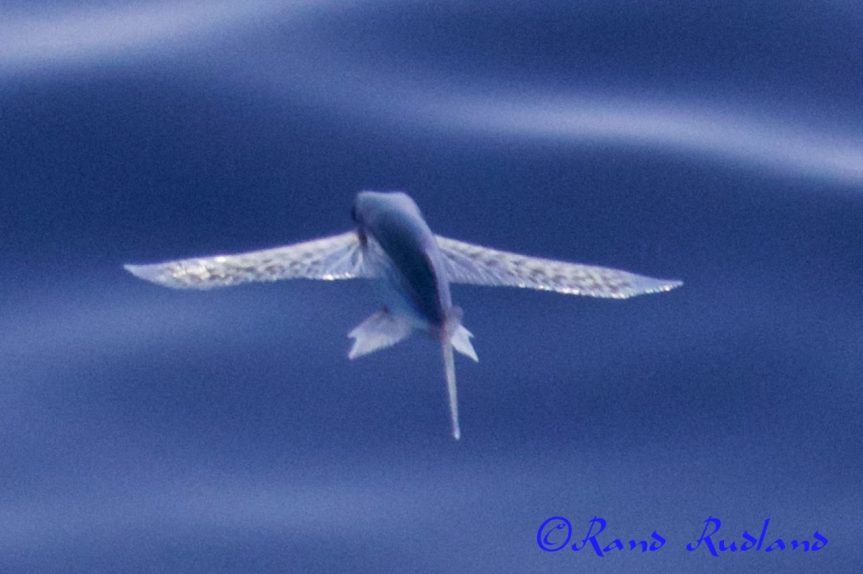
Although he mostly focused on birds – and the incredible level of endemisn to be found there – he also regaled us with images of seldom-seen tribal “sing-sings”, artifacts from the second world war, scary spiders, even scarier snakes, gorgeous butterflies, orchids, flying fish, and some of the happiest children in the world!

It’s not every day that you have a guest speaker casually say “oh and that’s a Superb Pitta…I think that’s only about the 4th or 5th time this species has ever been photographed…sorry for the poor quality, but the jungle was a bit dark, and it was about 42° C in the shade…”

A talk not to be missed.  A more detailed description of his adventures was published in his own club’s wonderful Marsh Wrenderings, which I’ve made available here.

Gulls with Art Martell

Gulls with Art Martell
by Heather Harbord, 18
 March 2016. 

Ten members accompanied Art Martell to Willingdon Beach and Sliammon on Friday.

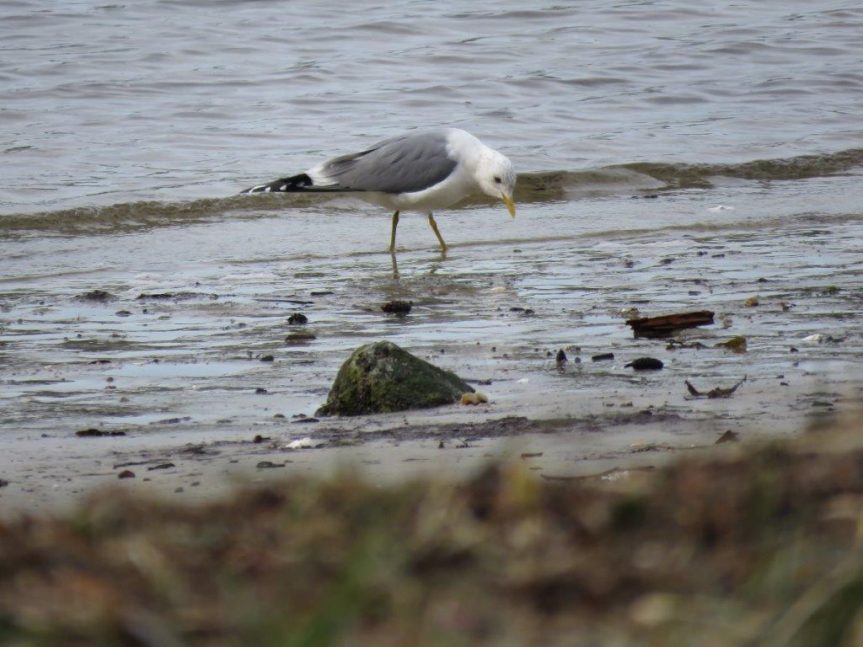
On the way down to the creek mouth at Willingdon, we stopped to look at a lone Mew Gull with magnificent mirrors on its tail feathers.  At the creek, we found three mature California Gulls which loomed clear in Art’s scope showing off their heavy bills with red and black spots. Unfortunately and eagle put all the gulls up and the Californias did not return, leaving only a small huddle of Mews.

Out at Sliammon, we saw Thayers Gulls, Glaucous-winged and Glaucous-winged x Western crosses.  Also, Art identified a group of Glaucous-winged x Herring Gull crosses which we likely would not have noticed without him.

He reminded us that among the previous night’s slides were some showing that dark or light eye colour by itself is not a sufficient identification mark.  It must be combined with size, beak configuration, shade of grey on the back and tail feather mirrors which all have to match.

Gulls likely to hybridize are those whose breeding colonies overlap such as Glaucous-winged and Western in the Pacific North West or Glaucous-winged and Herring (Larus smithsonianus) in the Gulf of Alaska.  The progeny of the former migrate up the centre of Georgia Strait and the latter come down from Alaska in the winter.

75% of Puget Sound gulls are Glaucous-winged x Western crosses and in the Seattle area are often referred to as Olympic Gulls.  Unlike popular beliefs about hybrids, these gull hybrids are not sterile and can reproduce with each other quite happily and continuously causing further confusion among birders.  A new species could be in the process of evolving.


Art Martell – “An Abundance of Gulls”

Art Martell – “An Abundance of Gulls”
by Andrew Bryant, 
17 March 2016

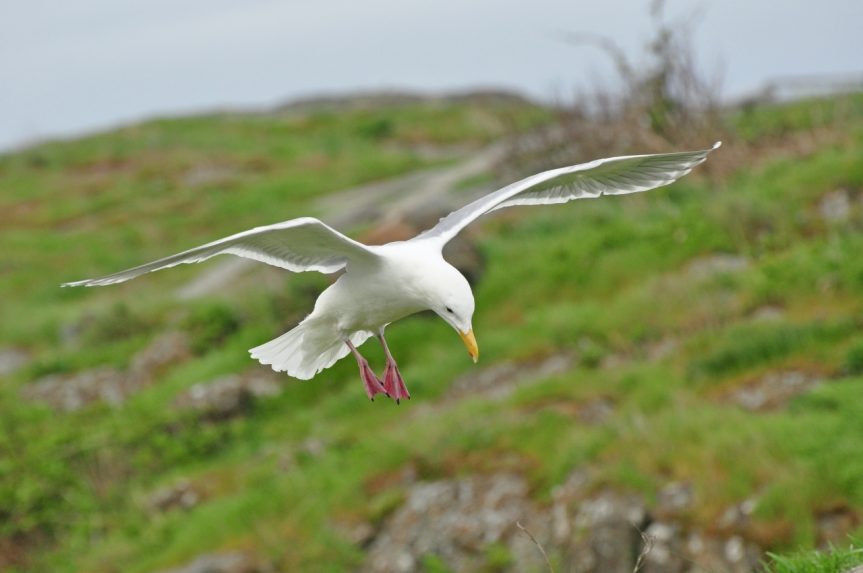
Dr. Art Martell worked for decades as a research scientist with the Canadian Wildlife Service, publishing numerous papers on caribou, small mammals, ticks, birds and other creatures. Now retired to the Comox Valley, Art visited us to provide an introduction to the diversity and characteristics of gulls found in the Salish Sea.  The photos above show our more common species.

Once one accepts that “there’s no such thing as a seagull”, it soon becomes apparent that identifying gulls is tricky – and becoming good at it takes work.

Starting with the basics, Art began by “narrowing down the field”, noting that of the 25 or so species which have been found here, only 8 are commonly encountered.  Much can be quickly learned from the general size, shape and “gestalt” or “jizz” of the bird.  Is it small, with a delicate, even dainty flight pattern?  Is it medium gray, or is it distinctly paler than others in the flock?  Much more can be determined by learning the common ones first, and then determining what a given bird is not!

 A handy gull ID chart can be found here.  Like anything else, but especially with gulls…practice is good!  

Art’s complete talk is below (note that you can enlarge slides to full-screen, and go backwards or forwards at will – hover over the 1st slide to see the controls).

[presentation width=600 height=450]
[slide bgimg=https://www.malanat.ca/wp-content/uploads/2016/03/slide1.jpg]
[/slide]
[slide bgimg=https://www.malanat.ca/wp-content/uploads/2016/03/slide2.jpg]
[/slide]
[slide bgimg=https://www.malanat.ca/wp-content/uploads/2016/03/slide3.jpg]
[/slide]
[slide bgimg=https://www.malanat.ca/wp-content/uploads/2016/03/slide4.jpg]
[/slide]
[slide bgimg=https://www.malanat.ca/wp-content/uploads/2016/03/slide5.jpg]
[/slide]
[slide bgimg=https://www.malanat.ca/wp-content/uploads/2016/03/slide6.jpg]
[/slide]
[slide bgimg=https://www.malanat.ca/wp-content/uploads/2016/03/slide7.jpg]
[/slide]
[slide bgimg=https://www.malanat.ca/wp-content/uploads/2016/03/slide8.jpg]
[/slide]
[slide bgimg=https://www.malanat.ca/wp-content/uploads/2016/03/slide9.jpg]
[/slide]
[slide bgimg=https://www.malanat.ca/wp-content/uploads/2016/03/slide10.jpg]
[/slide]
[slide bgimg=https://www.malanat.ca/wp-content/uploads/2016/03/slide11.jpg]
[/slide]
[slide bgimg=https://www.malanat.ca/wp-content/uploads/2016/03/slide12.jpg]
[/slide]
[slide bgimg=https://www.malanat.ca/wp-content/uploads/2016/03/slide13.jpg]
[/slide]
[slide bgimg=https://www.malanat.ca/wp-content/uploads/2016/03/slide14.jpg]
[/slide]
[slide bgimg=https://www.malanat.ca/wp-content/uploads/2016/03/slide15.jpg]
[/slide]
[slide bgimg=https://www.malanat.ca/wp-content/uploads/2016/03/slide16.jpg]
[/slide]
[slide bgimg=https://www.malanat.ca/wp-content/uploads/2016/03/slide17.jpg]
[/slide]
[slide bgimg=https://www.malanat.ca/wp-content/uploads/2016/03/slide18.jpg]
[/slide]
[slide bgimg=https://www.malanat.ca/wp-content/uploads/2016/03/slide19.jpg]
[/slide]
[slide bgimg=https://www.malanat.ca/wp-content/uploads/2016/03/slide20.jpg]
[/slide]
[slide bgimg=https://www.malanat.ca/wp-content/uploads/2016/03/slide21.jpg]
[/slide]
[slide bgimg=https://www.malanat.ca/wp-content/uploads/2016/03/slide22.jpg]
[/slide]
[slide bgimg=https://www.malanat.ca/wp-content/uploads/2016/03/slide23.jpg]
[/slide]
[slide bgimg=https://www.malanat.ca/wp-content/uploads/2016/03/slide24.jpg]
[/slide]
[slide bgimg=https://www.malanat.ca/wp-content/uploads/2016/03/slide25.jpg]
[/slide]
[slide bgimg=https://www.malanat.ca/wp-content/uploads/2016/03/slide26.jpg]
[/slide]
[slide bgimg=https://www.malanat.ca/wp-content/uploads/2016/03/slide27.jpg]
[/slide]
[slide bgimg=https://www.malanat.ca/wp-content/uploads/2016/03/slide28.jpg]
[/slide]
[slide bgimg=https://www.malanat.ca/wp-content/uploads/2016/03/slide29.jpg]
[/slide]
[slide bgimg=https://www.malanat.ca/wp-content/uploads/2016/03/slide30.jpg]
[/slide]
[slide bgimg=https://www.malanat.ca/wp-content/uploads/2016/03/slide31.jpg]
[/slide]
[slide bgimg=https://www.malanat.ca/wp-content/uploads/2016/03/slide32.jpg]
[/slide]
[slide bgimg=https://www.malanat.ca/wp-content/uploads/2016/03/slide33.jpg]
[/slide]
[slide bgimg=https://www.malanat.ca/wp-content/uploads/2016/03/slide34.jpg]
[/slide]
[slide bgimg=https://www.malanat.ca/wp-content/uploads/2016/03/slide35.jpg]
[/slide]
[slide bgimg=https://www.malanat.ca/wp-content/uploads/2016/03/slide36.jpg]
[/slide]
[slide bgimg=https://www.malanat.ca/wp-content/uploads/2016/03/slide37.jpg]
[/slide]
[slide bgimg=https://www.malanat.ca/wp-content/uploads/2016/03/slide38.jpg]
[/slide]
[slide bgimg=https://www.malanat.ca/wp-content/uploads/2016/03/slide39.jpg]
[/slide]
[slide bgimg=https://www.malanat.ca/wp-content/uploads/2016/03/slide40.jpg]
[/slide]
[slide bgimg=https://www.malanat.ca/wp-content/uploads/2016/03/slide41.jpg]
[/slide]
[slide bgimg=https://www.malanat.ca/wp-content/uploads/2016/03/slide42.jpg]
[/slide]
[slide bgimg=https://www.malanat.ca/wp-content/uploads/2016/03/slide43.jpg]
[/slide]
[slide bgimg=https://www.malanat.ca/wp-content/uploads/2016/03/slide44.jpg]
[/slide]
[slide bgimg=https://www.malanat.ca/wp-content/uploads/2016/03/slide45.jpg]
[/slide]
[slide bgimg=https://www.malanat.ca/wp-content/uploads/2016/03/slide46.jpg]
[/slide]
[slide bgimg=https://www.malanat.ca/wp-content/uploads/2016/03/slide47.jpg]
[/slide]
[slide bgimg=https://www.malanat.ca/wp-content/uploads/2016/03/slide48.jpg]
[/slide]
[slide bgimg=https://www.malanat.ca/wp-content/uploads/2016/03/slide49.jpg]
[/slide]
[slide bgimg=https://www.malanat.ca/wp-content/uploads/2016/03/slide50.jpg]
[/slide]
[slide bgimg=https://www.malanat.ca/wp-content/uploads/2016/03/slide51.jpg]
[/slide]
[slide bgimg=https://www.malanat.ca/wp-content/uploads/2016/03/slide52.jpg]
[/slide]
[slide bgimg=https://www.malanat.ca/wp-content/uploads/2016/03/slide53.jpg]
[/slide]
[slide bgimg=https://www.malanat.ca/wp-content/uploads/2016/03/slide54.jpg]
[/slide]
[slide bgimg=https://www.malanat.ca/wp-content/uploads/2016/03/slide55.jpg]
[/slide]
[slide bgimg=https://www.malanat.ca/wp-content/uploads/2016/03/slide56.jpg]
[/slide]
[slide bgimg=https://www.malanat.ca/wp-content/uploads/2016/03/slide57.jpg]
[/slide]
[slide bgimg=https://www.malanat.ca/wp-content/uploads/2016/03/slide58.jpg]
[/slide]
[slide bgimg=https://www.malanat.ca/wp-content/uploads/2016/03/slide59.jpg]
[/slide]
[slide bgimg=https://www.malanat.ca/wp-content/uploads/2016/03/slide60.jpg]
[/slide]
[slide bgimg=https://www.malanat.ca/wp-content/uploads/2016/03/slide61.jpg]
[/slide]
[slide bgimg=https://www.malanat.ca/wp-content/uploads/2016/03/slide62.jpg]
[/slide]
[slide bgimg=https://www.malanat.ca/wp-content/uploads/2016/03/slide63.jpg]
[/slide]
[slide bgimg=https://www.malanat.ca/wp-content/uploads/2016/03/slide64.jpg]
[/slide]
[slide bgimg=https://www.malanat.ca/wp-content/uploads/2016/03/slide65.jpg]
[/slide]
[/presentation]

Soapstone Carving

Soapstone Carving
by Janet May, 
5 March 2016

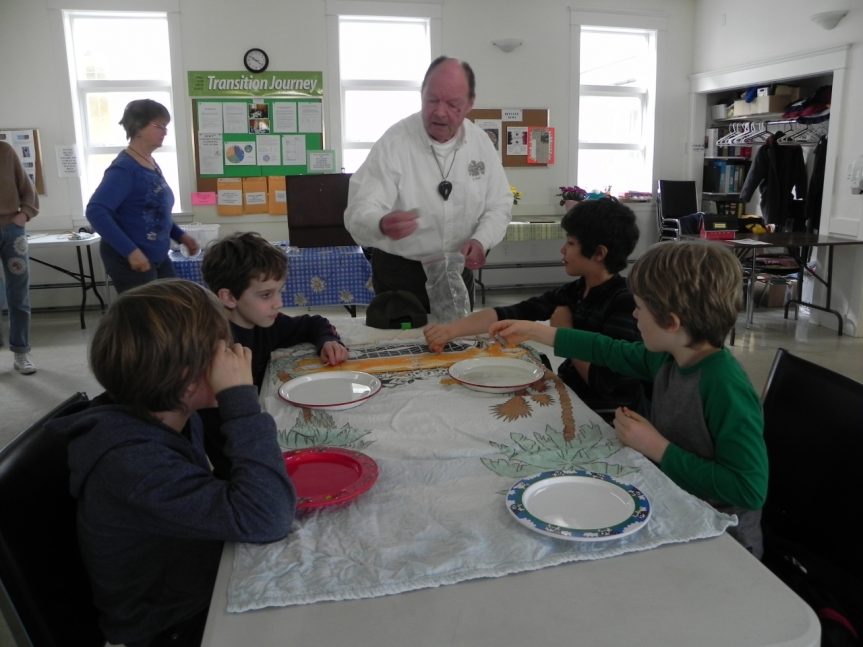
Richard Benson worked his magic this month, providing soapstone, sandpaper files, and instruction on stone shaping for 11 Young Naturalists and their adults.

Adriana Virtue and Sharon Benson helped out and Tom Kolezar gave a short presentation about rock forming processes and showed samples of different types of rock.

Everyone went home with a smooth touchstone and a new relationship with rocks..


Trail-busting with ORUG

Trail-busting with ORUG
by Barbara Sherriff and David Bedry, 
27 February 2016. 

No, it’s not the title of  bad movie.  Rather, because our members gain so much from having such a wonderful network of local trails, we thought it time to give something back.

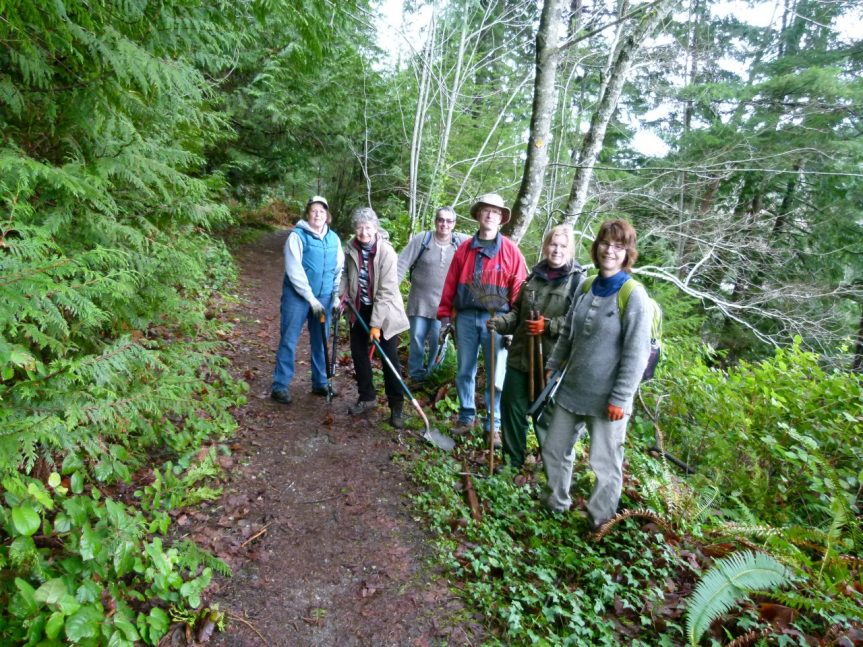
So on a misty February morning, seven intrepid Malaspina Naturalists set out to clear the trail along the south side of Powell Lake from Powell River Bridge to Block Bay.

We cut back blackberry, salal and alder to allow free access along the path. Grating was also installed on a small slippery bridge as well as some shovel work for drainage.

After this experience, we’re personally much more appreciative of the many kilometres of hiking trails that are cleared by hard working volunteers coordinated by the ORUG (Outdoor Recreation Users Group).


Dwight Owens – “Sour Seas: ocean acidification explained”

Dwight Owens – “Sour Seas: ocean acidification explained”
by Andrew Bryant, 21 February 2016

Dwight Owens works for Ocean Networks Canada, where he serves as a “user engagement officer”.  Although not a scientist himself, Dwight’s mandate is  to help make recent scientific research accessible to the general public.  This he did – in spades!

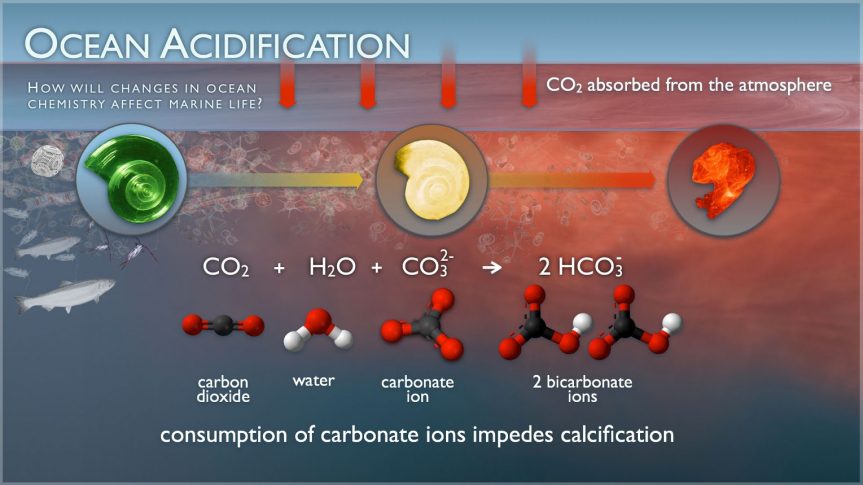
He spoke to us about ocean acidification, which has been called “global warming’s evil twin”.   Using graphics gleaned from a wide variety of sources, Dwight provided a lively introduction to a very sobering topic.

Why are oceans becoming more acidic, and what impacts can we expect? Dwight discussed recent and projected changes, examining impacts on marine ecosystems and human society.

For those interested in learning more about this fascinating, although frightening, topic, Dwight also provided a help link to many on-line sources, which can be found here.

Early Logging Practices

Early Logging Practices
by Barbara Sherriff, 
23 January 2015.

Bert Finnegan of the Powell River Hisorical Museum and Archives gave us a slide show of magnificent photographs and explanations of early logging operations in and around Powell River.

He began by putting things in context, that is by stressing with the fact that the First Nation Sliammon people had been using local trees to build houses, canoes, household goods, masks and clothing from local trees for thousands of years.  The present era of logging only began in the late 1800s with men, balanced on spring boards notched into old growth trees, cutting trees over 10 feet in diameter.

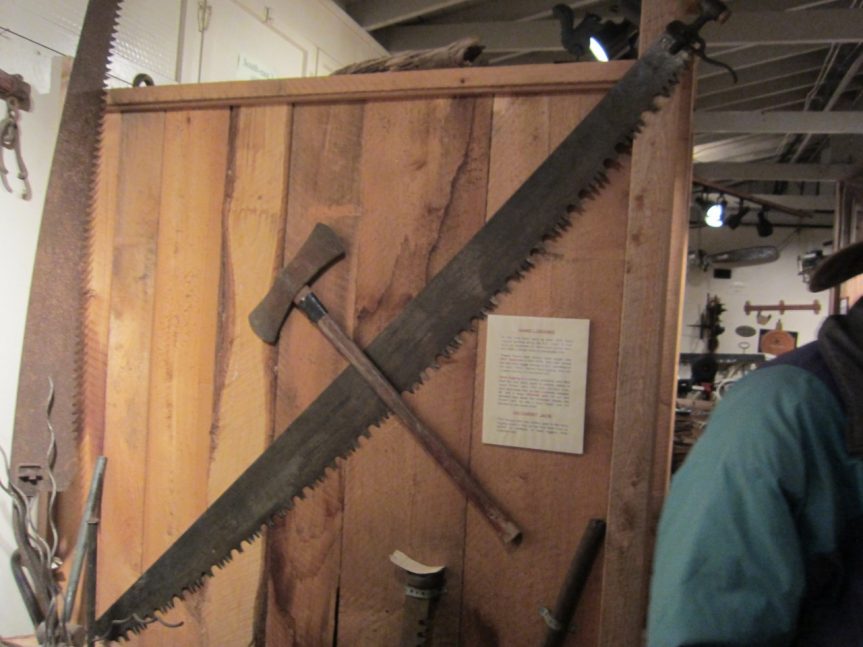
Bert described how the logging industry had evolved from hand saws and oxen trains to move logs, to steam engines, trains and finally trucks.  In the logging museum, we saw a selection of the tools utilized in this process including an amazing collection of chain saws.


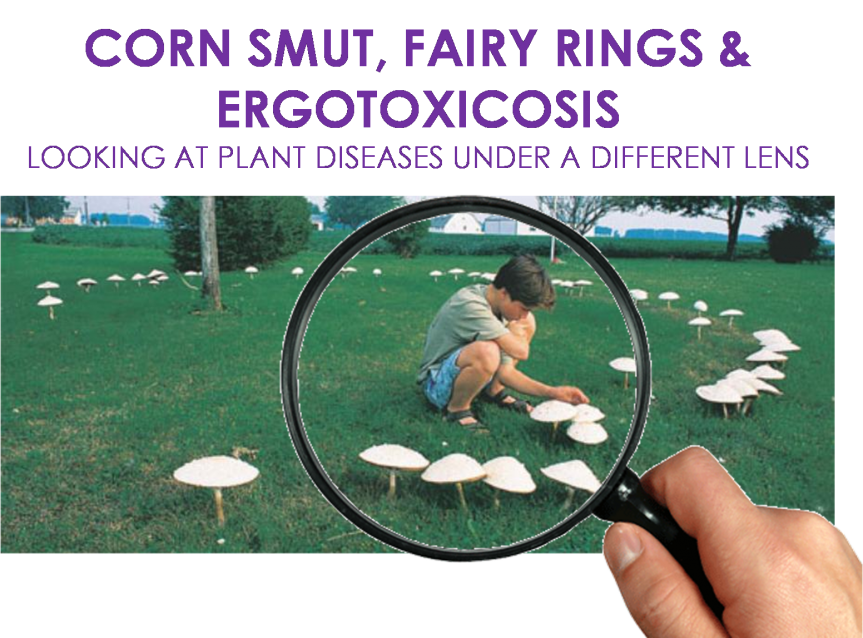
Ioni Wais – “Corn Smut, Fairy Rings and Ergotoxicosis”

Ioni Wais – “Corn Smut, Fairy Rings and Ergotoxicosis”
by Andrew Bryant, 21 January 2016.

Ioni Wais is a relative newcomer to Powell River and somewhat difficult to categorize.  He describes himself as a “community animator”,  with a focus on “people, plants and place”. Actually, I think that sums it up pretty well!

In any event Ioni, or more accurately Ionatan Waisgluss, led us on a fascinating exploration of plant diseases and their influence on humans, society, and history.

It was truly one of those rare talks that one attends without having any idea what it might be about, and which winds up occupying your mind for days afterwords.  Or at least that was my experience.

Welcome to Powell River Ioni – and thank you for the nice note, detailed image notes, and links to further reading, which can be found here!

4th Christmas Bird Count for Kids

4th Christmas Bird Count for Kids

by Andrew Bryant, 6 December 2015.

It was a dark and stormy morning, with sideways rain and gale-force winds.

Attendance was perhaps the lowest ever recorded for a Young Naturalist event, but I like to think that young Henry and his dad (our two guests) appreciated the day.  I know that I did!

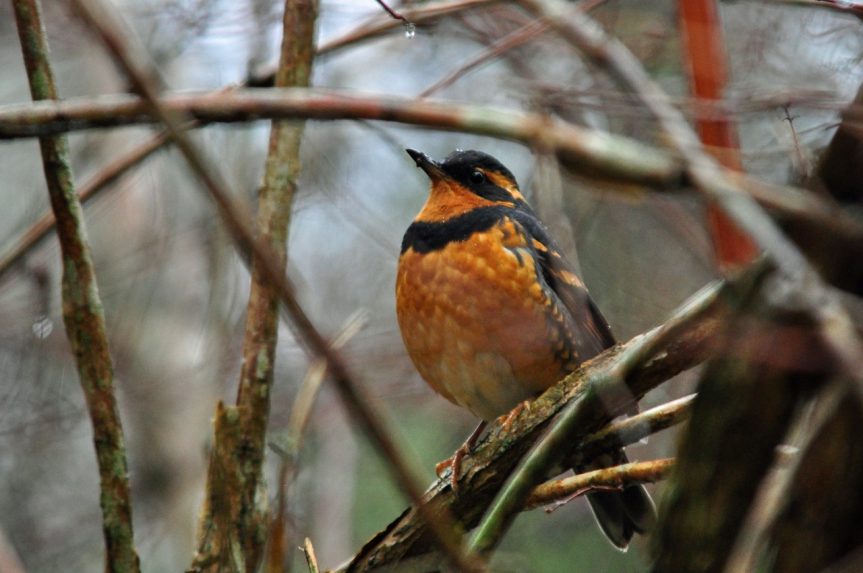
Our species list was also pretty short:  Glaucus-winged Gull, Mew Gull, Double-crested Cormorant, Pelagic Cormorant, Surf Scoter, Bufflehead, Bald Eagle, Crow, Black Turnstone, Varied Thrush and Dark-eyed Junco.

Many thanks to Janet, who put all the pieces together to make it happen, and to Heather, Clyde, and John, who make any day in the field worthwhile.


Mike Moore – “Antarctica”

Mike Moore – “Antarctica”
by Andrew Bryant, 19 November 2015.

Our dear friend Captain Mike Moore took time off from skippering the ever-faithful Misty Isles and driving naturalists hither and fro in his zodiac, to show us what he does in the “off-season”…

…which is driving naturalists hither and fro…in a zodiac…in Antarctica!

The photos were breathtaking, and some of the stories behind them are incredible.  Mike is a wonderful raconteur.  I knew that krill was important, but had no idea of the pervasive prominence of pink poo!

Nor did I know about the recently successful rat eradication program on South Georgia, or the historical significance of the wrecked factory whaling ship Guvernøren, or why there would be a bronze statue of a particular Chilean tug captain  on Elephant Island, or why one can see easily see different age-classes of penguins in a single photograph, or what some of the cascading impacts of climate change may be upon King Penguins and other creatures.

Incredible stuff.  I wanna go!

Susan MacKay – “Whales”

Susan MacKay – “Whales”
by Andrew Bryant, 22 Oct 2015.

Susan Mackay is a long-time club member, founder of Whales and Dolphins BC and President of the non-profit Wild Ocean Whale Society (WOWs).  She’s also a member of the Marine Mammal Response Network, a group that responds to reports of injured, distressed or dead marine mammals.

Susan spoke to us about the various species of whales that frequent our local waters, and included some fascinating videos and hydrophone recordings. She brought things clearly into focus by describing the incredible krill-based food chain, the basis of much of our marine ecosystem.  She also emphasized the value in reporting whale observations, which allow both researchers and the public to better understand whales and their hunting behaviors.

As always, Susan spoke with an in-depth knowledge that only comes from spending many, many hours on the water with these fantastic leviathons!

Forest Ecosystems

Forest Ecosystems
by Tom Koleszar, 17 October 2015.

Twelve Naturalists participated in the forest ecosystems field trip.  The goal of this trip was to examine forest soils and plants at different elevations near Powell River.

Lead by our guide, Nancy Pezel of Western Forest Products, we looked at 4 sites along A Branch between 500 and 1100m elevation.  At each site Nancy described the forest soils, the climate/moisture conditions, and the resulting plant assemblages. (At the 1st 2 sites she was ably assisted by Rod Tysdal and our own Janet May.)  The lower 3 sites (between 500 and 900 m elevation) were varying examples of Coastal Western Hemlock forests, while the topmost site was in the Mountain Hemlock zone.

Some great discussions took place at each stop, and I think we all learned many new things about the forests we thought we new so well! We also had a great spot for lunch at the top, which would have had a wonderful view if only the clouds had gone away (at least it didn’t rain!).

Special thanks to Nancy not only for guiding us through the trip, but for all her advance preparation and for answering all our many, many questions so well.


Salmon at Sliammon

Salmon at Sliammon
by David Bedry, 10 October 2015.

Ten hardy people braved the miserable weather to see the Sliammon hatchery.

Lee George, the hatchery manager, talked to us about the returning salmon, the harvesting of eggs, rearing the fish and their final release back into the river. We also saw the rebuilt weir over the stream. Besides seeing chum salmon in the water we were treated to a mother bear and her cub.

Lee also talked about community involvement with the hatchery. There is a smoke house the community uses, as well as school groups coming and spending a day at the facility-usually the beginning of November.  Water quality is also a major concern for rearing the salmon.


Orford River grizzlies

Orford River grizzlies
by Barbara Sherriff, 26 September 2015. 

Seven Malaspina Naturalists met with 3 other intrepid adventurers and boatman John at Lund. We had a fast 2 hour boat trip on Homolka 1 to Bute Inlet.  We just missed seeing a humpback whale as it headed up the Hole in the Wall channel just before we arrived there.

Our Homolka guides were waiting for us with a bus to take us to their beautiful tourist centre for a picnic lunch before heading off to find grizzlies. Our first siting of a grizzly was one walking along the road in front of the bus. We then enjoyed a couple of hours watching groups a grizzlies cavorting in a river. Young cubs were trying to catch their own salmon but kept sneaking back to eat Mum’s.

After another pit stop at the centre we had another exhilarating trip back to Lund.


Luc Simard – “From backyard astronomy to Extremely Large Telescopes”

Luc Simard – “From backyard astronomy to Extremely Large Telescopes”
by Andrew Bryant, 22 Sept 2015

Dr. Luc Simard wears several hats.  He’s an astronomer with the Herzberg Astrophysics group of the National Research Council of Canada, an Adjunct Professor of Physics and Astronomy  at the University of Victoria, and a key member of the Thirty Metre Telescope Project.

He took time out from his research to visit Powell River, where he shared his lively wit, passion and expansive knowledge of all things astronomical.

Like many talented speakers, Luc provided a marvellous mixture of humor, detail, and surprising tidbits.  I liked the way he introduced the universe as an endless series of “pointers”, with Ursa major (the Big Dipper) helpfully pointing out Polaris (the North Star), or Orion’s Belt pointing out the wondrous Seven Sisters (Pleiades Star Cluster).

I was amused to learn that Galileo’s telescope was not constructed with astronomy in mind.  Rather, telescopes were in common usage by Venetian merchants who used them to estimate the volume of incoming cargo-laden ships!  Wow.

The “stars are time machines” metaphor was wonderful, and I was equally impressed to learn that modern telescope designers enjoy roller-coasters as much as I do!  There’s lots more to learn about this ambitious international scientific endeavor at the project’s webpages at TMT.org  …make sure you check out the wonderful videos on the “animations” page!

What’s in the water?

What’s in the water?
by Janet May, 1 August 2015

What’s in the water?

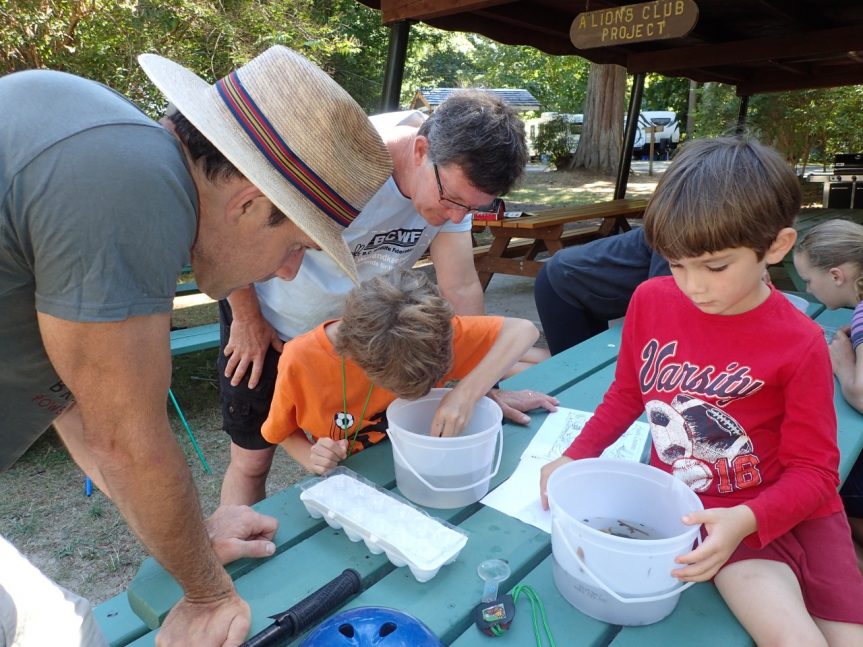
Young Naturalists’ families investigated the invertebrates of McGuffie Creek and found mayfly, caddis larvae, and other tiny creatures.

Alan Hobson directed the dip-nets and magnification of our watery friends and then they were all returned to the cool riffles.


Cortes Island geology

Cortes Island geology
by Tammy Siddall, 22 July 2015. 

It was a perfect July day in Lund when 12 naturalists boarded the Misty Isles in search of rocks. Captain Mike and crewmate Amy had planned an exciting two-day circumnavigation of Cortes Island for us.  From Lund Harbour we first headed north towards the Twin Islands.

As we travelled, co-leaders Barbara Sherriff & Tom Kolezar spoke about the geological formations and what we hoped to find.  We were on the lookout for dykes, which are sheets of igneous rock that form in fractures of existing rock.  We hit the mother lode arriving on Twin, where we hopped into the zodiac to head ashore.  The dykes did not disappoint!

From there we headed farther northwest around Cortes as Mike spoke to the group about Buchia, which are bivalve fossils.  His enthusiasm for Buchia was infectious and we followed a tip he had on a new specimen. It was a treasure hunt. We headed ashore and found the Buchia fossil. This was a hunt 140 million years in the making!

After a lovely lunch and some of the best cookies going, we travelled further around Cortes, learning the history of the region and spotting more dykes. With the informative rock lessons from our great leaders, no one on this trip will ever look at the shoreline the same way again.

An impromptu stop at Quartz Bay revealed a stunning dyke of quartz crystals. Tom and Barbara worked out that the existing rock setting in which the crystals formed was a sandstone while a foraging deer looked on. We even spotted a ‘cute’ dyke!

For the evening we headed to Read Island to stay at the Coast Mountain Expedition lodge. As we anchored in a bloom of moon jellyfish we knew we were in for something magical. The setting was serene and the hosts were marvelous.  As usual, the meal was awesome.  The next morning we had a lovely breakfast made by Lannie and Ralph, our lodge hosts and we were off in search of a copper and molybdenite deposit.

We travelled to the location of a stream that drains below a claim site on West Redonda Island.  Here we came ashore and we found assorted interesting cobbles including magnetite, basalt, diorite, granodiorite, and a rich sulphide. (You know the rocks are interesting when the geologists take back samples for themselves!)   Another treat at this location was the mysterious albeit beautiful gravestone belonging to two small children named Lucey.  The grave is still a mystery more than 100 years later.  The setting of the stream was idyllic and the water so clear that many of the group took time out to have a quick dip in the ocean.

Refreshed and renewed, we headed off in search of more ancestral pictographs. Mike once again regaled us with the history of the area, peppered like shiny mica, with the mystical stories as told by the area’s aboriginal communities.  After lunch, which included more of those great cookies (thanks Samantha!) we headed south towards geological formations known as xenoliths.  The xenoliths created wild patterns where they contrasted the host rock.  On our way to the xenoliths, we rounded a small island, which Mike calls Mini-Mittlenatch where we spotted many sea birds along-side seals nursing their young.

When we came into the Lund Harbour after an incredible day at sea, most of us realized our bags were much heavier than when we started.  Various rock samples of our treasure hunts were stuffed into our luggage.

For many of us on this trip the unfolding world of rocks was a new and tuff one, but after a fantastic two days we all agreed it was a blast!