Bats and bat houses

Bats and Bat Houses
by Janet May, 20 June 2015

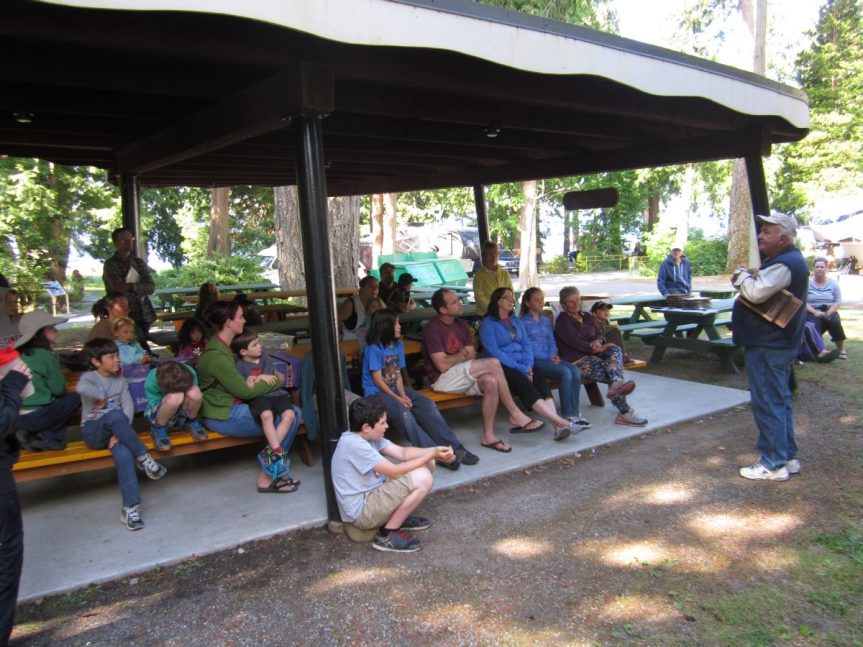
The Young Naturalists gathered around Willingdon’s picnic tables to build bat boxes.  Seventeen children and their families constructed pre-cut boxes under the guidance of John Treen.  Then they took them home.  Now the local bat population is benefiting from the enthusiasm of the young and elder naturalists.


A low-tide stroll out to Myrtle Rocks

A low-tide stroll out to Myrtle Rocks
by Andrew Bryant, 14 June 2015. 

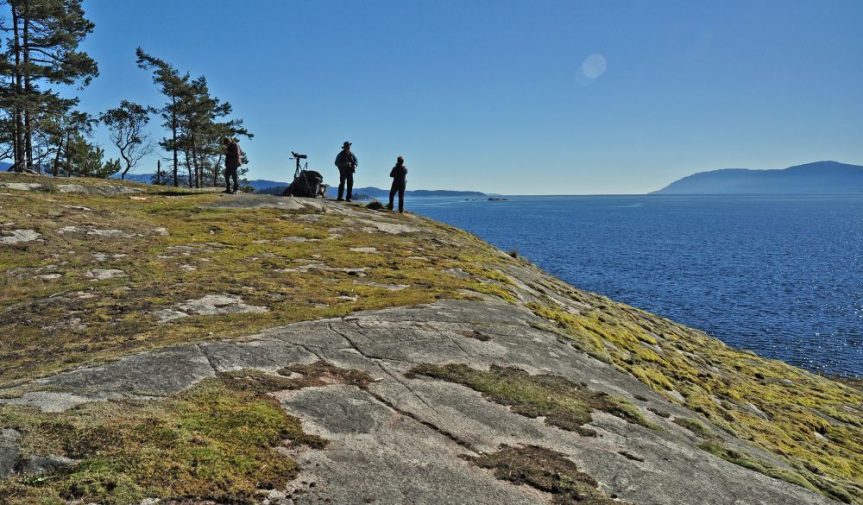
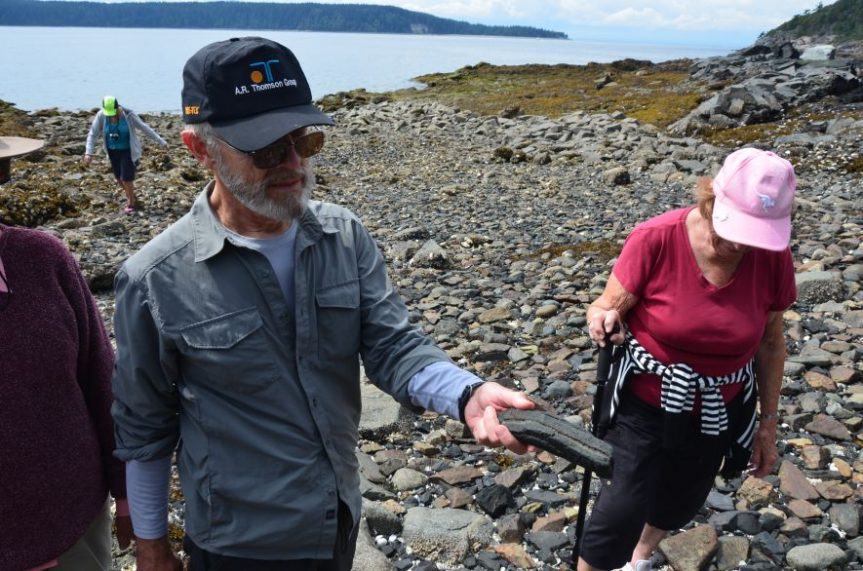
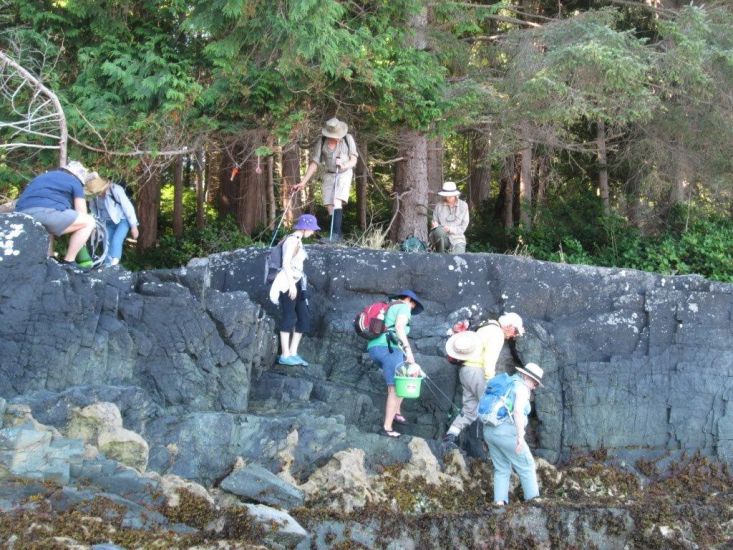
David Bedry, Heidi Rohard and I arranged (led is too strong a word)  a leisurely stroll out to Myrtle Rocks on a fine Sunday morning.

Fifteen club members and a few interested passers-by participated. Together we braved the bright sun, quiet winds, noticeably low tide conditions, and still waters  to cross the 500 metres or so that separate mainland B.C. and Myrtle Rocks.

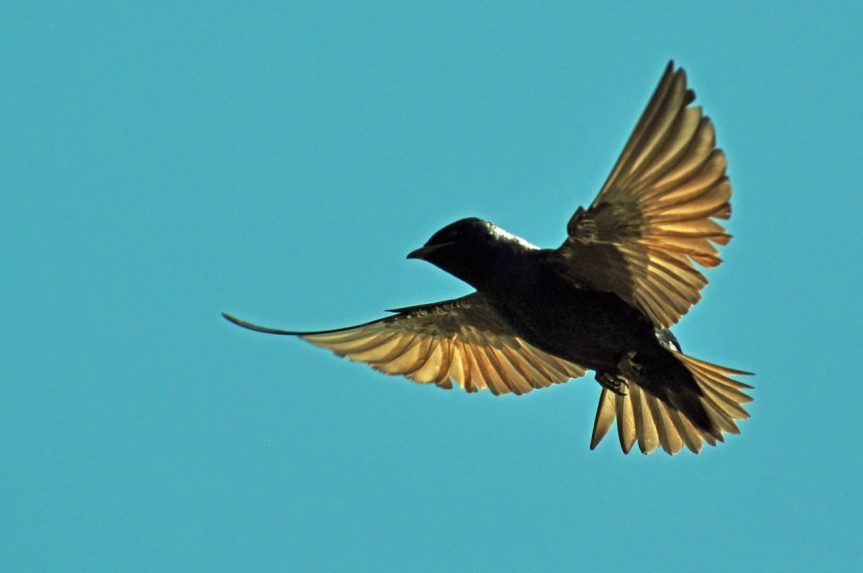
Along the way we watched the noisy antics of purple martins, and were ourselves watched by a family of harbor seals.

My personal highlights were the solitary Bonaparte’s gull, a yellowlegs, a willow flycatcher and a pair of black oystercatchers that I’m convinced nested there.  David, Heidi and others happily overturned pebbles, finding crabs, worms and other intertidal critters.

I think most of us were content to watch fishing boats, converse about this or that, and chalk this one up as another nice day in paradise.

Postscript:

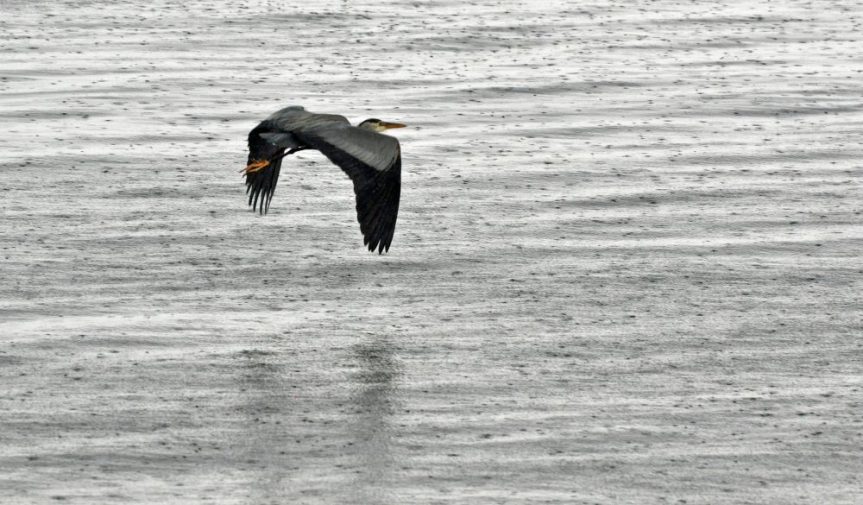
David Bedry wrote me the next day to say “Thanks for the tip yesterday.  I went back this AM for a look.  Found them, but not where I thought you said. Unfortunately all the wrong exposure conditions, and this is the best I got. Dark subject, dark background and into the sun, but still a great experience. I didn’t want to push the bird’s comfort level.   Pictures at 500 mm.”

Nicely done David!


Bute Inlet and Maurelle Island

Bute Inlet and Maurelle Island
by Heather Harbord, 11 June 2015. 

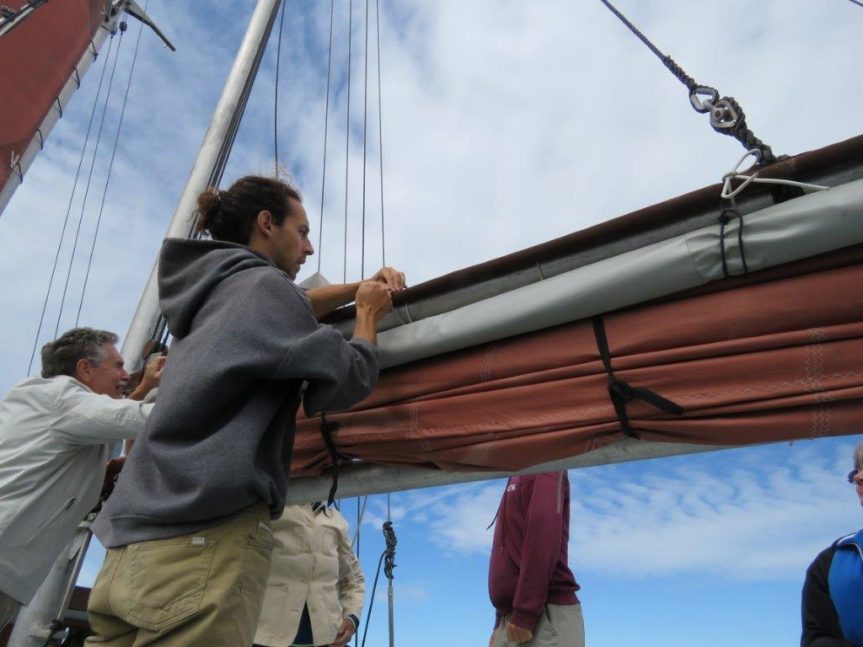
 Twelve of us went on Captain Mike Moore’s schooner, Misty Isles, to check out the entrance to Bute Inlet and circumnavigate Maurelle Island.

After the compulsory visit to Nancy’s Bakery, we left Lund at 10am, and powered up Thulin Passage to see the pictograph.   It was nice to see that the Active Tug’s name printed on top of it is now fading.  Mike said that the reason the pictographs have endured so long is because they have become coated with a translucent mineralization that leaches out of the underlying granite.   Not far from here, we saw the famous Agarikon mushroom.  Mycologist Paul Stamets and researchers from the University of Illinois have found it has antiviral and anti-bacterial qualities that may cure tuberculosis.  See Mushroom Man: The Search for Agarikon

With the wind blowing steadily from the NW we continued up Lewis and Calm Channels to Stuart Island where Mike showed us a location that he thinks is the same as Vancouver’s Village of the Friendly Indians because the hills behind it match those in a contemporary drawing.  After examining Raven’s Chamber Pot, a round hole in the rock, we headed for Hole-in-the-Wall and came out into the Octopus Islands where some harbor seals and an eagle greeted us.  Once through Beazely Passage, we tied up at Discovery Lodge’s dock and settled in for a great meal of Sockeye Salmon cooked by Mike and Jonah with all Samantha’s trimmings.

 In the morning, we ate a fantastic breakfast cooked by one of the Lodge owners, Lannie Keller, and staff before setting sail for Manson’s Landing. As we left, I took some pictures of birds in the water.  Some of these were murres but when I got home and enlarged them, I found a Rhinoceros Auklet among them.

Out of the shelter of Hoskyn Channel, the NW wind was brisk and cold. We were glad of our heavy clothing as we enjoyed a wonderful sail under almost full rig round the Subtle Islands, through Plunger and Uganda Passages and into Manson’s Bay.  Lots of cirrus clouds ornamented the sky with threats of more wind which didn’t materialize till Mike was trying to get home.

We disembarked into the zodiac at Manson’s Landing where a couple of charming islanders in SUVs drove us to the museum, surrounded by a sweet smelling garden of plants well loved by the pioneers.  Inside we were served tea and goodies before touring the current exhibit of local wildlife.  We had time to walk to the Co-op where some indulged in ice creams.  Back in the SUVs, we drove to Cortes Bay where we re-embarked on Misty and sailed down to Lund.

Although we didn’t see a lot of wildlife, everyone enjoyed the trip immensely, especially as several had never been on a sailboat before.


Underground! Horne Lake Caves

Underground! Horne Lake Caves
by Tom Koleszar, 30 May 2015. 

Sixteen  Naturalists traveled to Vancouver Island to visit the Horne Lake Caves.

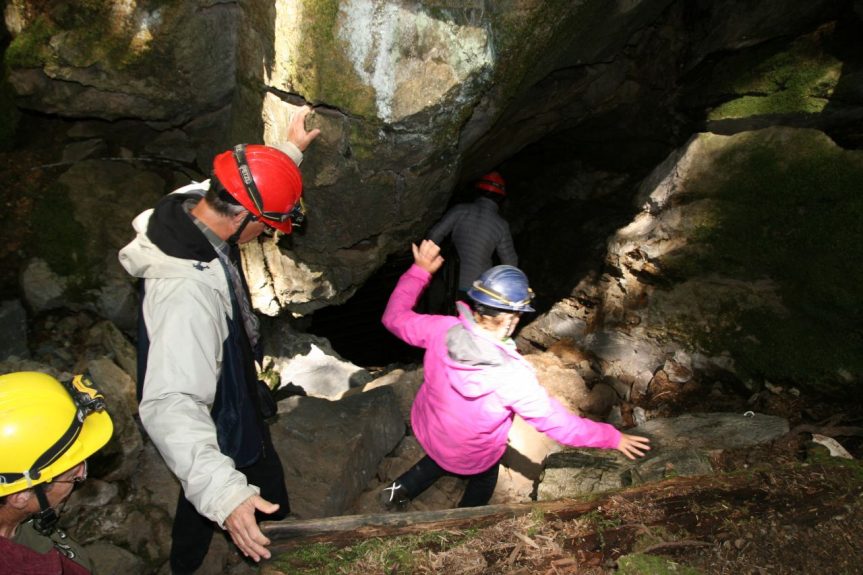
Lead by our guide, Sarah, we had a 1/2 hour walk (uphill!), complete with interpretive stops, to the entrance of the Riverbend Cave. From there, with helmets and lights on, all 16 of us descended (steeply!) into the cave.

With our guides Sarah in the lead and Jesse bringing up the tail, we moved about 100m into the cave, all the way to the smiling buddha room where we all had a chance to step up and view the buddha beside his reflecting pool! We had many opportunities to see the fascinating rock formations in the cave, and also had our minute of TOTAL darkness with all our lights out. I think we all had an interesting day learning about Vancouver Island caves and Horne Lake in particular.  You can learn more about Horne Lake caves here.

Following the cave tour we returned to Courntey to visit the Courtenay Museum & Palaeontology Centre  to see more of the geological and cultural history of Vancouver Island. A very worthwhile stop!

And lastly – the Griffin Pub to take our ease over dinner and a beverage before heading back to the ferry.

Special thanks to Barbara Sherriff for organising this trip and persevering through all the necessary arrangements!


Stephen Johnston – “Spain: Rocks, Romans and Rioja”

Stephen Johnston – “Spain: Rocks, Romans and Rioja”
by Andrew Bryant, 21 May 2015. 

Dr. Stephen Johnston, professor of geology at the University of Victoria, took us on a lively and all-encompassing journey to Spain.

Based on his extensive knowledge of Pangea, that supercontinent formed by wandering tectonic plates some 350 million years ago, Stephen gave a wonderful example of how everything is always connected to everything else.

Want to find gold in Spain?  Look for apple and chestnut trees, as these were often planted by the Romans while they were looking for gold.

Want to know why Las Médulas became a World Heritage Site?  Thank Pliny the Elder, who fortuitously published his notes shortly before his death in the Mount Vesuvius eruption in 79 AD.

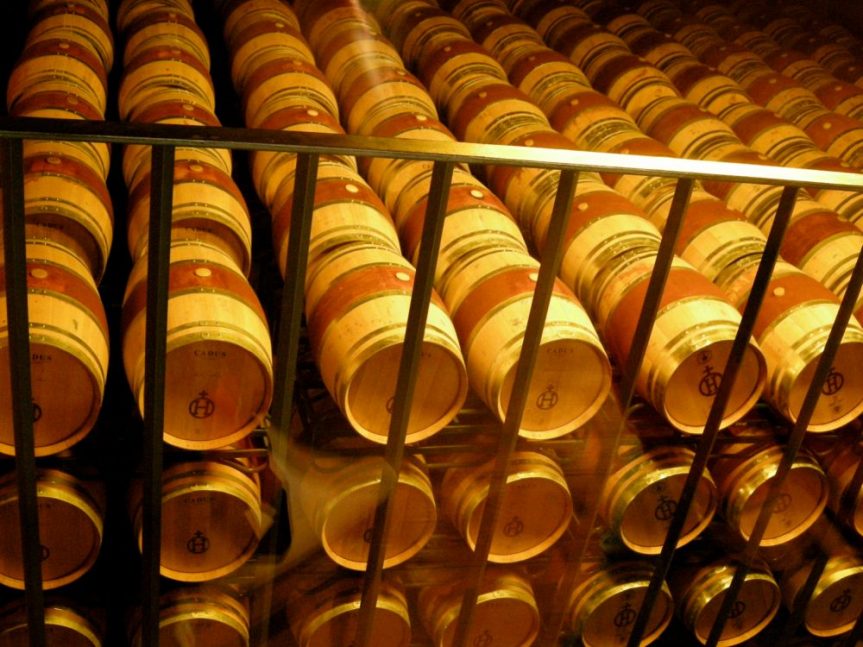
Why is there a Sequoia tree growing at the University of Salamanca?  Because Christopher Columbus brought seeds back from America, at the same time that loads of Spanish mercury were being shipped to the New World to be using in gold mining operations there

In short, this was not your typical travelogue!

A day on Mitlenatch

A day on Mitlenatch
by Cindy Dalcourt, 9 May 2015. 

On a beautiful, sunny morning 12 members carpooled to Lund where we met Captain Mike Moore aboard the Misty Isles for a trip to the B.C. Park nature preserve Mitlenatch Island. The very personable Captain briefed us on what the trip would consist of and shared his vast knowledge of the area and surrounding islands as well.

Mitlenatch is approximately half way between the coast and Vancouver Island and its name means “calm waters all around” in the Coast Salish language. Being in the rain shadow of Vancouver Island it is considered semi-arid, even having prickly pear cactus growing on it. When the tides come in around Vancouver Island from the north and the south they meet at Mitlenatch, bringing with them lots of nutrients and sea life. This attracts all kinds of fish, sea mammals and birds. It is home to the largest seabird colony in the Strait of Georgia.

Upon arrival at the island we were divided into two groups. The first group went ashore and were met by members Janet May and Heather Harbord who were volunteer wardens for B.C. Parks that week. They toured a small part of the island keeping to the existing trails as the island has a very sensitive ecosystem. They walked through a meadow full of spring flowers including common camas and chocolate lilies. In small groups they went into a bird blind where they could watch the gulls more closely. The surrounding cliffs were full of birds, courting and nesting. They ended their tour at the rustic cabin where Janet and Heather were staying.

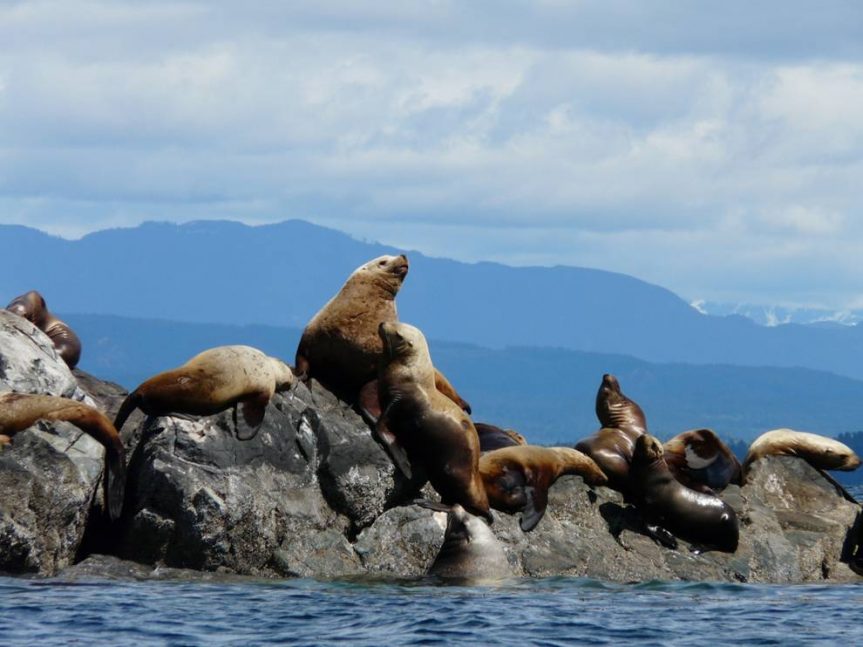
During this time the second group did a circumnavigation of the island by zodiac where they were curiously watched by large groups of noisy stellar sea lions. They also saw harbour seals as well as many different kinds of birds including Pelagic Cormorants, Black Oystercatchers, and Pigeon Guillemots. The birds were nervous about the presence of a few eagles and displayed some interesting flying manoeuvres to distract them. When the zodiac came back to shore the two groups exchanged places and were once again off to explore.

Too soon it was time to reboard the Misty Isles and after a snack of tea and cookies we arrived back in Lund. Everyone agreed that we had a wonderful day.


Birding by ear Part V

Birding by ear Part V
by Andrew Bryant, 25 April 2015.

Pierre Geoffray and Neil Hughes led eight of us on a leisurely ear-birding expedition along along the muddy trails behind the Italian Hall.  We started at the crack of eight and walked neither fast nor far.

The rains held off, but the woods were relatively quiet.  There were a few warblers (Orange-crowned, Yellow-rumped, McGillivray’s, Black-throated Gray, Townsend’s  and Common Yellowthroat) which were skittish and hard to photograph, but provided wonderful practice for the ears.  The Spotted Towhees and Song, White and Golden-crowned sparrows also showed off their amazing repertoires.  We saw or heard a total of 30 species.  Pierre has posted a complete checklist on eBird that can be seen here.

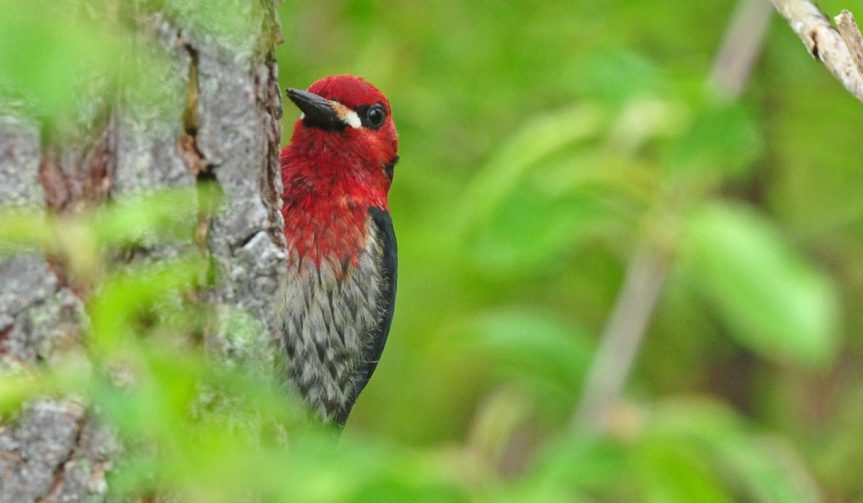
Highlights for me were hearing a Common Loon from the bluffs, encountering a very cooperative Red-breasted Sapsucker, seeing the nice gaggle of Turkey Vultures as we were leaving, and hearing and watching numerous Rufous Hummingbirds performing their vibrant and wonderful “J”-shaped courtship flights.

Also of note were the flowering salmonberries, Pacific bleedingheart (Diocentra formosa), and carpets of sea pink (Armeria maritima) atop the rocky outcrops.

All in all an enjoyable and educational day out, even if that Yellowthroat was more than a little bit exasperating!


Neil Hughes – “Spring migration on the Isle of Lesvos”

Neil Hughes – “Spring migration on the Isle of Lesvos”
by Andrew Bryant, 21 Apr 2015. 

Neil is a Powell River-based forester during regular business hours, and a keen birder and globe-trotter at all other times.  In 2010 he travelled to the Greek island of Lesvos (or Lesbos) to experience spring migration there.

And what an experience it was!  After the difficulty of getting there (a volcanic eruption had grounded air travel around the globe), Neil was treated to a magical mixture of quiet off-season resort restaurants, pastoral  landscapes, and olive groves.  And, of course, birds!

Lesvos is Greek in name, but Asian-minor in terms of biogeography.  Situated closer to Turkey than mainland Greece, the island is also the epicentre of several major bird migration flyways.   Thus it is similar to Canada’s Point Pelee, but it also unusual in that the avifauna of Europe and Asia meet here, so it presents a rare opportunity for European birders to see many Asian species that rarely show up further west.

For anyone interested in learning more about birding on the Isle of Lesvos, there’s a really nice website with annual reports, bird checklists and more located here.

Finally, Neil only touched on some of the conservation issues facing migratory birds in Greece, particularly regarding the illegal trapping of birds with mist nets or limesticks.   You can learn more about the severity of the issue from the Hellenic Ornithological Society or BirdLife Cyprus.

Edible plants, mosses and ferns

Edible plants, mosses and ferns
by Barbara Sherriff, 21 March 2015.

Diana Rosburgh and Suzan Roos led nineteen of us on a gentle walk along the forest trails at the rear of the Recreational Complex.  They not only identified many plants, they also explained which ones were edible and which would make us very sick.  Among the plants that they described were trailing blackberry, which have separate male and female plants, explaining why some patches have no fruits.

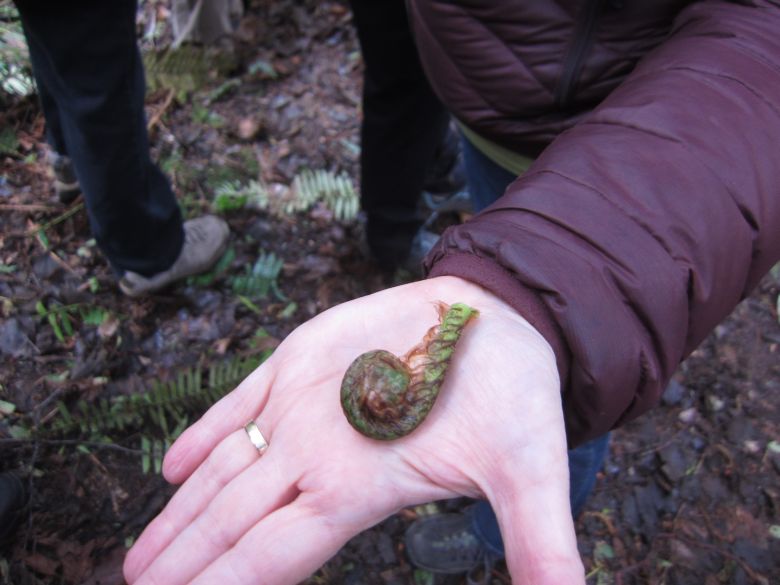
The berries of salal, oregon grape, salmonberry, red huckleberry and evergreen black huckleberry are all great to eat or make into jam but not twin berry or red elderberry.  We found edible fiddle heads of the lady fern but were warned off those of bracken, spiny wood or sword fern.

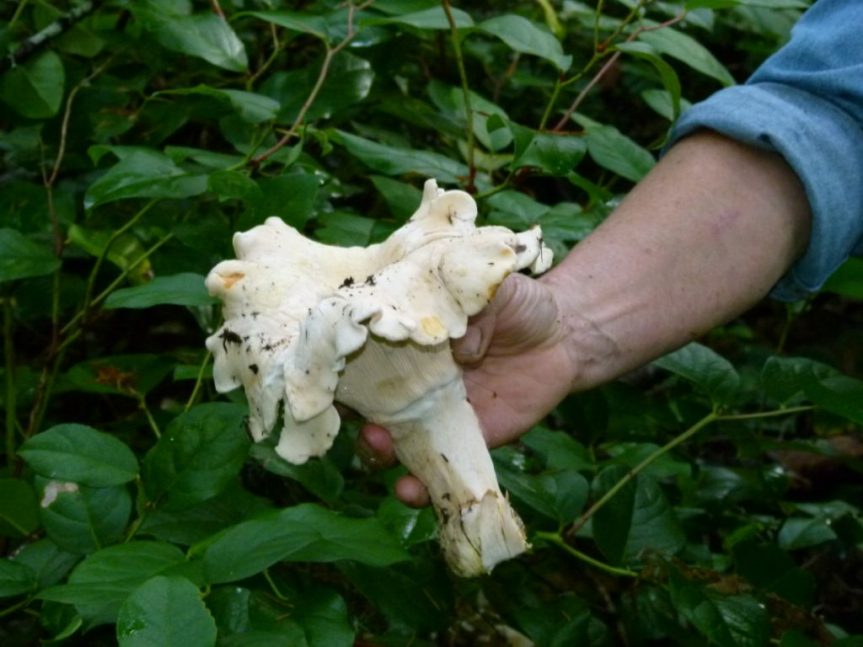
Suzan made us tasty tea from Douglas fir fronds and right at the end of the walk we found edible winter chanterelle mushrooms also known as yellow foot.


Tom Koleszar – “Exploring the Burgess Shale”

Tom Koleszar – “Exploring the Burgess Shale”
by Andrew Bryant, 19 Mar 2015. 

Tom Koleszar, geologist and vice-president of our club, took us on a sweeping, half-billion year-old exploration of the Burgess Shale.

This extraordinary rock formation, located in Yoho and Kootenay National Parks in the Canadian Rockies, contains one of the world’s richest deposits of fossils.  It is renowned for the quality of its fossils, especially as they allow for the preservation of soft-tissue imprints.   You can learn much more about it here, here and here.

It is truly extraordinary to look at a 500 million-year old rock and be able to count delicate hairs, eye facets or mouthpart details on an organism that was only millimetres or centimetres long when it swam or crawled through prehistoric seas.

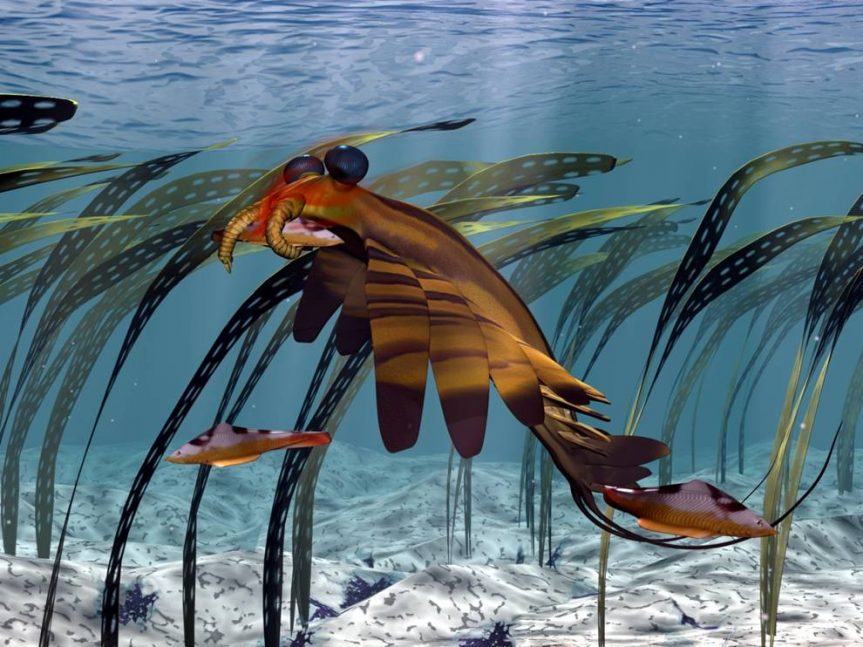
Using photos, maps, and wit, Tom intoduced us to the fascinating world of the Cambrian, an epoch during which the oceans exploded into life.  To decribe creatures such as Anomalocaris, Hallucigenia and Opabinia as “strange” is a severe understatement – some of these things are downright weird!

There is also some fascinating human history surrounding these rocks, including that of discoverer Charles Walcott, who impressed his hardworking family into field technicians and porters, and the unresolved scientific debate between people such as Stephen Jay Gould and Simon Conway Morris.

Was the “Cambrian explosion” just a series of failed experiments in body type design?  Or the beginning of phyla that can be traced to this day?

As they say.  Time will tell.

Casual birdwalk

Casual birdwalk
by Andrew Bryant, 28 February 2015.

Saturday was sunny and calm as nine of us gathered for a low-key birdwatching excursion with Neil Hughes and myself.

We began at Palm Beach Regional Park, where we saw a hundred or more Surf Scoters, together with smaller numbers of the “usual suspects” (Horned Grebes, Harlequin ducks, Buffleheads, Barrow’s and Common Goldeneye, American Wigeon, a few loons in the distance, and the ever-delightful Black Oystercatcher.  The woods were pretty quiet, with only the occasional Spotted Towhee or Song Sparrow breaking the silence.   We did get some nice views of a Red-tailed Hawk.

After a couple of hours spent happily spent peering through spotting scopes, comparing binoculars, and discussing the finer points of identifying Lesser versus Greater Scaup, a few of us ventured out to Stillwater Bluffs.  It was again very quiet, except for a quick glimpse of a hummingbird (Anna’s?) and the continual din of sea lions way over at McRae Rocks.

All in all, a quiet but deeply satisfying day, and much more fun than staying home to mow the lawn!


Tamsin Baker – “Herons and Dunes”

Tamsin Baker – “Herons and Dunes”
by Andrew Bryant, 26 Feb 2015. 

Tamsin Baker holds degrees in Animal Ecology (from UBC) and Environmental Management (from Royal Roads).   She presently serves as Stewardship Coordinator with the South Coast Conservation Program, which is a portal that connects small, local, project-oriented groups with governments and scientific researchers.  Yes, and they arrange to talk to naturalist clubs too!   Accordingly, Tamsin visited Powell River to discuss two projects with which she is involved.

First she spoke about Great Blue Herons in our area, providing an overview of their taxonomy (we mostly see the smaller,  coastal Ardea herodias fannini subspecies here), nesting behavior, distribution, population trends, and threats to them.   Herons are a good example of how different branches of government deal with threatened species, so we learned about their status both provincially, federally (COSEWIC and SARA), and internationally.

In particular, Tamsin stressed the importance of ongoing, local monitoring efforts of particular nests or nest-colonies in order to provide researchers and governments with accurate information about what is happening “on the ground”.   The Heron Working Group can be found here, guidelines for surveying and monitoring heron nests can be found here, and you can view an interactive map of heron nests using the British Columbia Great Blue Herons Atlas, which is part of the wonderful Community Mapping Network.

In the second part of her presentation, Tamsin described the intriguing characteristics of coastal sand dune ecosystems, including their requirements for formation (it turns out they need “feeder cliffs”, “accretional features”, and “helpful tides”).  She also described their consequently incredibly patchy distribution within the Strait of Georgia, and the wondrous accumulation of botanical and animal marvels that are likely to be seen in our backyard (or at least on Savary) for those who seek to learn when, where and how to look.

An excellent and comprehensive report prepared for the Coastal Sand Dune Recovery Team can be found here, with a shorter, less technical synopsis prepared by the B.C. Government available here.

Thank you Tamsin…for adding even more species to our club’s collective  “I’d really like to see one of these and learn more about it” life-list!

Plant phenology workshop

Plant phenology workshop
by Andrew Bryant, 23 January 2015.

As somewhat of a non sequitur to his talk about Madagascar the previous evening, Bill Merilees followed up with  a more informal discussion of his garden in Nanaimo and the mysteries of plant phenology.   “Phenology”, by the way, is just a scientific buzzword to describe the study of the timing of repeated events in the biological world.

Eleven of us met at Janet May’s house for tea and a fruitful (pun intended) discussion of how the systematic, careful study of questions like “when does my salmonberry flower” can lead to all kinds of other interesting questions and insights.  Such as…

– “So THAT’s why rufous hummingbirds show up when they do“.

– “My heavens, you mean one can detect global warming from Japanese cherry blossom records dating back for over 600 years?”   Yes, you CAN.

– “I’ve been keeping track of flowering dates for years.  Do you mean my old records might actually be USEFUL?”  Yes.  Henry David Thoreau’s records from Concord, Massachusetts certainly were!

So your old notes may constitute a gold mine.  And it’s easy to get involved! Two large and growing efforts to systematically collect and make data available to scientific researchers are the National Phenological Network in the United States and NatureWatch here in Canada.

Special thanks to Janet for hosting this event, to Heather for facilitating it, and to Bill for demonstrating once again how much can be gained by thoughtful observation, love of nature, and sharing your field-notes!


Bill Merilees – “Madagascar”

Bill Merilees – “Madagascar”
by Andrew Bryant, 22 Jan 2015. 

Bill Merilees of Nanaimo is a prominent British Columbian naturalist, educator, activist, conservationist and author of books such as Attracting Backyard Wildlife and (with co-author C.P. Lyons) the updated version of Trees, Shrubs and Flowers to Know in Washington and British Columbia.

He recently visited Powell River to share some of his many unusual experiences — in this case his globe-trotting adventures in Madagascar!

Bill visited that island twice, in 1998 and 2003,  and his talk focussed primarily upon the rich and largely endemic flora and fauna to be found there.   Illustrated with his beautiful 35 mm slides, Bill also presented a very human story of history, agriculture, and the huge economic and conservation challenges facing people inhabiting that part of the world.

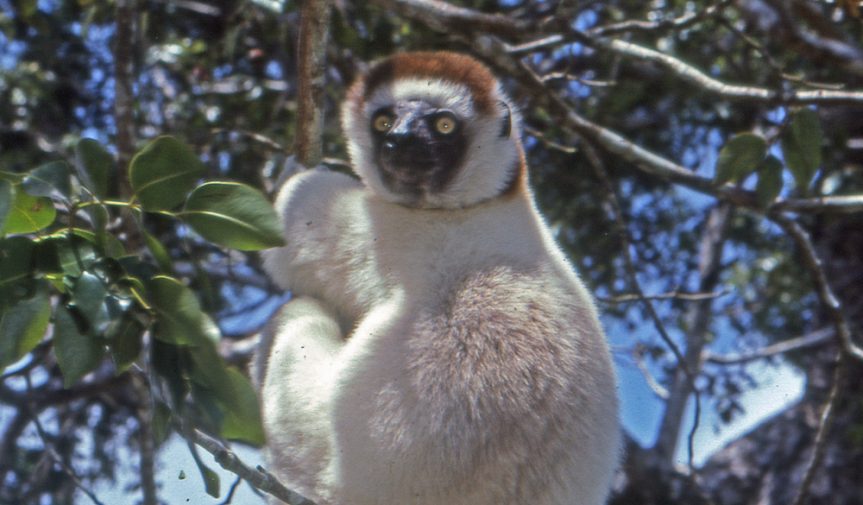
There were more than a few laughs, and some great teaching moments for me (“imagine Vancouver Island…only 20 times as long…and with 22 million people”).   Small wonder that Bill is known for his narrative abilities…there were stories of seriously prickly plants, leapin lemurs, finicky frogs, and fascinating life histories of all shapes and variety.

Come to think of it, Bill…your life-history is pretty fascinating too!

Two landings on Jedediah Island

Two landings on Jedediah Island
by Heather Harbord, 21 January 2015. 

7 Jan 2015 trip:  The fog horn sounded every 2 minutes as nine of us crossed over to Egmont and then drove to Secret Cove where the fog began to lift.

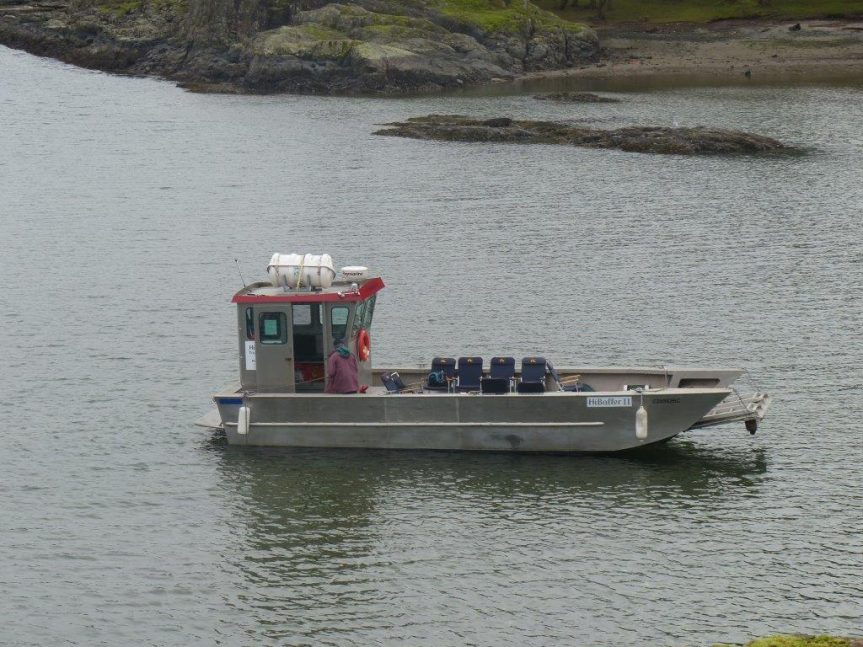
From there John Dafoe on the HiBaller II, a small landing craft, took us over smooth seas to Jedediah Island.  En route, we saw Long-tailed Ducks, Marbled Murrelets and a few Ancient Auklets.  At the south end of Texada, John pointed out some sheep grazing the cliffs.  Once we got ashore on Jedediah, we found lots of sheep traces and glimpsed some black and white animals in the distant meadow.  Sure enough the tops of the young conifers had been nibbled off.  Probably the flowers in the meadow are no more either.

While some of the group hared off to Deep Bay, the rest of us hiked over to Long Bay visiting the grave of Will, the horse, en route.  The banks of lush wet green mosses were like jewels contrasting with the black trunks of several fire survivors.  Although there was no rain, at lunch time, we were glad we had brought waterproof things to sit on as the land was very soggy. Small creeks ran along the trails.

Getting on and off the boat was a bit of a challenge as the shallow water, meant we had to do so up and down a slippery rocky cliff.  On the way home, we detoured into the strait where we saw more Long-tailed ducks and a Rhinocerous Auklet that disappeared before it could be photographed.   It was cool on the boat but we were dressed for it and the temperature was around 7 degrees.

21 Jan 2015 trip:  For the second Jedediah trip, nine of us drove to Secret Cove where we boarded the Comintagetya Hiballer II landing craft with John Dafoe at the helm.  The seas were calm and we had excellent views of about 150 Long-tailed ducks packed together in 3-4 groups along with a number of Ancient murrelets, a few Murres and Marbled murrelets.  The Steller’s sea lions, cormorants and gulls on the rock just outside Home Bay put on a show for us too.

We landed just below the old farmhouse and were glad of the steps they had cemented into the rock.  After a quick lunch, we hiked across the meadow and on to Deep Bay where we saw three of the goats.  Laurette later found this informative article.

We left just as the wind started to rise.  After a good look at Napier Falls, we started back but soon noticed a line of small waterfalls in the distance.  When we caught up to it, we found a pod of about 200 Pacific white-sided dolphins heading north which were very entertaining.  We got back to Secret Cove in time to catch our desired ferry back to Powell River.


Updated Christmas Bird Count Results

 
Audubon Christmas Bird Count Results, 2004-2014
By Andrew Bryant
31 Dec 2014
 

Since 2004, Clyde Burton, John Treen, Heather Harbord and others have organized our members to participate in the long-running Audubon Christmas Bird Count.  This magnificent example of “citizen-science” has now been running for over 114 years, and has led to literally thousands of of scientific papers and greatly improved understanding of bird population trends across the continent.

In Canada, the program is coordinated by Bird Studies Canada, and you can find and download recent and historical data through the Audubon data  portal here.

I did just that, and thought that providing a summary of our local results over time might provide a useful additional resource for the ornithologically-inclined!

Here they are:  Powell River Christmas Bird Count Results 2004-2014

3rd Christmas Bird Count for Kids!

Christmas Bird Count for Kids!
by Andrew Bryant, 6 December 2014

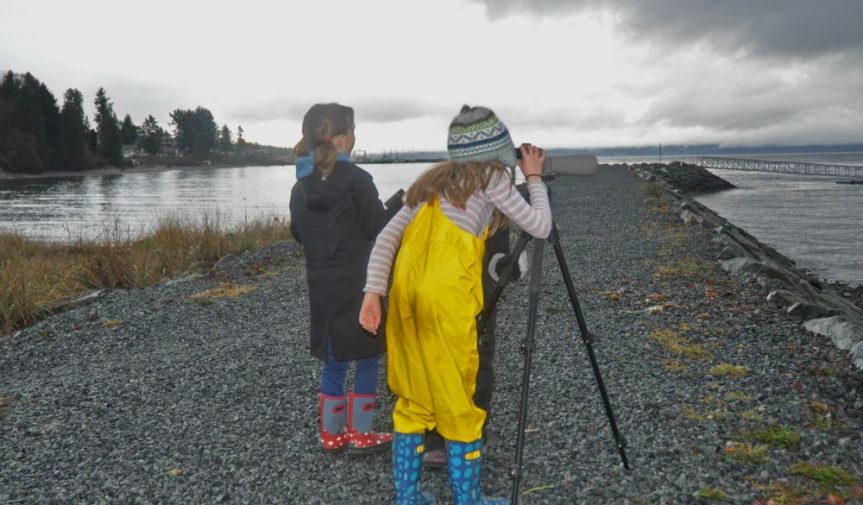
For the third year in a row,  the Young Naturalists participated in the Christmas Bird Count for Kids.  Although not an official Audubon event, it’s a great excuse for families to get out and about, learn some new birds and socialize with others.

Nicely organized by Elizabeth Tenhoeve and Michael Stewart, nine children and about a dozen adults braved the somewhat scary-looking weather and showed up at Willingdon Beach.  In fact the rains parted and it proved to be a great day.   Thanks also to John Treen, Neil Hughes, Heather Harbord, Janet Bingham, Clyde Burton and Nick Hauser for the scopes and birding expertise, and to Angelique Veerman and Gillian Andrew for the hot chocolate!

In all we counted 26 species and 156 individuals.  Highlights for me included a Thayer’s gull, Mew gulls, a very cooperative Varied thrush, and a flock of about 30 Kildeer that showed off their amazing ability to hide in plain sight!

Sustainable Forests field-trip

Sustainable Forests field-trip
by Tom Koleszar, 22 November 2014.

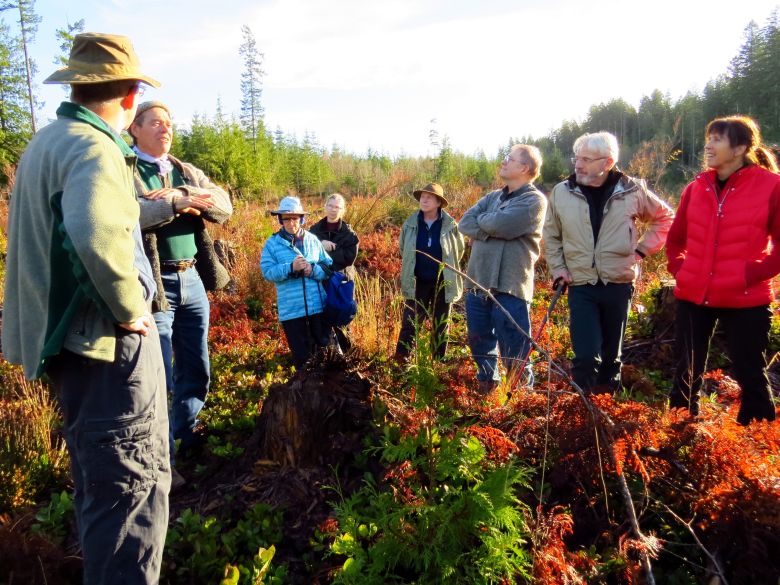
As a follow-up to the talk on Thursday, on Saturday twelve of us, led by Rod Tysdal (Director) and Al Barker (Operations Manager) of the Powell River Community Forest, toured parts of the Community Forest area, stopping at five sites to discuss various aspects of forest ecology and site management.

At the first stop we learned about the effects of root rot on Douglas Firs and the management of root rot sites.  From there we moved on to see some examples of the management of trails effected by Community Forest operations.

The next two stops examined forest ecology and the planning and regeneration of forestry sites based on ecological considerations.  The last stop reviewed the hydrological monitoring done by the Community Forest within its operations area.

We had a great day and the weather smiled upon us, and I think we all learned quiet a bit about sustainable forestry in our own back yard.

Special thanks to Rod and Al for guiding us through the sites and answering all our questions!


Rod Tysdal & Chris Laing – “Sustainable forests”

Rod Tysdal & Chris Laing – “Sustainable forests”
by Andrew Bryant, 20 Nov 2014. 

Professional forester Rod Tysdal, who works for the Powell River Community Forest, and Chris Laing, a forestry consultant and owner of Results Based Forest Management Limited, teamed up to provide a fascinating glimpse into the use of modern technology in order to manage our forests in a sustainable way.

While focussing on local forests, Rod and Chris also showed how forestry methods have evolved over the years throughout the province.   Long gone are the old ways of hip-chains, flagging tape and dbh tapes.  More importantly, long gone are the days of simply harvesting trees and planting Douglas fir everywhere!

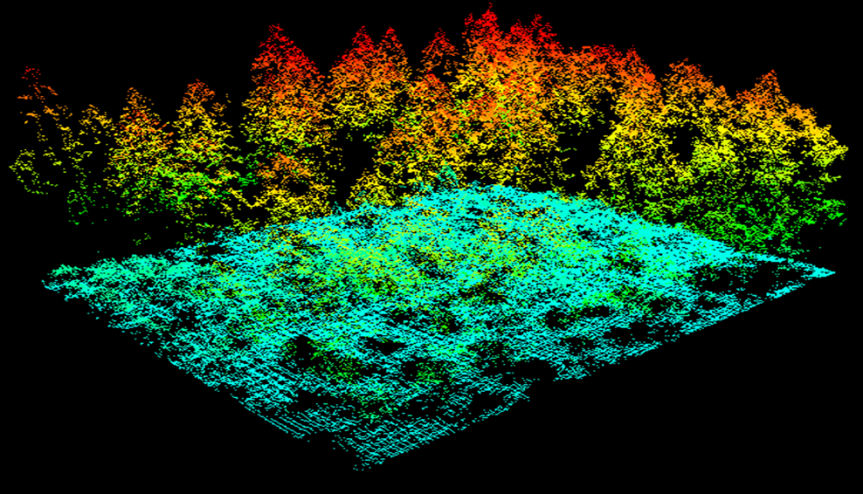
Instead, using advanced remote sensing methods such as LIDAR (light detection and ranging) and combining the resulting data using modern computer-based GIS (geographic information system) software, Rod and Chris showed the astounding amount of information that can be gleaned.

Forest heights, tree species, and even branching patterns can be clearly distinguished, making it far easier to know what “what is there” and “what can be sustainably harvested”.  It also allows foresters to tailor treatments specifically for a given area, improving forest productivity and helping us to know”what it will look like” for years or even decades into the future.

Eye-popping stuff!

Mushroom cook-out

Mushroom cook-out
by David Bedry, 17 October 2014. 

Twenty adults and three children headed into the woods for a follow-up field trip after our monthly meeting. Brian Lee, the previous nights speaker, led a great trip into the forest at Squirrel Crossing.

Despite a forecast of heavy rain and strong winds the weatherman cooperated for our field trip. Most people were prepared and dressed appropriately for the weather with water repellent clothes and in layers.

Brian lead us into the forest and we started seeing mushrooms that he began talking about almost immediately. Brian would either show and talk about mushrooms that he came across or commented on specimens that members brought to him.

Brian constantly emphasized the safety of what we were picking and referred to two field guides (All That the Rain Promises, and More by David Arora and Common Mushrooms of the Northwest by J. Duane Sept – both are available at Breakwater Books) to accurately identify what we were picking.

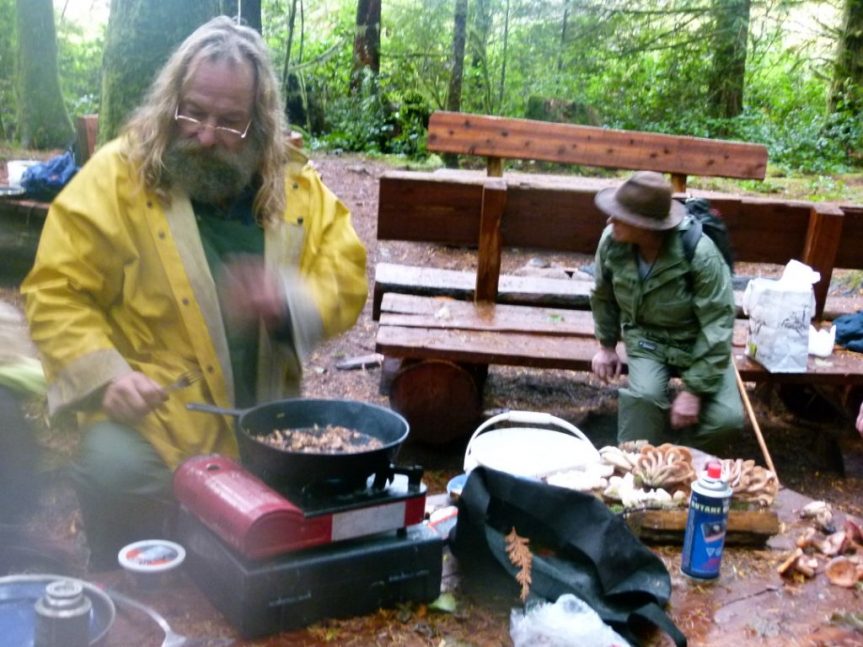
After a couple of hours of traipsing through the woods we converged on the picnic site at Squirrel Crossing (thanks to the BOMB Squad for the new picnic tables and benches) where Brian treated us to his mastery of culinary skills regarding our pickings. He suggested a cast iron skillet on high heat to “dry sauté” the mushrooms. This evidently both cooks the mushrooms as well as removing the excess moisture so you don’t have a “slimy” product in the fry pan. He only added a bit of butter towards the end of cooking to emphasize the taste of the mushrooms and not all the other flavours that could be added.

We all learned a great deal about mushroom identification, picking, and how to prepare and cook them.


Brian Lee – “Mushrooms”

Brian Lee – “Mushrooms”
by Andrew Bryant, 16 Oct 2014. 

Brian Lee is a local resident, a member of the Sechelt Mycological Society, and all-around woodsman and master of bushcraft.  He gave a lively talk about our local mushrooms, including tips for field identification, potential pitfalls for the unwary, and interesting culinary tips.

His talk was ably assisted by some of David Bedry’s marvellous mushroom photography, and in what must be a first for our club, Brian even served some of his exceptional home-made mushroom soup!

Jane Watson – “Sea otters”

Jane Watson – “Sea otters”
by Andrew Bryant, 25 Sep 2014. 

Dr. Watson is Professor of Biology at Vancouver Island University, and is based in Nanaimo.  For over 25 years she has been actively studying the ecology of sea otters, those iconic mammals that also have the amazing ability to create and shape the environments in which they live!

Sea otters were hunted to extinction in Canada by the mid 1800s, but were reintroduced to British Columbia from 1969 – 1972.  Reintroductions were ultimately successful, with the wild population currently numbering  around 5000, and still growing at a rate of 17-20% per year (trust me you’d be very happy if your bank account was doing as well).

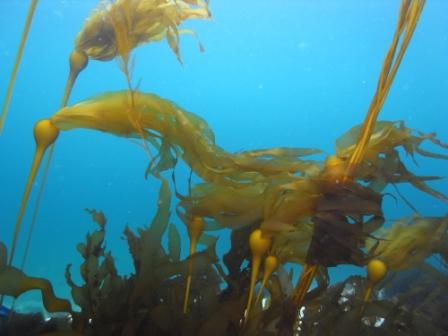
Part of Jane’s long-term research has revealed how presence (or absence, or re-colonization) of top-level predators can profoundly alter local ecosystems.  By feeding on sea urchins, which in turn graze upon algae, sea otters play an important role in nearshore ecology.   Thus, presence or absence of sea otters can lead to highly productive “kelp forests” or less productive “urchin barrens”.  And strange is this may sound, these changes may have profound implications for the fish that you catch, the size of the geoducks that you dig, or the flavor of the crab-meat that you eat.

Through wit, charm, use of data, wonderful images, tactile things, and her obvious passion for her subject, Jane brought us closer to a creature we’ve all seen in photographs…but never really understood.


Toba Inlet

Toba Inlet
by Barbara Sherriff and others, 9-10 August 2014.

Twelve of us took a two-day voyage up Homfray Channel, Desolation Sound, and Toba Inlet aboard the trusty Misty Isles, with Captain Mike Moore at the helm. I asked everyone what their personal highlights were.  Here’s what I learned…

Jane
  • Lying in the bowsprit
  • the colour of the water in Toba inlet
  • seeing the black bear along Toba inlet
  • interesting travel companions; they were great travel mates with good stories
  • well fed, wonderful sleep, starting the day with a short trail hike up to the waterfall followed by a delicious breakfast and coffee on a sunny cabin deck enjoying the view and company
  • fresh ripe blackberries to eat on the way to and from the meal cabin, pruned blackberry and salmon berry hedges
  • you can’t beat swimming in the warm waters of Pendrell Sound
  • thank you Captain Mike and helper Jonah for such a fabulous trip!
Marita
  • the whole trip
  • being with our friends and showing them our beautiful British Columbia
  • enjoying the stories our captain told us
  • seeing the bear spotted by Bernd
  • This was the best opportunity we found to access and explore the beauty of the ‘Unknown Canada’ of Desolation Sound and beyond. On your own it’s not accessible.  The times of the great explorers of the area like James Cook, George Vancouver and later entrepreneurs and homesteaders came to life through the stories told by our captain Mike.   I always looked forward for the next ‘storytime’.  We had a wonderful trip.
  • Big Thanks to the organizers of the trip. We look forward to doing a similar trip again.
Brigitte
  • wonderful days in a fairy-tale landscape, with the best
    weather you can think of
  • to be with our friends
  • we don’t have anything like this in Germany
Bernd
  • One of the most impressive trips we have made during our
    vacation here in Canada
  • we even saw one sea lion paddling around
Ken
  • Seeing our water, air and land meet in such incredible harmony in
    relief from the world of man
  • seeing Captain Mike sitting on his deck reading stories of Butte Inlet to us.
Liz
  • Seeing the heights of the mountains and imagining the depths of
    the inlets, smells, feelings of wind and fresh cool air in the sails
  • distorted growth of ancient trees growing on sheer rock
  • dryness of usually streaming water falls
  • Sharing Pendrell Sound with a few lower down jellyfish makes you realise how bright is the white body that I’ve been protecting from the sun
  • you fit right in with the supermoon of the night before
  • cool pool but no octopi visible.
Julia
  • amazing turquoise blue water in Toba inlet
  • Total silence at Toba Wildernest Lodge
  • Misty Isles skipper and his wonderful stories, magnificent accommodation, great shower and flush toilet, the most amazing view over the mountains, great food
Paul
  • I was so mellow when I swam in Pendrell Sound
  • great salt water, warm and inviting
  • the super moon over the mountains was spectacular
  • accommodations were wonderful, especially the shower pressure
  • my style of camping
Maria
  • The colour of the water in Toba Inlet
  • leaving the many boats behind
  • Mike’s stories, our lovely cabin deck
  • sails up with Mike scampering up the ladder
  • glacial remnants
  • beautiful light
  • the full moon
  • a fabulous view from the cabin, great dinner and breakie
  • thanks Jonah!
Barb
  • I loved sailing up Toba Inlet with the two sails up and the beautiful aqua colour of the water
  • swimming in the warm water of Pendrell Sound was wonderful
Barbara
  • The moon rise over the mountains
  • the wonderful glaciers
  • horns
  • the Crack of the World
  • xenoliths
  • pictographs

Purple martin banding part III

Purple martin banding part III
by Andrew Bryant, 9 Aug 2014.

Scheduling conflicts prevented our Young Naturalists from attending this event.  But a few members (thanks Clyde Burton!) stepped up to the plate and provided some on-the-ground support. As usual I snapped a few images.

Thanks as always to Bruce Cousens and Charlene Lee of Nanaimo, and their technician Julia Kadera, who did all the banding.  Thanks also to the Bennett family (John, Erin and Janice), Trevor at Relay Rentals for the free ladder rental, and especially to John Bennett and Jason Roberts for helping to move the ladders around.  I REALLY appreciated your brawn, confidence and grins.

I had NO idea that BC will  likely come close to 1000 breeding pairs this year.  All because of volunteers who are willing to roll up their sleeves and get involved.

Charlene reports that a total of 30 nest boxes were checked (3 came down over the winter). 29 boxes were used by Purple Martins and swallows (likely Violet-green) nested in 1 box. There were 12 fledged martin nests, 1 lined nest, 1 with 3 nestlings too young to band, 1 with a 20-day old bird that wasn’t banded, 11 boxes with nestlings (24) that were banded and 3 boxes with dead young (4).  There were also 3 birds that fledged unbanded.

You can learn more about the ecological context, history, and progress of the recovery program for Western Purple Martins here.


Cortez Island Geology

Cortez Island Geology
by Tom Koleszar, 26 July 2014.

Twelve naturalists, led by our own Barbara Sherriff, boarded the Misty Isles with Captain Mike Moore for a day-long geological tour of Hernando, Twin, and Cortes Islands.

We first cruised past Hernando Island before landing at Iron Point at the south end of Twin Islands, where we had ample opportunity the get our hands on the rocks of Wrangelia and the Coast Plutonic Complex.  Back aboard the Misty Isles, we then cruised along the south shore of Cortes Island looking at recent Quaternary sediments and more examples of the plutonic rocks of coastal BC.

For the latter part of the afternoon, Captain Mike took us on a cruise around Kinghorn Island in Desolation Sound and then along the Copeland Islands and back to Lund.  Along the way we saw some wildlife and a rare Agarikon fungas on an old growth Douglas Fir (in addition to the rocks and beautiful scenery, of course!)

We had a wonderful day with great weather, and we all learned a lot about the geology of our own area.  Special thanks to Barbara and Mike Moore for making it all possible!

Texada Tidepools

Texada Tidepools
by Lu Wuthrich, 13 July 2014.

Eleven of the naturalists group had the pleasure of exploring the intertidal zone at Limekiln Bay on Sunday, July 13th. The weather was wonderful and a low tide provided an opportunity for three hours of fun turning over rocks and digging bivalves on the sandy part of the beach.

The rock formations are striking, as the tide pools are carved out of
limestone and looked scooped out by some giant spoon. Beautiful Chitons
were one of our finds as well as a huge abundance of orange Sea Cucumbers
that seemed to be under every rock. The picture is of one such orange and
white Sea Cucumber.

We owe special thanks to John Dove, who not only co-led the trip with me, but cleared out the trail especially for us!

Twigs and more Part II

Twigs and more Part II
by Heidi Rohard, 7 June 2014.

This Saturday was a perfect day for a stroll in the woods: big, beautiful sunshine!

Five of us joined our plant expert, Shirley Cole, for a follow-up field trip to Squirrel Crossing to see the bushes, trees and other flora which we had visited earlier this year and are now in their spring foliage.

It was a very easy walk because at every step of the path there was something to learn about, either high up such as the large cascara and Pacific crabapple, further down salal and twinberry,  and at ground level trailing blackberry, various ferns and skunk cabbage. Shirley pointed out characteristics of plants, some of them minute, that will help us with identification.

The morning was enjoyable and informative; Shirley is so interesting to listen to.  The challenge now is to remember what hardhack, ninebark and lady fern look like.

Barbara Sherriff – “Arsenic and old waste”

Barbara Sherriff – “Arsenic and old waste”
by Andrew Bryant, 15 May 2014. 

Dr. Barbara Sherriff spoke from her long experience as a Professor of Geology at the University of Manitoba.  Now re-located to Powell River, Barbara serves as our current Club President and reminds us that geological processes have not stopped.

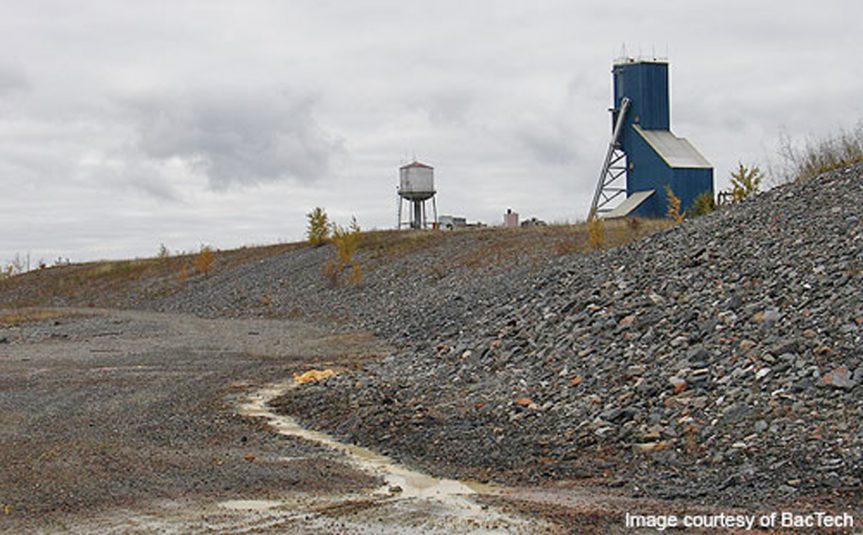
She spoke about the causes and some solutions for environmental issues related to metal mining, including acidic drainage and arsenic with examples from gold and base metal mines in Manitoba, the Northwest Territories, and elsewhere around the globe.

I unfortunately missed her talk, but her Powerpoint presentation was masterful.  To the point.  Focused.  Thorough. And with data!  And one of those presentations when people just shake their heads in wonder and say “I had NO idea…”