Marvellous mushrooms in the mist

Marvellous mushrooms in the mist
by Janet May, 28
 Oct 2017.

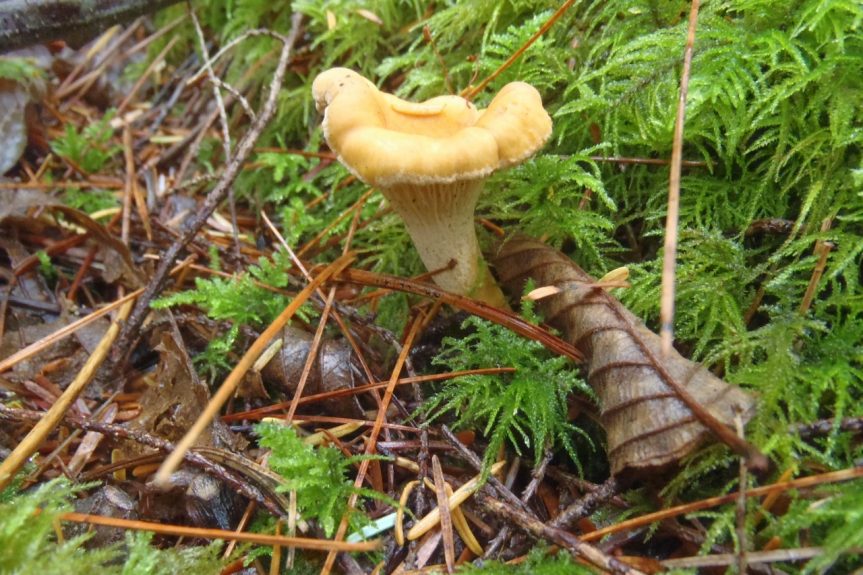
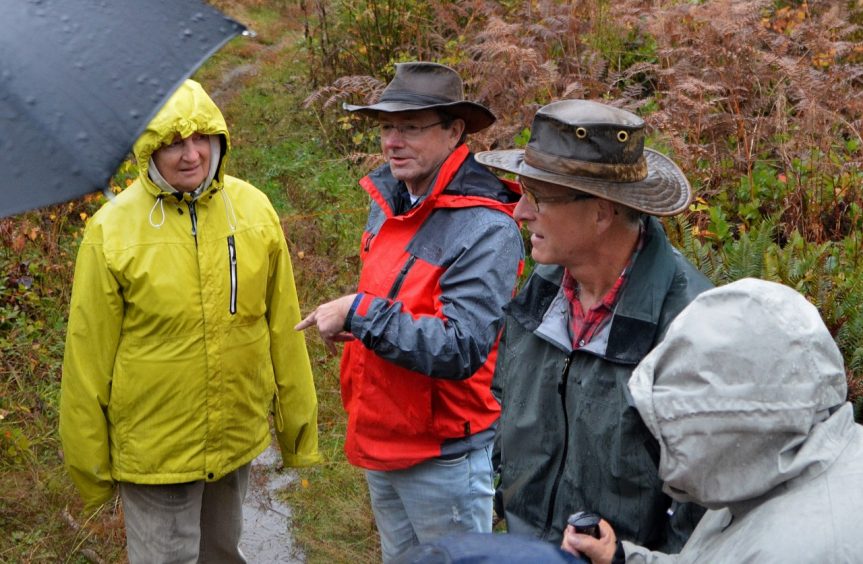
Ioni Waisgluss led a foggy fungi hunt through Millennium Park.

Tiny candle snuffs and burly red belted polypores were admired, as sunlight gradually brightened the golden maples above us.

Enthusiastic young mycologists and their parents had a fine fall day out!


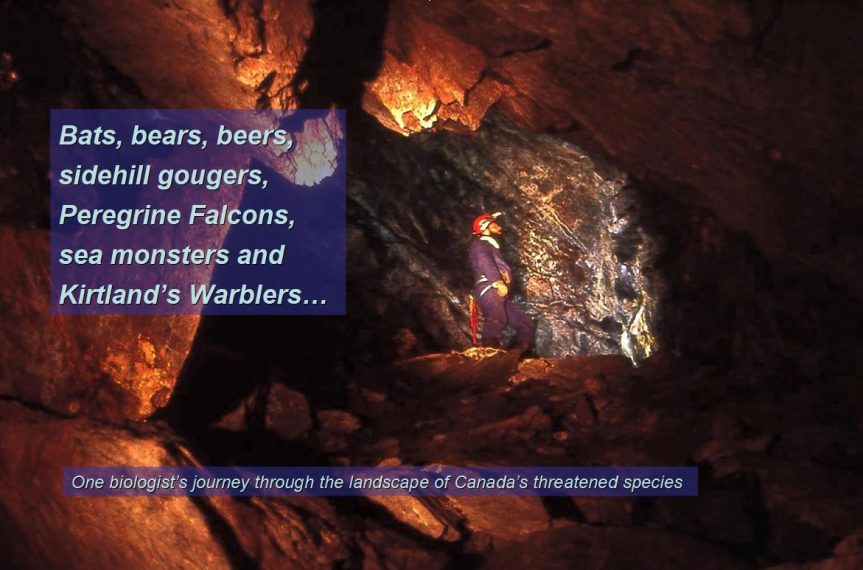
Andrew Bryant – “Sidehill gougers & sea monsters: one biologist’s journey”

Andrew Bryant – “Sidehill gougers & sea monsters: one biologist’s journey”
by Heather Harbord, 19 Oct 2017.

Our very own Dr. Andrew Bryant came to tell a story – or more accurately, a whole bunch of stories – about his work with endangered species.

In “Follow the money”, newly-graduated Andrew does just that.  He passed up a low-paying “dream job”, instead becoming a park naturalist, answering damn fool questions from tourists in Algonquin Provincial Park.  Things worked out.  He wound up reintroducing Peregrine Falcons – and having a cliff named after him.

“Loaded for bear” begins with a chance encounter with a grizzly bear, on an otherwise Julie-Andrews-kind-of-day.  This led to a slight change in Andrew’s career-path – and a minor supporting role in creatimg the world’s first protected sanctuary for grizzly bears – in a place called the Khutzeymateen.

Follow the girl” sees Andrew arrive in the south Okanagan.  There he spent time rapelling into abandoned mine shafts in search of hibernating bats.  Twenty-seven years later, he was surprised to learn that somebody had actually read his report – and acted upon it.

Watch out for sea monsters” takes Andrew back to Ontario, where he used tape-playback methods to search for endangered Kirtland’s Warblers.  Not finding any, he did get a good scare while paddling around Manitoulin Island.  The warblers, as it turned out, didn’t need his help anyway.

Here and there we also got to learn about sidehill gougers, zoom back and forth across the country, and see some truly one-of-a-kind photographs.

He really needs to settle down and write that book!


Mushroom hunt

Mushroom hunt
by Nancy Pezel, 14 Oct 2017. 

It was a damp morning but that didn’t deter the eleven hardy members that met at Squirrel Crossing to learn about mushrooms.

At the picnic spot across the bridge, Izi Loveluck gave us an informative talk on the basics of wild mushroom identification, a useful handout about mushrooms and some spore print charts, as well as some tips on where to look for mushrooms in the surrounding forest.  We then split up into small groups and started searching for specimens.  After an hour we regrouped and laid out the specimens we’d gathered.

Izi and Laurette Hamoline identified chanterelles, some kind of Bolete, fawn/deer mushroom, bleeding milk cap (Lactarius rubrilacteus) and some kind of Russula from our findings.

Izi had also brought a couple of pine mushrooms and a cauliflower mushroom she had found the previous day for us to look at.  David Bedry generously provided his stove so Izi could cook up some of the chanterelles, the cauliflower mushroom and a shrimp mushroom (Russula xerampelina), with lots of butter!

We enjoyed sampling some tasty mushrooms before the cold finally forced us home.

Frank Ritcey – “What’s the connection? How to stay safe while figuring it out”

Frank Ritcey – “What’s the connection? How to stay safe while figuring it out”
by Andrew Bryant, 12 Oct 2017.

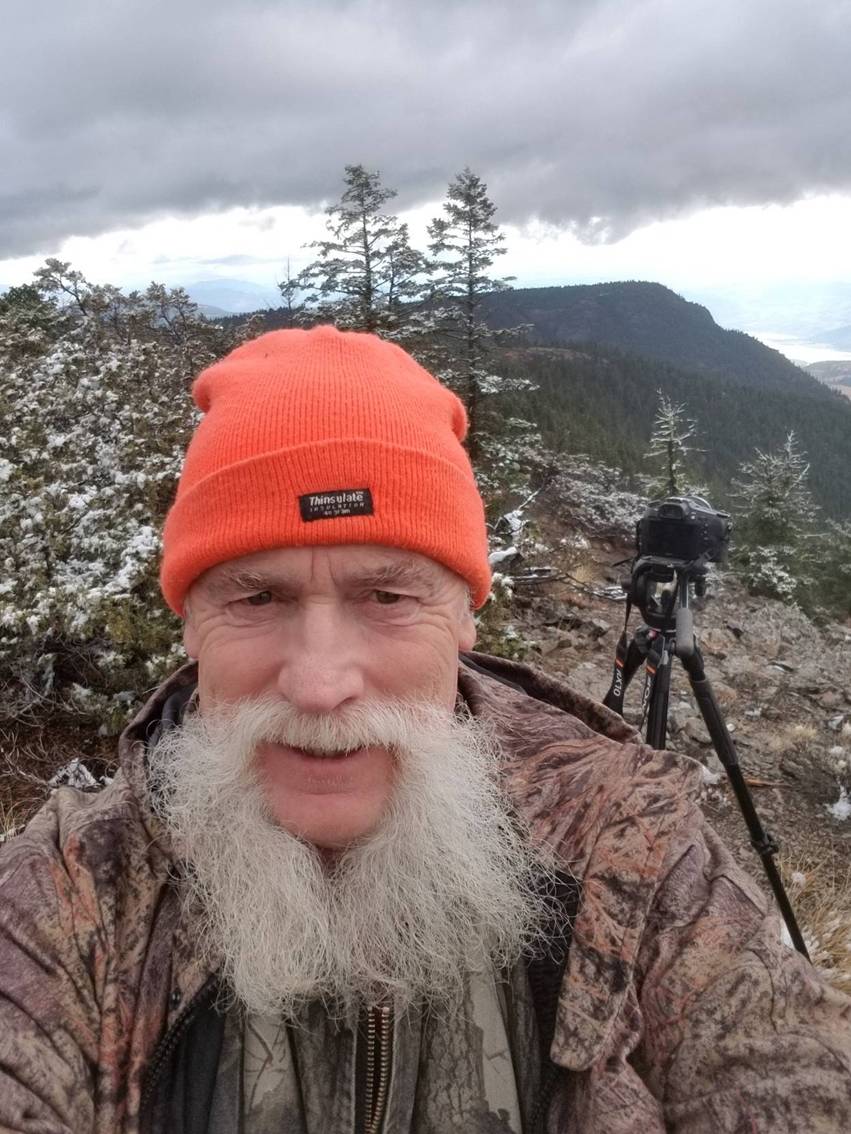
Frank Ritcey grew up in the wilds of Wells Grey Provincial Park, and now divides his time between serving as Provincial Coordinator for WildSafe BC, host for CBC-Radio, and hunting wild creatures with camera.

He returned to Powell River to share more of his wonderful images and stories.  This time his emphasis was on seeking connections in nature, and trust us – he’s found more than a few!

– Did you know that one can predict the likelihood of future bear encounters by looking at soapberries in June?
– Or that bullfrogs and bighorn sheep have much in common?
– Or that the number of chukar partridge is related to the number of cows?

After discussing wildlife encounters, electric fencing, amd the marvellous WARP (Wildlife Alert Reporting Program) Frank ended the evening with a selection of highly amusing videos, a few of which can be seen below.

Thank you Francine Ulmer & Wildsafe BC District of Powell River, for helping set up this unscheduled talk on such short notice!


Fun with trail-cams #1:
cougar close – up

Fun with trail-cams #2:
cougars and fawn


Fun with trail-cams #3:
don’t believe everything you see on the internet!


Lang Creek Hatchery

Lang Creek Hatchery
by David Bedry, 30 Sept 2017. 

About a dozen people met at Lang Creek to see the returning salmon and learn about the Lang Creek egg collection facility run by the Powell River Salmon Society.  With only two paid staff the PRESS relies on alot of volunteer help, especially at this time of year.

With recent rains and on shore winds the salmon have been making a steady return.  About three quarters of this years’s brood stock are already being held in the facility until they are ready to harvest the eggs.  The other fish are allowed to swim up stream to spawn in various locations of Lang Creek.

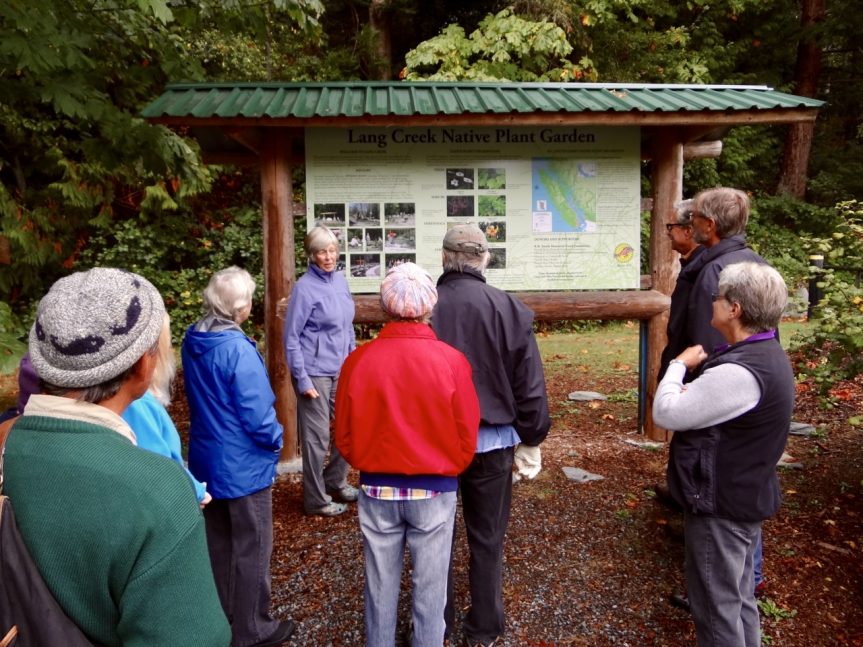
Michael Stuart finished off the morning with short talk about the Lang Creek Native Plant Garden, and the variety of plantings there.

Alison Bird – “Earthquakes of Coastal BC”

Alison Bird – “Earthquakes of Coastal BC”
by Andrew Bryant, 14 Sept 2017.

Alison Bird works as Earthquake Seismologist for Natural Resources Canada, and is based in Saanich.  Our club, in partnership with the Powell River Regional Emergency Program (PRREP), invited her to come talk to us about her area of expertise – earthquakes – and she graciously obliged.

Beginning with the amazing story of how researchers were able to date, to the day, a massive earthquake that hit waaaay back in 1700, Alison took us through the basics.  What are fault-lines, subduction zones, and plate tectonics?   How big is big?  An excellent one-page primer can be found here.

Using images from around the world, Alison stressed that while the forces unleased in an earthquake truly baffle the imagination, the damage suffered largely depends on more mundane things.  Location is important (obviously) but soil types, vertical topography, and ocean basin topography are all of great importance – as are building codes, enforcement, retrofitting, and keeping an emergency kit.

Will the “big one” happen?  Most assuredly.  Can we predict when it happen?  No.  Can we mininize risks, through attention to detail?  Yes.

A talk not to be missed.


The Cascadia Mega-Tsunami (given time-zones, this occurred at around 9:00 PM local time, 26 January 1700)

Alpine Adventure – by helicopter!

Alpine Adventure – by helicopter!
by Tom Koleszar, 12 August 2017.

Twenty members of the Malaspina Naturalist Club recently enjoyed an alpine adventure, travelling by helicopter to an area near Skwim Lake.  While some were able to fly in directly from the airport, most of us flew from a staging area near Freda Lake.  Pilot Ben made sure all the flights were very interesting indeed!  We were also very lucky with the weather, finding a window just as the forest fire smoke was leaving and before the clouds arrived!

We spent the day exploring a ridge just above Skwim Lake and enjoying the views of the surrounding landscape. Our explorations included a tour along the ridge before lunch looking at the geology, flowers, shrubs, trees, and even a marmot!  Thanks to Andrew Bryant for an impromptu lecture on marmots and marmot habitats!  We found some fossils in the ancient sedimentary rocks of the area, and enjoyed several different varieties of wildflower growing among the snow patches, rocky terrain, and stunted alpine trees.  While Skwim Lake itself was mostly free of snow and ice, the upper lake near our ridgetop was still almost entirely covered, with some fascinating snow and ice formations around the shoreline!  After lunch, we had some free time to explore as we wished, or just relax and enjoy a beautiful alpine day. Our local alpine areas are fascinating, but very difficult to get to, so I think a great time was had by all exploring new territory (or in a few cases, revisiting old haunts!).

Special thanks go to Laurette Hamoline and Nancy Pezel for helping to organize the trip, our drivers who took folks to the staging are over many kilometers of dusty roads (Mel Lougheed, David Bedry, Nancy Pezel and Andrew Bryant), and also to Pilot Ben Berukoff of Oceanview Helicopters for safe flying and interesting tours!

Postscript:
Andrew and Laurette sent out the following emails upon their return:

>>>>>>>>>>>>>>>>>
Hi everyone,
Something quite amazing happened at the very end of the trip.
Specifically, we were on final approach to landing on the logging road.  I was in the front seat snapping photos.  The first two images show our landing approach.  The 3rd image shows the helicopter landing in the same spot (taken earlier in the day).  We were about at the same altitude, facing the same way, when Pilot-in-Command Ben exclaimed:
“what the F___ is THAT going on ABOVE us?”
It took a second to see what Ben had already seen through the swirling helicopter dust.
Tumbling arse-over-teakettle down through the shubs, and then down the bare slope, was an adult deer.  With a large cougar firmly attached to it.  I have an image of alternating paws, hooves and frenzied shubbery.  That was a lot of body mass to be performing somersaults. I saw this apparition quite clearly – and then I didn’t – because they tumbled down behind the log pile.  A moment later we were on the ground.  Unscheduled shut-down.  Fumbling with seatbelts and doors to disembark.  Five of us stood there, knowing there was an excited cat behind that wood pile, and a dead or dying deer there too.  We didn’t go closer.  A few moments later we caught another glimpse – the cougar streaking back up the embankment and disappearing into the undergrowth.  Ben rebooted his helicopter and was quickly airborne.  We thought it best not to check on the deer, but instead loaded gear and drove home.
Several things make the event noteworthy for me.  In 25 years of fieldwork on Vancouver Island, I only saw about 15 cougars, and never watched one kill a deer in front of me.  Second, I had the camera, literally in my hands, but the moment was too fleeting even to raise it to my eye.  Finally, the time elapsed from frame DSC_300 and touchdown was short…maybe 10-15 seconds?  So I suspect that both predator and prey must be somewhere in that photo – but damned if I can see them.
Nature, red and tooth in claw
Andrew
>>>>>>>>>>>>>>>>>
To continue Andrew’s story ……. I was in the next shuttle run to the landing and Ben was, of course, telling us of the raw nature scene you had witnessed so we are anxious to see how the story was unfolding and especially to know where that cougar was now.  As we approached we were amazed to see the wounded deer limping across the landing right across our parking spot and down into the brush below.  It was, to be sure, a rather pitiful and disturbing sight but it’s just nature taking its course.  I’m quite certain that cougar, frightened off by all the noise of the chopper, was keeping a close eye on his supper and was just waiting for us to all to leave.  Quite something!
Laurette

A Mitlenatch day-trip

A Mitlenatch day-trip
by Marg Reckenberg, 29 June 2017.

What a warm, sunny, calm day as the twelve of us set out for Mitlenatch Island aboard the Misty Isles with Captain Mike Moore and assistant Amy.  We left Lund Harbor at 10 am after a quick stop at Nancy’s Bakery.  Then we were on our way, for the 2 hour trip past Major Rock, then through Baker Passage between Hernando Island and Twin Island.

Mike showed us our course on the marine map and told us interesting tidbits about the islands that we past.  We saw lots of white jellyfish in the water en route and an eagle skimming along the water with a large fish.  The eagle could not get airborne and had to struggle just to land his fish on shore.  Mike explained the optical illusion of Mitlenatch looking close but, in fact, it took us another 45 min. before we arrived.

The Island is surrounded by a fairly shallow rocky shoal so we anchored and half our group went ashore by zodiac.  (Note from Misty Isles crew – remember to bring water shoes as a dry docking is not always possible).  The group on shore looked at wildflowers – including one prickly pear cactus in bloom – the island has a desert-like climate and we visited the naturalist cabin and then the nesting areas of the seagulls and many of us saw for the first time gull chicks scooting under their Moms.

Meanwhile the other half of the group went around the island in the zodiac with Mike.

He was wonderful at pointing out the nests of Pelagic and Double-crested Cormorants, Black Oystercatchers, Harlequin ducks, Pigeon Buillemots, and Great Blue herons as well as crows, ravens, eagles and gulls.  We saw plenty of harbor seals and Stellar sea lions.  From their growling noises we understood where they got their name.  Then these huge sea lions began to take to the water – and soon afterwards we saw a nearby humpback whale.  If this wasn’t bonus enough we saw a humpback further away breaching.

It just doesn’t get better than this.  Of course, the two groups switched places halfway through the allotted time.  At the end of the leisurely afternoon we headed back to Lund.  Of note, on our return trip, was a brown scummy substance, widely spread across the water.  Mike thought this was likely an algae bloom that the changing tides brought our way.  It gave the boat’s wake a muddy appearance.

We returned, feeling that the day had been truly magical!

In search of saprophytes

In search of saprophytes
by Nancy Pezel, 24 June 2017.

Walter Kubany and his wife Sally led an enthusiastic group of 14 naturalists on a hunt for saprophytes along the trails of Valentine Mountain on this beautiful summer day.

We learned that many of these plants live on dead and decaying vegetation, but some like the Indian-pipes and Groundcones are parasitic on other plants.   They don’t have green leaves and chlorophyll, but interestingly some of them are in the winter-green family.   Because these unusual plants don’t seem to be very long lived, we were lucky to find some striking Candysticks in full bloom, a few Coralroots of varying shades of orange and purple, and a Pinesap.

Without Walter’s keen eye we would have missed the white Indian-pipe that was just emerging from the soil at the edge of the trail and some delicate orchids off the main trail.  For any of the saprophytes that were already finished flowering or hadn’t emerged yet, Sally and Walter had beautiful photos so we would know what to look for on future walks!

Tom Koleszar – “Hidden treasure in the attic: our local alpine”

Tom Koleszar – “Hidden treasure in the attic: our local alpine”
by Andrew Bryant, 22 June 2017.

Intrepid hiker, geologist, and Club President Tom Kolesar took us on a vicarious exploration of the high alpine in our own backyard – and what a fine view it was!  Using images spanning years and multiple adventures, Tom shared his experiences on many of our local mountains.

He structured his talk in terms of layers, discussing each of the
• Tree Layer
• Shrub Layer
• Herb Layer
• Moss Layer
• Water Layer
• Rock Layer
• Wildlife Layer
as the inter-related ecosystem components that they are.

I was personally impressed with his geologist’s view of things.  Where I see an awesome mountain ridge, Tom sees a geological intrusion that “doesn’t fit”.  Where I see an extraordinary mountain waterfall, he sees “inexorable forces”.  Where I see a beautiful meadow of wildflowers, he sees “resiliance”.  And where I see an enormous glacier, he sees “time” and “pressure”.

A talk not to be missed.  Nor is our upcoming helicopter field-trip in August!

Bute Inlet Epic

Bute Inlet Epic
by Rose Marie Williams, 8 June 2017.

After filling up with coffee and cinnamon buns from Nancy’s bakery in Lund, our skipper, Mike welcomes 12 of us aboard his schooner, Misty Isles.   We leave the harbor and turn north, through Thulin Passage.  All stretch their memories to match  names to faces.  Not easy for some, but we do it.  In the Copeland Islands we pause to view the red pictograph on the rocks on our starboard side.  It’s been close to 40 years since I last sailed Desolation Sound and beyond.  It is exciting as memories  flood back.  The sea is calm, the sky is blue and the sun shines brilliantly over the water.  Mike amuses us with stories and facts about the surrounding area.

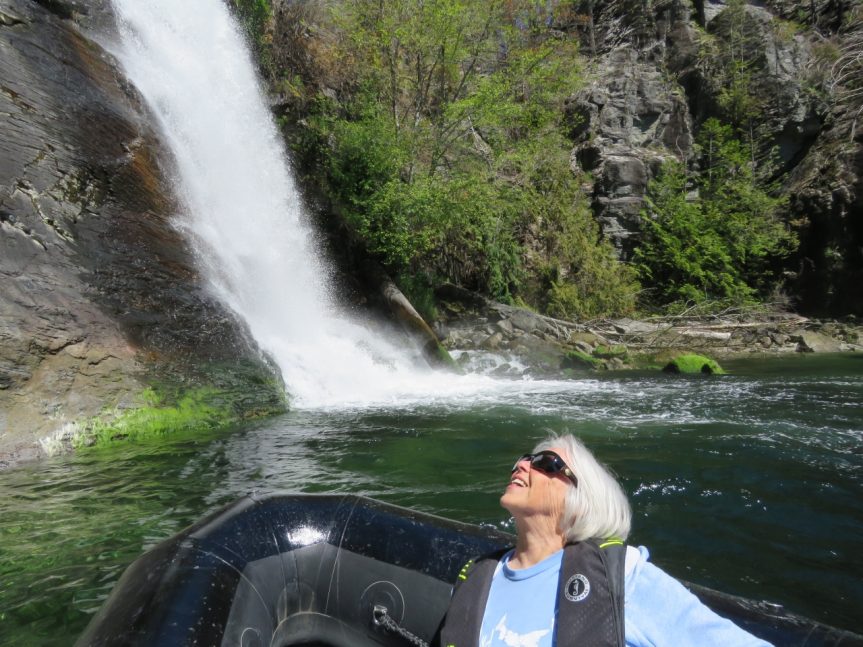
Our first stop is Refuge Cove.  It’s early in the season and the harbor is empty.  We clamber onto the dock and up to the store where we peruse the books, charts and other trivia offered for sale. Once everyone in Desolation Sound came here for mail, supplies and gossip.  Continuing up Lewis Channel we enter Teakerne Arm, docking below the waterfall.  The adventuresome ones hike up the path to Cassel Lake above the falls.  Mike takes three of us for a cruise around the bay in the zodiac.

Back on board, Devon serves everyone a mug of a most delicious tea and cookies as we enter Calm Channel and pass the most northern point of Cortes Island, Bullock Bluff. Steering to port we enter Drew Passage between Read Island and the Rendezvous Islands. Passing Mayes Point we again steer to port and thread our way through Surge Narrows meticulously following the marked course between Read Island and Maurelle Island.  It’s been a long and exciting day as we head to the far east side of Quadra Island and come to rest at Discovery Islands Lodge.  Our skipper and his mate turn their hands to kitchen duty, and with the help of the lone person at the lodge soon have a salmon dinner on the table. In the morning we awake to freshly baked bread, porridge with many extras, and of course coffee.

On board again, Mike introduces us to the complicated intricacies of tides in Surge Narrows. We retrace our way through the Narrows heading north, cross Calm Channel, observe the site of Church House before beginning our ascent up Bute Inlet, passing Stuart Island on our port side.

Bute Inlet is 80 km long and averages 4 km wide with spectacular mountain vistas. The water is a deep blue and the land on both sides of the inlet is green with the native forests. Barbara Sherriff shows us maps of the geology and discusses the rocks that the trees conceal. As we travel up the inlet the water changes color as melting ice from the surrounding glaciers merge with the seawater.  Toques, mitts, scarves and warm coats appear as the temperature drops.  The wind off the numerous glaciers and massive ice fields is frigid.

After lunch we enter Bear Bay and we seem to be standing still as the tide is running against us.  Mike takes us for a zip around the bay in the zodiac. Now the water is a milky grey turquoise. By late afternoon, mountains and glaciers that rise 9000 feet above sea level surround us. Mike maneuvers the boat to the far northeast corner where the Southgate River enters Bute Inlet and by looking to the north west we can see in the distance snow covered Mt. Waddington, the highest mountain in B.C. (13,186 ft.).  Chuck, a guide from the Homathko Logging camp leads us up the river to the camp where we will spend the next two nights.

In the morning we hike in the surrounding area and instead of warning us about dangerous animals, Chuck says: “Do not disturb or frighten the wild life.” In the afternoon we take the zodiacs and explore the nearby Cumsack and Southgate rivers. The former has exquisite mountain reflections and the latter an old homestead that we explore.

Wednesday morning we begin the return trip down the inlet.  En route Paul Jones  buys fresh prawns off the boat that caught them and Devon serves them with garlic butter. Our last night is spent at another comfy Discovery Islands Lodge, tucked in a bay on Read Island off Sutil Channel.

On the 5th morning we travel south down the west side of Cortes Island. The day is grey, raining and we encounter a stormy southeastern wind. We duck in to Mansons Landing where very kind residents drive us to the local museum and then to Cortes Bay.  Heading into the howling “southeaster” and towering seas, Mike and Devon alone take the Misty Isles down and around the most southern tip of Cortes Island, Sutil Point, to Cortes Bay. We board the vessel for a rough ride, battling 6 ft waves, until we reach the north end of Thulin Passage and the Copeland Islands protect us from the battering wind.  We arrive in Lund harbor peacefully at 5:15 as planned.

Rhododendron gardens

Rhododendron gardens
by David Bedry, 27 May 2017.

Ten of us were blessed with a cloudless sky as we toured the amazing Rhododendron garden that David Smith has carved out of his property off Crowther Road, on the way to Okeover Inlet.

David’s is a year round labor of love as he plants not only rhododendrons from around the world, but other native shade tolerant plants in his hillside garden.  It’s really a Botanical Garden, with rhodos as the centerpiece.  To make a fertile and hospitable planting substrate David conditions the soil with native mulch.  All of has planting is natural as well as chemical free.  David was an excellent tour guide, telling us about his work in the garden and answering all of our questions.

David’s passion for what he does has spilled over onto two of his neighbours properties, creating a garden to rival any that I have visited both in Canada and abroad – and we have it right here in our own back yard!

Return to Mitlenatch and Twin Islands

Return to Mitlenatch and Twin Islands
by Tom Koleszar, 23 May 2017.

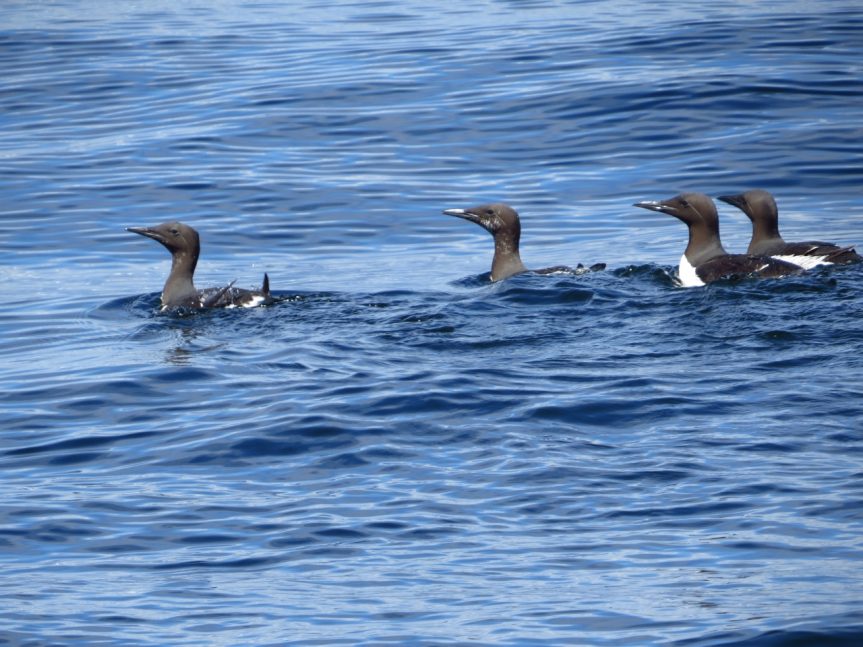
Twelve of us boarded the Misty Isles at Lund for a 2 day trip with Captain Mike Moore and naturalist leader George Sirk.  We sailed south around Savary Island and Mystery Reef, finding hundreds of Pacific Loons and Common Murres, along with many other sea birds. From Savary we continued on to Mitlenatch Island, where we split into 2 groups – half going ashore and the other half circumnavigating the island in Mike’s zodiac.

There was a profusion of sea lions, seals, and cormorants and other sea birds for the zodiac groups, and many wildflowers and gulls for the island groups.  The second activity for each group was cut a bit short by a sudden (but forecast) change in the weather.  Strong northwest gale force winds came up suddenly and forced a quick return to the boat, and then made the trip from Mitlenatch to Twins Island a very interesting ride!  We made it in safely, however, and then were treated to a fantastic salmon dinner at the Twin Islands lodge by Captain Mike, Amy, Samantha and host Mark Torrance.

After a very comfortable night, some of us went for a pre-breakfast bird walk lead by George Sirk, then all enjoyed a wonderful breakfast provided by Mike’s crew.  After breakfast, our host Mark gave us a tour showing what he is doing to make his place environmentally friendly and sustainable – solar and micro-hydro power systems, extensive gardens, etc. – a very informative morning!  The walk then continued down through the dry forests of South Twin Island (where guide George continued our bird and plant education) to Iron Point (where trip participant Tom Koleszar gave a summary of the area geology).  From there it was back to the lodge for a great lunch, and then on to the boat for the trip back to Lund – and we put up the sails for this nice, relaxing final stage of the journey!

Special thanks to Captain Mike Moore and guide George Sirk for a great couple of days of learning, to Amy and Samantha for the great meals, and to our host at Twin Islands Mark Torrance for opening his place to us and showing us around.  We all learned a lot and had a great time.  Thanks also to Heather Harbord for making all the trip arrangements for the Club.

Birding by Ear – Part VII !

Birding by Ear – Part VII !
by Pierre Geoffray, 16 May 2017.

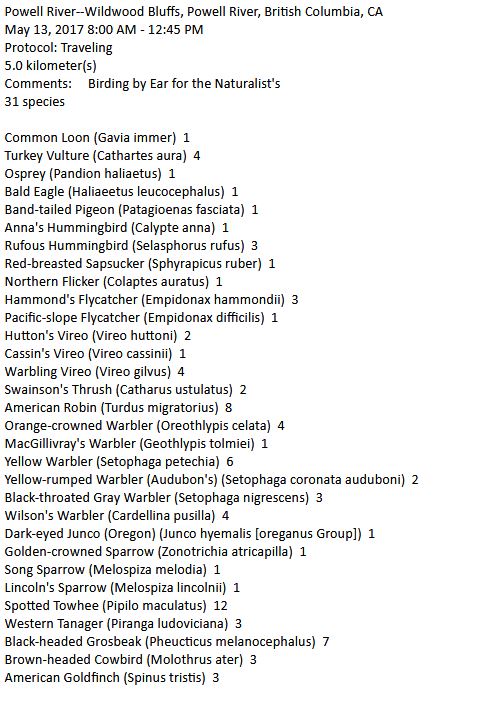
Fifteen of us met at the Italian Hall for “Birding by Ear”.  The weather decided to give us a break and we enjoyed the dry and cloudy spell (the best we can wish for this year!) as we toured the Wildwood Bluffs.

Right around the Italian Hall, we had some good views of our first Black-headed Grosbeak, singing for us in the open at the tip of an alder tree. Also there, a Yellow Warbler and a pair of Western Tanagers, all freshly arrived from their long migration, showed very well.

This year has been particularly quiet, with birds being shy and not very vocal. The cold temperatures surely have something to do with it. In a way it made it easier for us as it helped us focus on the fewer songs we heard.  The warblers especially can be confusing when they are all singing together!  So we unravelled them, mostly one at a time:

Sweet, sweet, I’m so so sweet” (Yellow),

CHI chi chi chichiCHI!” (Wilson’s),

CHICHICHI chachacha” (MacGillivray’s), and the new mnemonic found I think by Lois,

Chim, chim chim CHIMNEY!” (Black-throated Gray Warbler)…

The vireos were very present yesterday. We heard many Warbling, a rapid series of notes with the last two going up, encountered a cooperative pair of Hutton’s and heard the sluggish call and response song of a Cassin’s Vireo on the bluffs: ” Where are U? Here I am”, with that slurry Mexican accent that makes it roll the R’s, remember?

We walked along the bluff trail, so beautiful at this season with all the flowers blooming. There we had a different set of birds: Hammond’s and Pacific-slope Flycatchers… We heard an Oregon Junco singing, an uncommon breeder here, a musical trill very similar to the “dropping” trill of the Orange-crowned Warblers we had heard earlier in the second growth.

While admiring the view from the bluffs over the Straight, an Osprey flew by, another not so common bird for PR north. All in all we had 31 species.

It was a very fun walk, thanks to all participants for their enthusiastic and focused attitude.

Good Birding all!  And don’t forget to use those Binoculars when they dangle around your neck!


Note: Pierre also supplied his Ebird list for the day, and encouraged us to take advantage of that extraordinary internet birding resource:

Don Hare – “Invasive Plants”

Don Hare – “Invasive Plants”
by Andrew Bryant, 12 May 2017.

The mission of the Invasive Species Council of BC is to provide information, and resources, to combat the many threats posed by exotic plants and animals.  Don Hare is their Executive Director, and travelled to Powell River to speak mostly about invasive plants specific to our area.

Many are aware of species such as Scotch Broom or English Ivy.  These are now firmly established, to the extent that any possibility of successful eradication is long past.  Others, like the Giant Hogweed, are increasingly in the news when someone is injured.

But the problem is much more widespread than many people realize.  As the Vancouver Sun reported, invasive species pose a threat in every corner of the province, and the threats are real – and very costly.

Don spent much of his talk about an issue I hadn’t given much thought to – the problem of invasive plants arriving through local gardens…
Either through contaminated packages of seeds, purchase of unidentified “ground covers”, or just lack of information, numerous species have escaped our gardens – and become a threat to the wild ecosystems that we all cherish.

Food for thought indeed.

The “it’s not a field trip” Purple Martin field-trip

The “it’s not a field trip” Purple Martin field-trip
by Andrew Bryant, 30 April 2017.

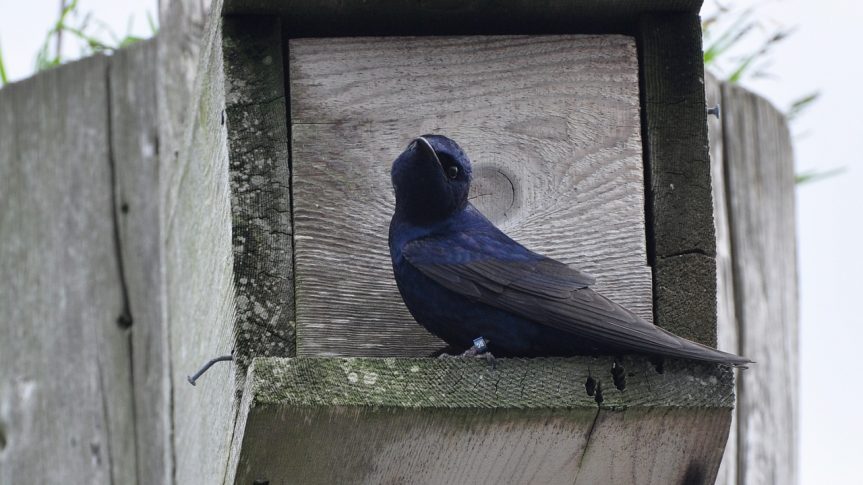
Some of the Purple Martin nest boxes at the Myrtle Rocks colony suffered a bit at the hands of winter storms – and needed some attention.

After an aborted attempt on a dangerously gusty and rainy Saturday, Sunday saw fair skies. David Bedry, John Treen, Bill Whyard and myself replaced seven boxes and installed some new anti-predator barriers.

Purple Martins are interesting for many reasons, not least of which is that here in BC, we have a species that is now completely reliant upon man-made habitats – because the natural cavity-nesting habitat has been destroyed.

You can learn more about Purple Martins, their history in BC, and the hugely successful volunteer-based nest-box program here, here and here.

Thanks to Rona for providing construction materials, and to Relay Rentals for loaning us their very tall (and very heavy) ladder.
And thanks to all who braved the winds on Saturday!

Tide Pool Treasures

 Tide Pool Treasures
by Janet May, 29
 April 2017.

Despite the wind and rain, Young Naturalists followed the herons and the tide down the Westview beach. Lu and Heather helped identify everything from eel grass to kelp crabs.

They found three kinds of starfish, three kinds on anemone, and maybe an eel!

What a great morning!


Tuari meets the kids

 Tuari meets the kids
by Janet May, 22
 April 2017.

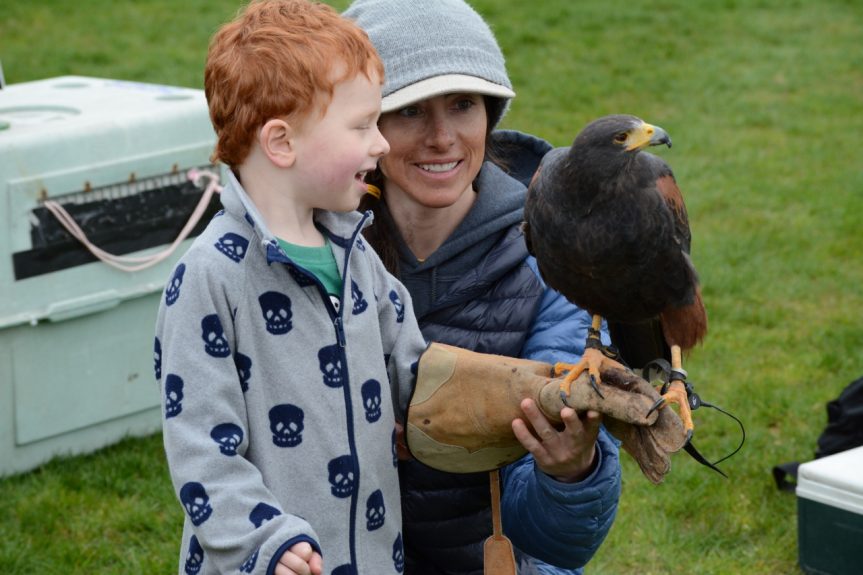
A dozen Young Naturalists, their families and a few passers-by got to meet Jessica Baynton and Tuari-the-Hawk.

Believe it or not, their job is at Vancouver International Airport (YVR).  As part of a team, they work to keep airplanes and birds safely apart.  It’s a job that requires skill, patience and trust.

Our Young Nauralists got to watch Tuari and Jessica in action.   I didn’t count, but certainly a bunch of kids got to get up close and personal with Tuari…and learned the power of communication.

What a fun morning!

Jessica Baynton – “Island Raptors: the science and art of falconry”

Jessica Baynton – “Island Raptors: the science and art of falconry”
by Andrew Bryant, 20 April 2017.

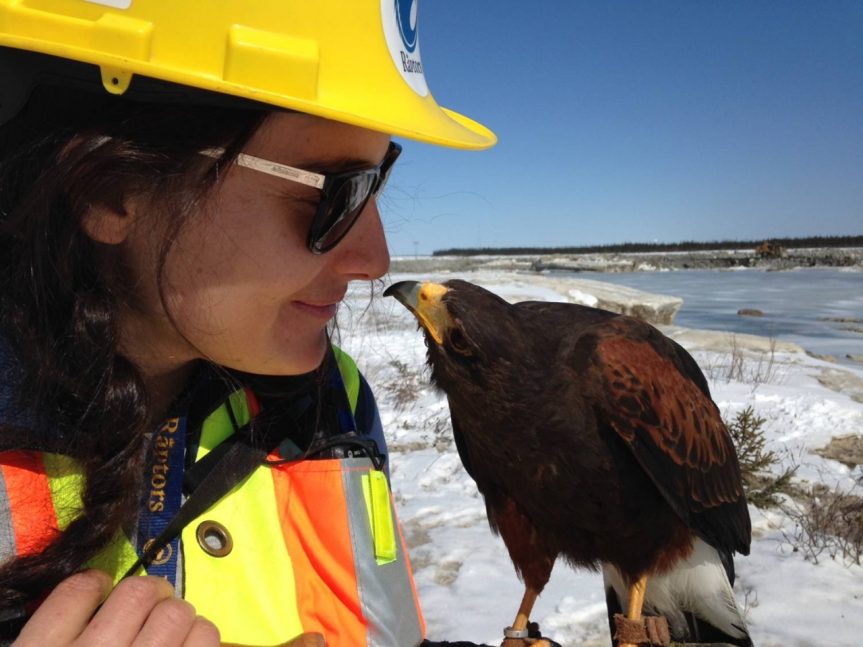
Jessica Baynton has one of those weird and wonderful jobs that us mere mortals can only marvel at.  As a biologist employed by The Raptors, she spends her days flying various birds-of-prey.  Yes, you read that correctly.

Using gloves, twine, whistles, radios, and traditional skills from the age-old practice of falconry, Jessica works to keep birds away from aircraft…by flying her birds.

She’s mostly involved with Vancouver International Airport (YVR), although her particular skills have also taken her (and birds) to remote industrial locations across Canada.  It matters.  Because birds and aeroplanes sometimes don’t play nice – ask Captain Sullenberger.

Jessica spoke about the long history of falconry, and how that particular hunting technique/sport/hobby/status symbol has changed over time. What hasn’t changed, as Jessica explained, is that falconry relies on sensitivity, non-verbal communication, and trust.

Falconry works, and has become an increasingly useful tool in the arsenal of wildlife management.  Thus, people who keep track of such things report that “bird strikes plummet at Vancouver Airport” – and passengers are safer as a result.

Jessica’s talk was, of course, a preamble to meeting Tuari, an 8 year-old Harris’ hawk.  It’s not her hawk, of course…except it is…kind of…
…and together they certainly commanded our attention!

Texada Gold Rush

Texada Gold Rush
by Joan Treen, 19 April 2017.

The morning was spent at the Texada Museum, which was quite a surprise for most of us who did not know it existed.  It’s an amazing place, housing information about the development of mining on the island and the pioneers who settled there, many of whose descendants remain to this day. The folks on Texada deserve a lot of credit for producing, and continuing to expand such an interesting display of the island’s history which dates back to 1873 and earlier.  Two of the museums volunteers, Doug Paton and Ken Barton explained the history in fascinating detail.

We were also fortunate to visit Bob Duker’s property to view his home-made gold processing plant which he and his partner used for many years. He was very generous with his time and we felt fortunate to be able to visit him.  In the afternoon Geologist John Dove and Prospector Dave Murphy showed us the remains of the Little Billie Mine in Vananda where we found samples of various minerals in the rocks.  We also discovered the closed off opening to the now defunct mine shaft.

Our trip along the trail to Emily (Turtle) Lake was lovely with stops along the way to view a beaver dam and various island plants such as Lungwort Lobaria pulmonaria (Pojar p.489), Evergreen Huckleberry, salal, and many wild red current bushes in bloom.

Some of the group also saw the nesting site of the turtles and one out sunning itself on a log in the lake.  We ended our day with a short hike to Clam Bay while awaiting our ferry, then back to Powell River with memories of the uniqueness of Texada Island, and appreciation of the fascinating history of this mining community.

Thanks to Heather Harbord for organizing and leading this interesting field trip.

Richard Dewey – “Tides, currents, and sailing the coastal waters of BC”

Richard Dewey – “Tides, currents, and sailing the coastal waters of BC”
by Andrew Bryant, 18 March 2017.

Dr. Richard Dewey is Associate Director and head of research at Ocean Networks Canada, based at the University of Victoria.   He’s conducted oceanographic research throughout the Pacific from Japan to California, and along the B.C., Alaskan, and Arctic coasts.

Long-time sailer and resident of the Pacific Northwest, he’s particularly interested in  coastal flows, mixing, turbulence, waves, and tides.  Tying these themes together was the subject of his talk.

Richard spoke about the Venus and Neptune projects, which are pioneering efforts to monitor chemical, physical and biological traits of the ocean floor.  Plugging in another extension cord turns out to be a bit more complicated – when you’re working (remotely) in pitch dark, and at environmental pressures equivalent to ~600 Earth atmospheres.

Richard rounded out his talk with useful tips about tide-tables, apps for your smart-phone, proper whale-watching etiquette, and a multitude of things you should remember before heading out onto the deep blue – the most important of which is – you really should!

Winter Twigs and Greens

Winter Twigs and Greens
by Nancy Pezel, 25
February 2017.

A small but enthusiastic group of our members spent a couple of hours enjoying a walk along some of the trails off McLeod Road.

There the group learned how to identify western yew and western hemlock, how to differentiate between alder and cherry, that true firs have needles with notched tips, and that Cascara has naked buds. We also saw a variety of native shrubs including Bald-hip rose, salmonberry, thimbleberry, salal, Oregon grape, Spirea and Pacific Ninebark.

After working up a bit of an appetite, we enjoyed hotdogs on the campfire and the peaceful scenery of Hammill Lake before heading back up the trail and home.

Terry Brown & Jude Abrams – “Whopping whales and wee fish”

Terry Brown & Jude Abrams – “Whopping whales and wee fish”
by Andrew Bryant, 19
January 2017.

Humpbacks breaching in Jervis Inlet. Click on the to see the video!
Humpbacks breaching in Jervis Inlet. Click on the image to see the video!
(4 minutes)

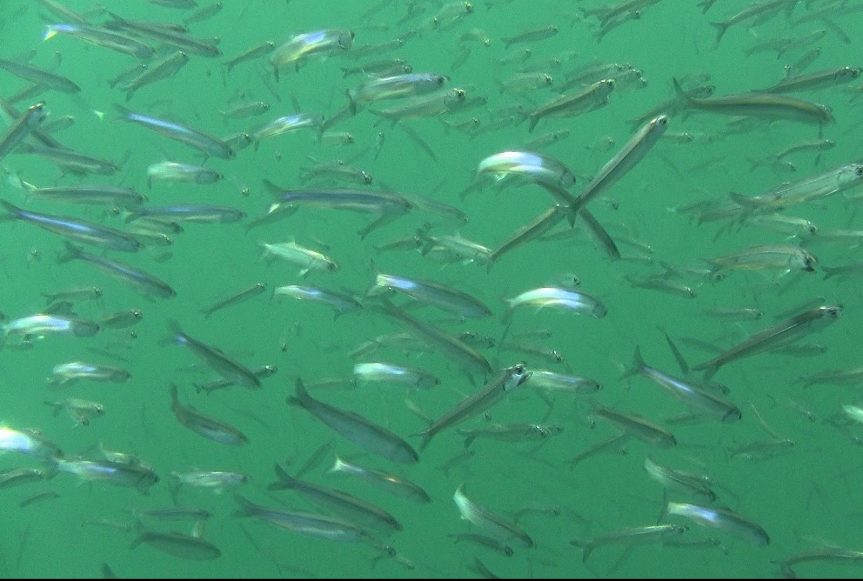
Noted amphibiographers Terry Brown and Jude Abrams travelled all the way from Okeover Inlet to speak about some creatures we hold dear, those whopping big humpback whales – and the herring, anchovies and krill that whales (and many others) depend upon.

Using videos, sound clips and stories, Terry and Jude wove a marvelous tale about the history, ecology, and recent resurgence of humpbacks in local waters.

We learned much about their recent population recovery, and about the threats these giants still face.

"Kelp Creature", a humpback that suffered a boat collision - T. Brown
Here’s Kelp Creature, an unfortunate humpback that suffered from a boat collision.
Click on the image to watch the close encounter!
(32 seconds)

The harpoon-laden boats may be gone from Blubber Bay and Whaletown, but hazards remain. Collisions with boats, sound pollution, oil spills, and harvesting of krill, anchovies and herring all pose threats to the success of humpbacks in local waters.

What is needed, said Terry and Jude, is a new – and closer – relationship – between these gentle behemoths of the deep, and ourselves. We agree!

Pacific white-sided dolphins, Powell River, 2013 - A. BryantClick on the imaqe to watch Terry's great footage from 3 January 2017 - how many were there?
Pacific white-sided dolphins, Powell River, 17 May 2013 – A. Bryant
Click on the imaqe to watch Terry’s great footage from 3 January 2017
How many can you count?
(38 seconds)

Tiny Brown Birds

Tiny Brown Birds
by Heather Harbord, 14
January 2017.

Eight members joined Clyde at 8am on Saturday for the Tiny Brown Birds trip.  After carpooling from town, we drove to the Lang Creek Hatchery, crossed the road and walked among the prime TBB habitat.

At the start, Clyde explained how carefully and quietly we should move to avoid scaring the birds.  Unfortunately, the sun went behind a cloud and it was very cold so only a few Towhees and Ruby-crowned Kinglets cooperated.  At the Hatchery, we saw a Pacific Wren beside the creek where the Dippers are often found at this time of year.

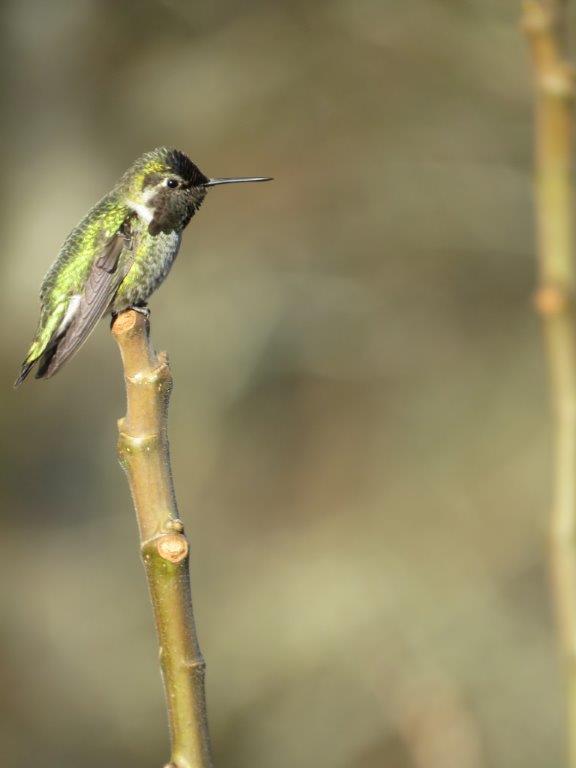
Next stop was Michael Stewart’s feeders which were much more fruitful for our purpose.  Hidden inside her house, after a slow start we enjoyed prime views of seven birds on Heather’s hand-out of TBBs plus several Anna’s Hummingbirds which sat on twigs to display their black throats and shocking pink and orange lapels, an iridescence caused by the way light hits microscopic barbules in their colourless feathers. Oregon Juncos were the commonest birds.  The red squirrel-proof feeder had both male and female House Finches on one side and Purple Finches on the other often interrupted by Spotted Towhees and Juncos.  Clyde showed us how to distinguish between them.

Both Song and Fox Sparrows put in brief appearances and also demonstrated Clyde’s distinctions.  We were grateful to him for sharing his vast knowledge of birds and their behaviours and setting us on track to become more competent birders.  The area has potential for a birding or tree frog field trip in the spring when the weather should be more clement.

Note: Apart from leading the trip, Clyde and Heather have produced a really useful “mini-field guide” to some of our local TBBs…you can get it here.

5th Christmas Bird Count for Kids

5th Christmas Bird Count for Kids
by Janet May, 3
 December 2016.

The 5th Powell River Christmas Bird Count for kids was led by elder birders Clyde Burton, John Treen, and Andrew Bryant.

The kids quickly took charge of spotting scopes, and we were treated to the usual fare: herons, loons, surf scoters, killdeer, and a bald eagle flying by, maybe doing a young naturalist count of his own.

It ended with a game of hide and seek and hot chocolate all around.  Thank you to all who participated.


Neil Hughes – “Ethiopia: a birding extravaganza”

Neil Hughes – “Ethiopia: a birding extravaganza”
by Andrew Bryant, 17
 November 2016.

Long-time club member, professional forester, and die-hard birder, Neil entertained us last year with his talk about spring migration in the eastern Mediterranean.  Although he’s moved away from Powell River and now calls Victoria home, Neil made a special trip back to share his latest amazing adventure – to Ethiopia!

It was more than a succession of marvelous bird photographs (although there were a lot of those).  I did not know, for example, that Ethiopia had such a diversity of landscapes, including not only the famous Rift Valley, but deserts, savannahs, forests, and montane habitats.

Nor was I was aware of the tremendous bird diversity to be found there (over 800 species), or of the extraordinary challenges facing not only birdwatchers, but the country as a whole.

In between the fascinating tidbits of natural history (sunbirds are the hummingbirds of Africa) and birding humor (“this is a drab, little brown bird…indeed it positively revels it its drabness”), there were some wonderful insights into the sense of the place.  I liked the all-essential “spotters”, without whom visiting birders would see little, and the quite extraordinary “meeting at the waterhole”.   Brilliant.

Iris Griffith Centre

Iris Griffith Centre
by Cindy Dalcourt, 5
 November 2016.

While rushing to catch a ferry to the peninsula, have you ever noticed the sign for the Iris Griffith Centre and wondered what is was?

Well, this Saturday 17 of us found out.   After carpooling to Saltery Bay and walking on the ferry, we were picked up by Lee-Ann Ennis in the “Wood Duck” bus, and taken to the Ruby Lake Lagoon Nature Reserve Society headquarters.  The Society’s mission is to preserve and enhance the natural habitat and wildlife of the Ruby lake Lagoon, facilitate local environmental education, and help monitor the ecological health of the region.  Their state-of-the-art Field Studies and Interpretive Centre is named after Iris Griffith, a local grassroots naturalist and activist.

On arrival we were greeted by Anne, a founding member of the Society, and treated to tea and snacks, while Lee-Ann provided background about the society and centre.  The society provides facilities for study and research, fosters good stewardship ethics, promotes respect for First Nations history, cultural traditions and heritage, and promotes leadership in environmental building design.  Lee_Ann also told us of their newest endeavour which is to build a “Pender Harbour Ocean Discover Station” (PODS).  This is to be a centre for viewing marine creatures in their natural habitat, marine research and lab work as well as a community gathering space.  The proposed architectural plans are amazing and if built, will someday be a great place to visit.

Lee-Ann then took us on a tour of the beautiful centre and surrounding area.   We viewed their reclaimed wetland area which is home to ducks, turtles, frogs, beavers and much more.  She explained their monitoring of the western painted turtle and showed us their nesting sites which have been enhanced by the society.  Tips on dealing with the invasive Giant hogweed (Heracleum mantegazzianum) were also mentioned.   We walked some of the trails in the area which connect to the “Suncoaster Trail” a multi- use trail that stretches from Earls Cove to Halfmoon Bay. We continued our walk through the property next door which is owned by the Ruby Lake Resort and saw their luxury camp set up and unique amphitheatre.

Upon leaving the centre we were taken on a very short tour of Egmont and then to the Egmont Heritage Centre across the street from the entrance to Skookumchuck Narrows Provincial Park.  There we learned about Egmont’s history and enjoyed the many artifacts displayed.   Then it was back to Earls Cove for the trip home.  Lee-Ann was an enthusiastic guide and we thoroughly enjoyed our day.  So next time you’re on the peninsula make sure to take the time to stop and see the sights – you’ll be glad you did!

Princess Louisa Inlet

Princess Louisa Inlet
by Heather Harbord, 29
 September 2016.

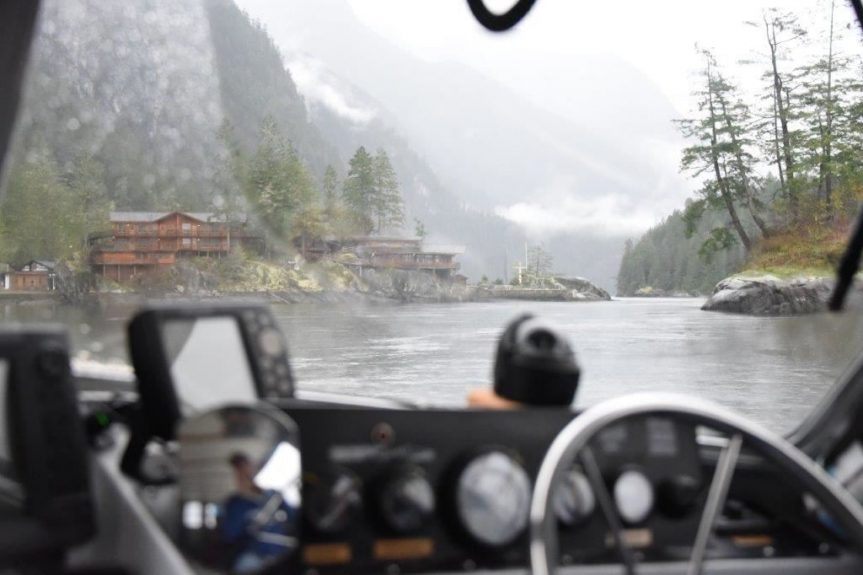
Nine out of ten members enjoyed our trip up Princess Louisa Inlet.  The tenth was too sick to come, and the only person on the waiting list was also unable to fill in.  Bryce Christy’s boat, the B-Line, was very comfortable.  Everyone could be inside in the well-heated cabin. John Dafoe identified the sea birds we passed and pointed out geological and other interesting natural history features.

No humpbacks showed but, on the way up, we saw lots of Marbled murrelets, Horned, Red-necked and Western grebes, Steller’s sea lions and Surf scoters.  The highlight, however, was three Pacific White-sided Dolphins chasing something hiding under the boat. Everyone had a good look at them.

Bryce showed us several pictographs and related the stories told to him by the Sechelt elders.  The flush toilets and tour of Malibu Camp were a much appreciated preliminary to the wondrous sight of Chatterbox Falls at the end of Princess Louisa.  Without a snow pack up above, the falls were not in full spate, but were still spectacular.

We were the only boat at the dock when we landed.  After viewing the falls up close from different angles, we ate lunch in the big gazebo and then marveled at the industriousness of what John thought was likely a grizzly bear.  He or she had had a good feed after digging up cow parsnip roots all along the trail beside the shore.

On the way back, we stopped at the spigot of Soda Creek which falls directly into the ocean with much white froth.  There were no goats on the heights likely because they were all sheltering under the trees.  “This kind of drizzle is pretty normal for here,” John told us.  Just as we approached Saltery Bay, three Steller’s sea lions put on a big show of waving their salmon catches above the surface in the manner of Excaliber.

At the end of the trip, John pulled out a basket of pine mushrooms gathered yesterday and gave us all a sample.  A great finish to a fun day in the rain.

Oh deer me

Oh deer me
by Heather Harbord, 21
 October 2016.

Seven members dripped their way around the forest with Rick Page, the previous night’s speaker.  We started out near the former Artaban Centre and walked through to the pole line and back along McFall Creek, which was in full flood.

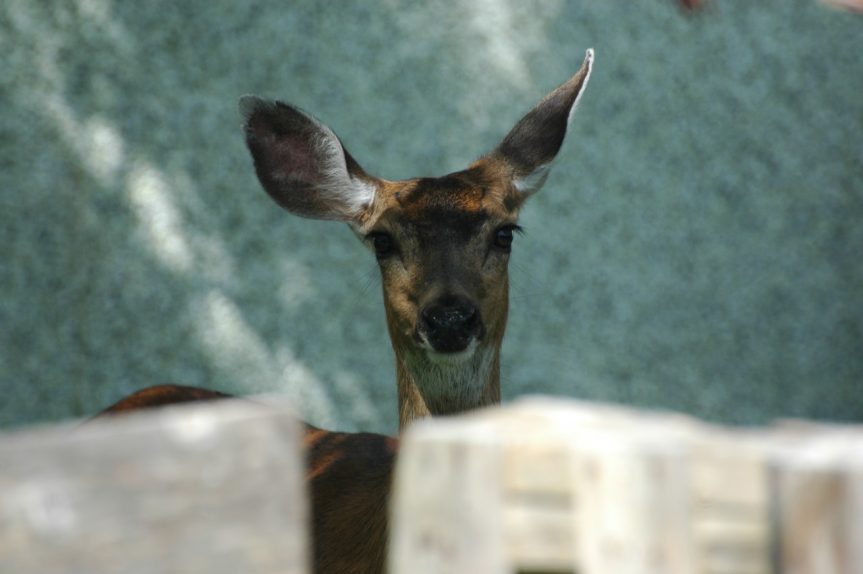
Rick pointed out various examples of foliage which had been recently and not-so-recently dined on by deer.  A five foot yew tree had been sheared back to its trunk from the ground up to about the four foot level.  It was a strange piece of topiary to find in the middle of a regenerating clear-cut.

My rain jacket leaked through to an under jacket and the wallet in my pocket was sopping.  Nobody drowned, but we all soaked our car seats on the way home and undressed into the dryer.

The area has potential for a birding or tree frog field trip in the spring
when the weather should be more clement.

Rick Page – “Urban deer: they’re here to stay”

Rick Page – “Urban deer: they’re here to stay”
by Andrew Bryant, 20 October 2016.

Having previously worked on geese in Ontario, caribou in Spatzisi, and the moose and wolves of Isle Royale, Dr. Rick Page recently visited to share his considerable knowledge and experience of “urban deer“.

Deer are are beautiful and impressive creatures, but bring problems to the urban landscape.  Without natural predators such as cougars and wolves, deer populations can grow quickly.   The average lifespan of a “wild” deer is about 4 years, but without predation it can rise to >10 years.   Because females typically breed every year, the result is predictable: a lot more deer.

Deer overpopulation increases traffic accidents, damage to crops and gardens, aggression to pets and humans, and the potential for transmission of things like Lyme disease (via deer ticks).  It also leads to unhealthy deer populations.

As with any ecological problem, there’s no quick “one-size fits-all” solution to the urban deer issue. In BC, jurisdictions such as Oak Bay or Cranbrook have employed a variety of “conflict reduction” or “population reduction” methods, including fences, chemical repellents, roadside signage, lethal culls, translocation, or surgical or chemical sterilization practices.  These can be both costly – and controversial.

Urban deer are here to stay.  Fences, careful choice of garden plantings, and landscape-level planning can help, but they’re not going to make the problem go away.

Any successful deer management program requires stable, long-term funding and scientific evaluation – but to date, as Rick underscored with wit and humor, we’ve not been particularly good at providing much of either.